Results tagged salt from David Lebovitz

Salt-Roasted Peanut Recipe

“You’re A Winner!” said the email.

“You’ve won a Katana Series Nakiri knife, from Calphalon.”

knives.jpg

While I seem to be the quintessential person who never wins anything (except the fabulous no-expense paid trip to Paris that I’m enjoying), and I don’t remember putting my business card in the raffle fishbowl, I was happy to accept. And the knife made a lovely addition to my Katana collection, joining the smaller one that I already owned. I’ve been using both, and they’re really rather incredible knifes. I love the handles, and the blades are scary-sharp. Which is good.

While we’re on the subject of deadly weapons, let’s talk about salt. Everyone is scared of salt.

I don’t pay much attention to hot-shot chefs, but I’d read that Thomas Keller was once asked what makes a good cook, and he replied, “salt”. He summed it all up in one simple word, and that’s truly what it all comes down to…and that’s why he’s a great chef and I bought his French Laundry book even though there’s no way in h-e-double-toothpicks I’m ever going to make anything from it. But if he can use it, so can you.
So no matter what you do to food, whether you whip it into a foam, toss it on the grill, spend 17 hours cutting it into little itty-bitty cubes that people wait 6 months to taste, or churn it in your ice cream maker, salting makes all the difference in cooking and baking.

A lot of people are afraid of salt, citing health concerns. Yet experts tell us that if you stay away from pre-packaged convenience foods, the average person only consumes about 1 1/2 teaspoons to salt per day. Although I should talk…I can’t have enough of it and sometimes buy it by the kilo. So maybe at this point you’d be wise to just scroll down to the recipe.

fleurdeselenorme.jpg

I mostly sprinkle top-quality salt on top of things, as a finish, where you’re going to taste it rather than adding it all at the beginning of the recipe where it can get lost. Whatever salt you use, I recommend coarse salt crystals, since the larger pieces take longer to dissolve, thereby giving your palate more time to experience the complexity of flavors, rather than just dissolving into a salty mouthful like fine salt does. Plus most commercial salt has additives which give the salt a bitter, acrid taste.

If you don’t know what fleur de sel is, you should. It’s fine crystals of salt that’s hand-harvested in marshes in Brittany, off the Atlantic coast of France. Although lots of fleur de sel-style salts have been showing up from Italy, Portugal, and elsewhere, the best fleur de sel is from the Guérande. I use it on everything; its fine, delicate taste is best appreciated when sprinkled over things, as mentioned above, rather than dissolved (like in soups) so it’s best to save it for places where it can be appreciated.

Fleur de sel is admittedly pricier than ordinary table salt, but when people balk at paying 5 or 6€ for a container of salt, that will cost them pennies (or centimes per day), they get all freaked-out. (Hey, it’s cheaper than gas, and lasts longer.) Just a last-minute flurry over a slab of foie gras or dark chocolate bark will give it a curious, other dimension. When you start using it, you’ll be as hooked as I am. You’ll never go back to ordinary table salt again.

I only buy fleur de sel harvested in Brittany, and I’ve recently befriended a récolteur who invited me to his marshes this summer to rake and harvest salt. His salt is incredible; light and flaky, with the fine, delicate taste of the sea. He sells his salt in Paris and I always tell guests to stock up here, since it’s one of the true bargains in Paris. A 250 g bag costs just 4€ ($5), which translates to .0136986 cents per day.

fleurdesel.jpg

So I hereby give you permission to spend a little bit more on salt. It will improve your cooking, just like upgrading to a good olive oil will improve your salads (and really, how much do you use?) If you don’t believe me, take this simple test: Taste a few grains of fleur de sel. Then taste a few grains of commercially-available fine table salt. I can almost guarantee that you’ll never use ordinary table salt again.

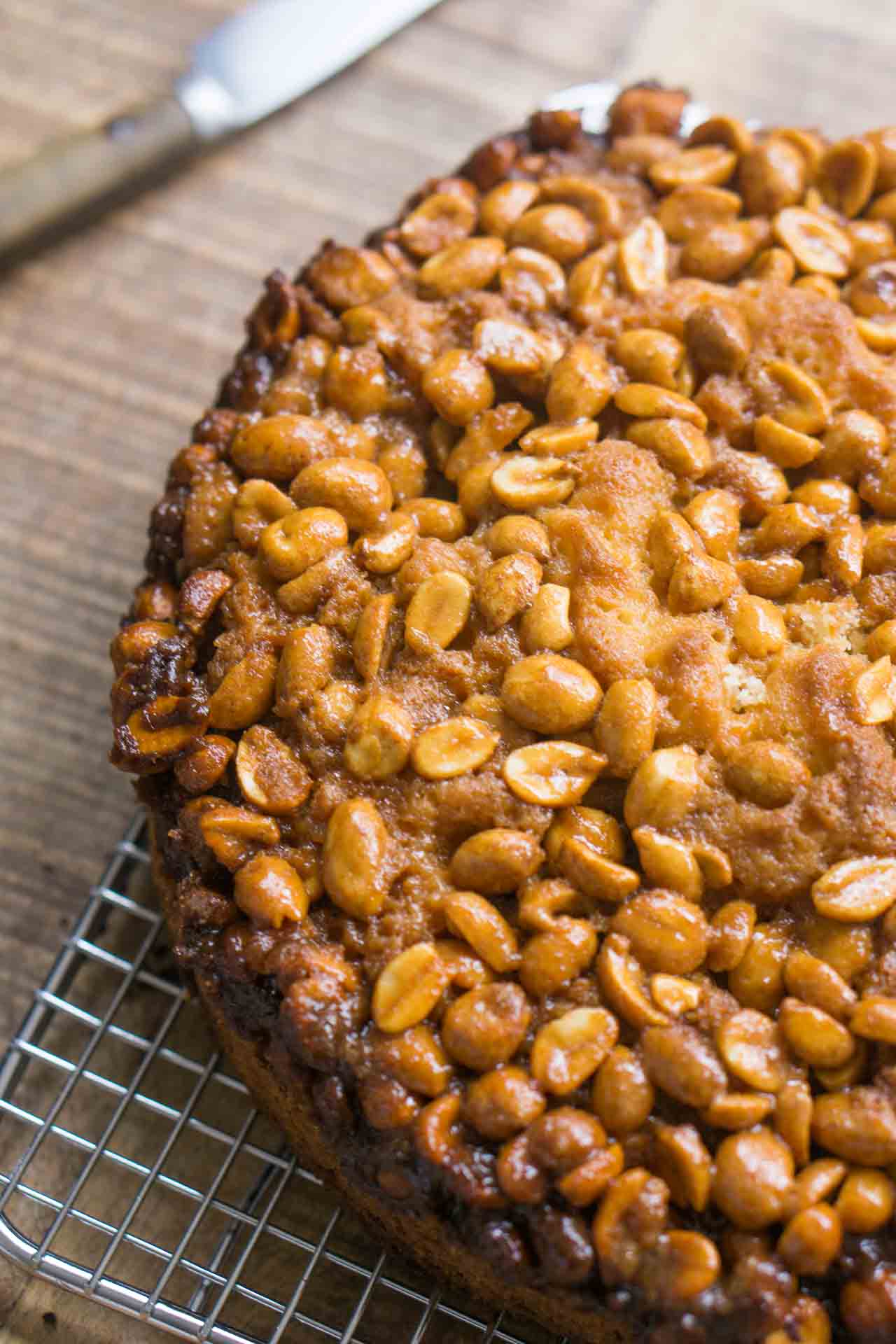
This is one of my favorite recipes for using fleur de sel, crispy Salt-Roasted Peanuts. These are terrific with cocktails or aperitifs, but I also like to enrobe them in bittersweet chocolate and if you’re making Hot Fudge Sundaes, they’re also dynamite sprinkled over the top.

peanutsblog.jpg

Salt-Roasted Peanuts

  • 2 cups (300 g) raw peanuts
  • 1/4 cup (80 g) light corn syrup, agave nectar, or rice syrup
  • 2 tablespoons (30 g) light brown sugar or cassonade
  • 1 1/2 teaspoons fleur de sel

Preheat the oven to 350 degrees F (175 C).

Lightly oil a baking sheet or line it with a silicone baking mat.

In a bowl, mix together the peanuts, corn syrup, and light brown sugar, until the peanuts are well-coated.

Sprinkle the salt over the peanuts and stir just a few times, but not enough to dissolve the salt.

Spread the peanuts evenly on the baking sheet and bake for 25-30 minutes, stirring three times during baking, until the nuts are deep-golden brown and glazed.

Cool completely, then store in an airtight container immediately, to preserve their crispness.

Store in an airtight container for up to 1 week. Makes 2 cups.

FAQ’s

I can’t find raw peanuts.

You can use roasted, unsalted peanuts, and reduce the baking time to 15 minutes. I buy raw peanuts in Asian markets.

Can I use other nuts?

I never have, but let me know how they turn out if you do.

What if I can’t get light corn syrup where I live?

Use glucose, available at professional pastry supply shops.

Can I use honey or golden syrup?

Yes, but they’ll be stickier and not as crisp. See the linked post under ‘corn syrup’.

Can I use another salt?

You can use any coarse sea salt, but choose one that’s light-tasting. I like Maldon salt from England very much, or you can use kosher salt.

Caramel Corn Recipe

Caramel Corn

I tried various recipes of for caramel corn, some came out too dark, some not dark enough. So I worked and worked, until I settled on this one.

Caramel Corn

Adapted from Epicurious

  • 2 tablespoons vegetable oil
  • 1/3 - 1/2 cup popcorn kernels
  • 1 stick (½ cup) unsalted butter
  • 1½ cups packed light brown sugar
  • ½ cup light corn syrup
  • ½ teaspoon coarse salt
  • ½ teaspoon baking soda
  • ½ teaspoon vanilla extract
  • 1 cup salted peanuts, or use any toasted nuts, such as almonds, pecans, or cashews.

Special equipment: a candy thermometer

Heat oil with 3 kernels in a 3-quart heavy saucepan, covered, over moderate heat until 1 or 2 kernels pop. Remove lid and quickly add remaining kernels, then cook, covered, shaking pan frequently, until kernels stop popping (or until your shoulder gives out), about 3 minutes. Remove from heat and uncover.

I ended up with 6 cups of popped popcorn.

(Premium American-brands of popcorn will yield more than mine did, about 8 cups of popcorn. If so, you may need to prepare 2 baking sheets in the next step.)

Line bottom of a large shallow baking pan with foil and lightly oil foil, or use a non-stick baking sheet.

Melt butter in a 6-quart heavy pot or Dutch oven over moderate heat. Add brown sugar and corn syrup, and salt and bring to a boil over moderate heat, stirring, then boil, without stirring, until syrup registers 300 degrees F on thermometer, 8 to 10 minutes. Remove pot from heat.

Using a wooden spoon or a heatproof spatula, stir vanilla and baking soda into the syrup, then quickly stir in peanuts and popcorn to coat. Immediately spread mixture over baking pan as thinly and evenly as possible.

Let cool completely, then break into bits.

Click here for more cookie and candy Recipes.

Preserved Tomatoes Recipe (Confit of tomatoes)

tomato plate

Recently the proliferation of heirloom tomatoes at greenmarkets harkens back to the days of yore, when tomatoes were beautiful and irregular and presumably so full of flavor that after one bite you could boast about how good it was for the remainder of your life and try to make everyone feel like you know something that they don’t know and how much richer your life is than theirs because you’ve had this amazing tomato experience and they haven’t.

Tomatoes

Nowadays the marketers and growers have gotten smart. It’s fairly easy to come across tomatoes sold ‘on-the-vine’ that look old-fashioned. But when you get them home and slice them open, they taste negligibly better than any of the other tomatoes at the supermarket…and cost twice as much. They just have a redder color and come with their stems attached.

campari tomatoes

Here’s an excellent recipe for encouraging flavor and sweetness from any tomatoes, even ones that are less-than-ideal, using a technique called making a confit. The slow roasting with olive oil concentrates and sweetens flavors, making ordinary tomatoes boast-worthy.

tomato.jpg

Confit of Tomatoes

Adapted from The Sweet Life in Paris

1. Buy some tomatoes, just about any variety will do. 2 pounds (1 kg) is a nice amount.

2. Wash and dry them, then slice them in half. Pour enough decent-quality olive oil in a baking dish so that it just covers the bottom of the dish, somewhere between 1/4 cup (60 ml) and 1/3 cup (80 ml) should do.

3. Sprinkle in coarse salt and freshly-ground black pepper, add a few branches of fresh thyme and/or a few sprigs of rosemary. Then line the bottom of the baking dish with the tomatoes, sliced-side down. Don’t be bashful; it’s okay to really pack them in.

4. Peel and slice 3 or 4 garlic cloves, slice them in half lengthwise and tuck them in the gaps between the tomatoes. Sprinkle the tomatoes with a bit more salt and a small sprinkling of sugar (less than 1 teaspoon) and add a few bay leaves.

5. Bake the tomatoes in a 350 F (180 C) oven until they are soft and cooked throughout (a paring knife should pierce them easily), which should take at least 45 minutes.

6. Once they’re soft, remove them from the oven and let stand until room temperature. You can scrape the tomatoes and juices and herbs into a container and refrigerate them for up to 4 to 5 days or use them right away. They will actually improve as they sit.

Use them to toss into pasta, slightly chopped, or warm them and spoon them whole onto hot garlic toasts, perhaps with a few filets of good anchovies, and shower them with lots of fresh herbs. They’re also nice served alongside a summer salad with some goat cheese, all drizzled with a bit of the tasty olive oil and juices.


Related Links and Posts

Canning Tomatoes (NCHFP)

Panzanella: Tomato & Bread Salad

Seville Orange Marmalade

Summer Tomato Salad

Cabbagetown Hummus