Recently in Recipes Category

caramelizing bananas


My recent banana windfall gave me the chance to play around a bit with various banana ice cream combinations. Although I loved the taste of this one, frankly, I wasn't sure I should post the recipe.


banana ice cream  banana ice cream & chocolate sauce


Since bananas are such a natural partner for coconut, I reasoned, "Why use milk or cream when there's coconut milk? So I reached for a can of it. Continuing with that train I thought, I had a bag of jaggery, raw cane sugar that's used in Indian cuisine.


organic bananas


I'd bought the husky, ultra-dark sugar up near the gare du Nord, in the Indian and Sri Lankan neighborhood, for no other reason than I was attracted to its rich color and the aggressive scent that wafted through the bag when I pressed it against my nose. When I moved to Paris, I remember people telling me to avoid that neighborhood, that it wasn't safe. But it's become one of my favorite quartiers, mostly because of the lively ethnic communities that have settled there. (As well as being the home to the Paris chapter of the Hell's Angels.)

caramelized shallot chicken


I'm always surprised when people say that they don't have time to cook. I mean, aside from reproducing, physiologically, we don't really exist on this earth for any other reason. (Unless someone knows something that they're not telling me.) Feeding ourselves is really our most basic human need.

Now if someone said, "I don't have time to clean up afterward", then I can totally relate. I spend at least 40% of my life standing in front of a sink, washing dishes. When people ask if they can come and help me test recipes, I always say, "Bring rubber gloves!" And that's the last I hear from them.


caramelized shallot chicken


This is one of my very favorite, go-to dinners. It's incredibly easy and there's hardly any dishes to wash; just toss chicken pieces in olive oil, vinegar, soy sauce, and shallots in a baking dish. Season with salt and pepper, and pop it in the oven.

organic bananas Banana & Chocolate Chip Upside-Down Cake


I'm happy to be taking care of two things with this recipe. One is that about a week ago, I was late to the market, arriving near the end, when everyone was packing up to leave. Scanning quickly to see what I could procure in a short amount of time, I passed by a stand where one fellow lorded over an enormous pile of organic bananas, and was hollering, "Un euro, deux kilos!...Un euro—deux kilos!"

Since that's roughly a buck for a little over four pounds of fruit, I stopped right there, and took as many as I could carry off his hands. And then, he threw another bunch in my basket after I paid. So I had a whole bunch of bananas...five, to be precise...which was great. But I was a little concerned about having what looked to be like around fifty bananas for just one person.


Banana & Chocolate Chip Upside-Down Cake Banana & Chocolate Chip Upside-Down Cake


Once home, as they started ripening during the week, seemingly all at once, a mild panic set in. So I called into service a recipe from my archives, one of my all-time favorites: Banana and Chocolate Chip Upside-Down Cake.


bergamots


Like Pistachio Gelato or Polenta Ice Cream, this recipe might fall into the category of "Things You Can't Make" for some of you.

Yes, bergamots aren't something one runs across everyday in the supermarket, or even at greengrocers. But mid-winter, depending on where you live, you just might get lucky and happen across some, as I recently did. Twice! (Although the second time took a bit of moxie.)


bergamot marmalade


There's conflicting information what a bergamot actually is, but it's definitely a member of the citrus family and most consider it to be a relative of the bitter orange, which might have been mated with a lemon at some point in its dubious past.


german chocolate cupcakes


Believe it or not, there's been a spate of cupcake places opening in...of all places—Paris.

I haven't been in to any of them, but I should probably go at some point since I'm not sure if it's just a fad that's going to end soon, or something that might be here to stay. Parisians aren't especially fond of cakes with thick layers of frosting or blue icing, and sugary roses don't have quite the same nostalgic effect here as they do in America.

A lot of people come to Paris and ask me what they can bring. I've kind of had to stop mentioning things when I ramble on here, because if I casually mention that I would kill for a box of thin mints, every guest that comes to visit for the next three years arrives with a dozen boxes of thin mints. So please, don't bring me any thin mints. Except those After Eight mints. As evidenced by the empty brown, envelope-style wrappers littering my apartment, I love those. (Oh, and I like Planter's Peanut Blocks, too.)


Askinosie cocoa powder


Since I got in trouble recently for using...shall we say, a less-than nutritionally correct ingredient, on my last trip to San Francisco, folks will be happy to hear that I discovered fresh, wholesome pecans for sale at Costco.

crispy Korean chicken wings


I'm always a little late to the party. For example, last week, the Super Bowl festivities took place. But honestly, I have an excuse. Actually I have a few. Since I don't live in America, there isn't much enthusiasm for American football around here. When I tried to explain the concept of the grandeur of Super Bowl Sunday to Romain, he gave me that typically blank stare which is sort of a signal to not even bother with an explanation, because it made my head hurt thinking about it.


pre-cooked chicken


Equally unexplainable, he asked; "Do you understand American football?" and it took me about one second to respond, "Non". But truthfully, who on earth does? All I know is that those games seem to go on and on and on forever. One team runs a few yards and knocks down someone. Then they all take a break, walk around, talk to each other, pat a few behinds, the cameras scan the crowd, then they do it again. After a few more tackles, breaks, and changes of direction, there's ten minutes of shaving commercials before the non-action resumes.


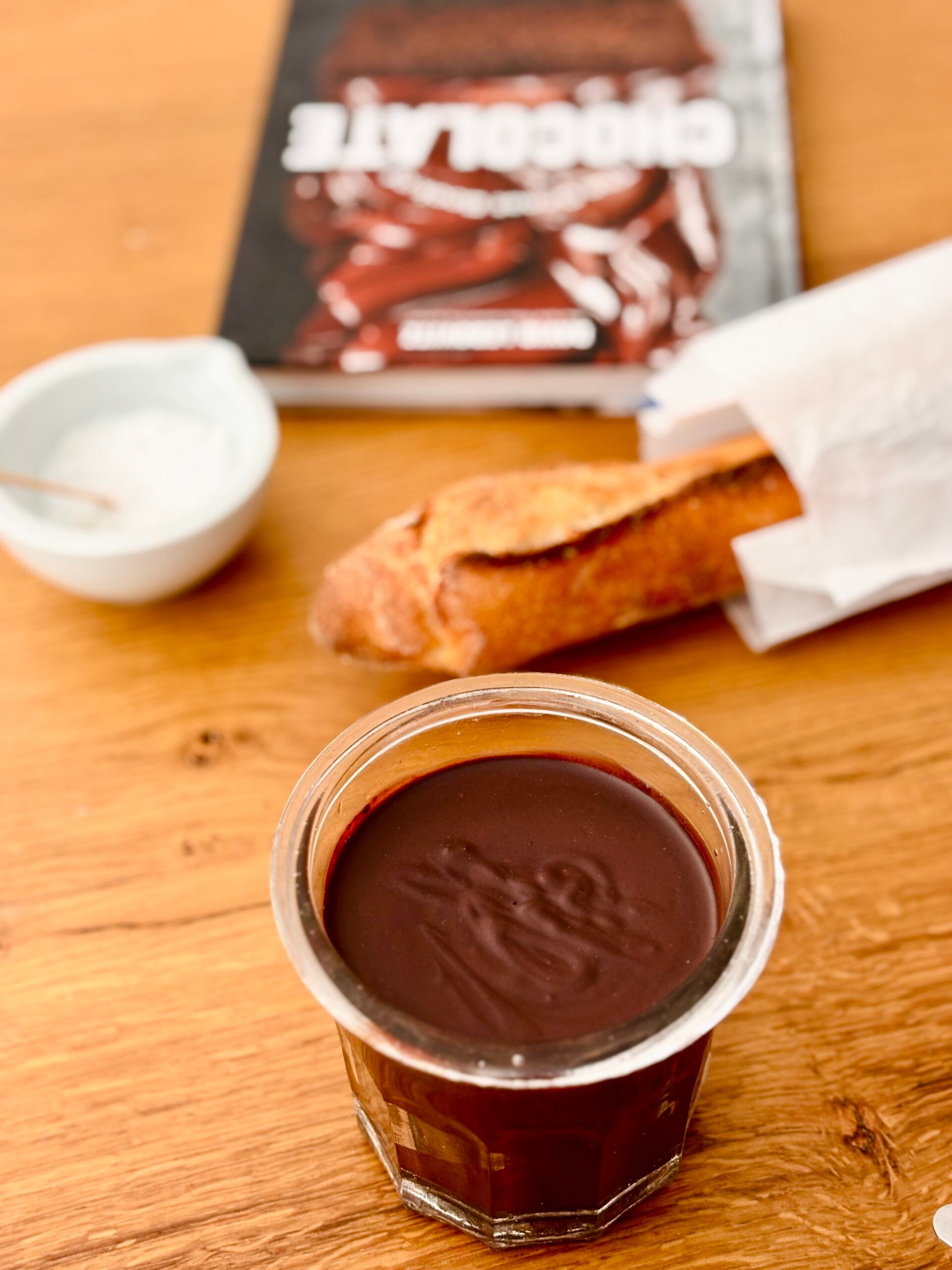
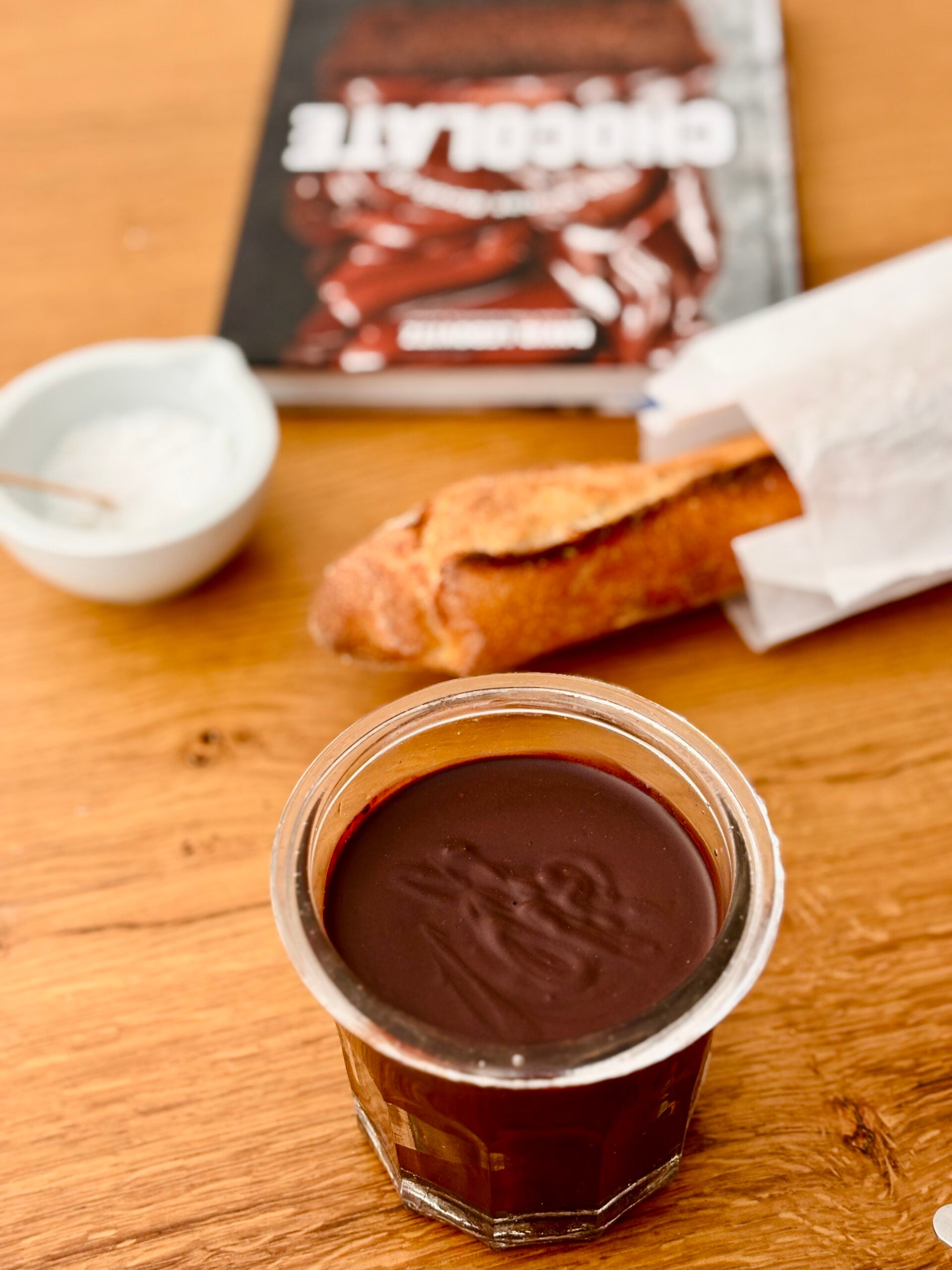
chocolate hazelnut spread blog


I'm probably not the sharpest knife in the drawer, because about a decade ago, I met two guys who were planning to start a bean-to-bar chocolate company in America. And I remember thinking, "Hoo-boy, are these nut-jobs going to lose their shirts! Who in America cares that much about chocolate?"

Fast-forward to a few years later, and Scharffen Berger chocolate became a huge hit, challenging, and changing the way Americans thought about chocolate. It was eventually sold for a substantial sum of money, and the rest is history.

And I'm living in a drafty, two room rooftop apartment where getting hot water is a miracle that might happen weekly. If at all. So who's the nut-job now?


I'm not one to easily back down from an argument, especially when it comes to anything food-related. (Well, except about whether brownies should have nuts or not. That's just something I just can't get worked up about, as much as some people do.) Recently I was having a bit of a disagreement with someone particularly stubborn about the role of fat in cooking.


sugared popovers


I believe fat is fine, but should be used where it makes a difference. For example, milk is better in hot chocolate than cream, as the heavy richness of the cream overwhelms the taste of the bittersweet chocolate. And I don't think anyone who tastes a scoop of my chocolate sorbet can tells me it doesn't have the intense flavor of the deepest, darkest chocolate dessert. I dare ya.

But on the other hand, if you're going to pan-fry potatoes, a spoonful of duck fat in the frying pan will produce crackly, crisp-browned potato cubes, and they're going to be a life-changing experience. So I'm happy to use it there. If you still afraid to try it, and are too concerned about eating duck fat, walk to the gym the next time you go, instead of driving there.

Last year Amanda Hesser was reminiscing with me about Maida Heatter, when she asked me to recreate Maida's popover recipe. For those that don't know who Maida Heatter is, she's responsible for writing some of the most amazing, luscious, scrumptiously adjective-worthy baking books over the last few decades. Known for carrying around cellophane-wrapped brownies in her purse, and distributing them freely, she was equally generous with recipes as she was with words.


pouring caramel


I had a wee bit of a dilemma recently. In my refrigerator was a half-jar of crème fraîche, that I had to use up before I left for a recent vacation on the beach. I'd been thinking about making caramels with it, but I also knew that I would be slipping on a swimsuit within a few weeks. And being alone in my apartment with an open jar of ultra-rich crème fraîche was probably not a good idea.


bordier butter salted cup of creme fraiche


So what did I do? I hemmed and hawed about it, until I channeled my mother, who would have flipped out if I tossed away the rest of the crème fraîche. (Or anything, for that matter.)


frais malo


A few weeks ago, I made plans to meet my friend Terresa in Pigalle, to check out a new épicerie (specialty food shop). I don't know if you're familiar with Pigalle, but the area has a certain well-deserved 'reputation' and if you're a middle-aged man walking around by yourself in the evening, casually looking in the windows of the cafés and bars, don't be surprised if a very scantily-clad woman tries to catch your eye back, and catch your fancy. And a few euros.

My friend was late, so after I cut my walk short though the quartier, I waited outside the Le Marché des Gastronomes, where we were planning to meet, which made me only slightly less of a target. And within a few minutes, people were handing me business cards for various 'services' of the female persuasion. So I was especially glad when the only woman in the neighborhood I was interested in hooking up with finally arrived and we went inside.


plain yogurt fromage frais


The idea of the store is to be one place filled with many great products. There were indeed some interesting things on the shelves, including Spanish hams and other European specialties. But when you live in France, it's hard to get worked up about shrink-wrapped cheeses, no matter how good they might be, when there's so many amazing fromageries in every neighborhood. But I think they're trying to be both a specialty shop and cater to the locals who need the basics, too. So I give them points for rising to that task, and most of us would be thrilled to have a place like that in our neighborhood.

wheat berry salad


Last summer, Romain went to stay at a place in the French countryside with a large, semi-wild potager, a vegetable garden, which the people who lived there fed themselves from. They let weeds grown, didn't spray pesticides on anything, and they ate most of the food as close to raw as they could. During his stay, he called me and said that he never felt better in his life, and that he wanted to eat like that when he returned home to Paris.


parsnips


One doesn't think of people in Paris munching on wheat berries and whole grains, but it is possible, especially because there are a few rather decent natural food chains here, as well as some smaller stores, too.

potato leek soup mache


I don't think I've ever made a New Year's resolution. Even if I did, I likely didn't have much success sticking with any of them, so I just don't bother with them anymore. Usually resolutions involve quickly-forgotten rules about eating better, losing weight, and saving money. (Which is probably why I never make them in the first place.) So I wouldn't place any bets that I'm going to stick with doing any of those three things this year, I'm happy to report that for those of you with more will-power than I, this Potato Leek Soup falls neatly into all three categories.


soup dinnertable


I kind of have a funny relationship to soup. If I'm going to eat soup, I eat it as a main course for lunch or dinner, not before. And since for me, soup is a meal, I like thick soups. I'm not a fan of slurping up thin broth from a vessel. If I wanted to lap up watery liquid from a receptacle, I'd slip a collar around my neck and get down on all-fours for my supper. No thank you. (Well, at least not at dinnertime.)


peeling potatoes cubed potatoes


So where do I start with this one?

Stollen

75 comments - 12.18.2009


stollen sliced & ready


I rarely make bread for reasons that should be obvious: it's hard to justify spending the day at home mixing, kneading, and baking bread when you live in a city where there's likely at least four very good bakeries within a two block radius. Unless, of course, it's the middle of winter and the idea of braving 0º temperatures is less-than-appealing.


stollen dough in mixer stollen ingredients


Before the deep-chill set in this week, the previous week I was going to my dentist, and stopped in at the nearby Kayser bakery* (one might say I chose my dentist based on the proximity to that bakery, but I'll deny it), and they were selling their terrific Stollen, which they make for the holidays. The small loaves cost only €3, which makes them, in my opinion, the best bargain in Paris.


Did you know that there is no such a thing as a Meyer lemon anymore? Well, at least not as we know them. Officially, they haven't existed for about fifty years, when a virus attacked the Meyer lemon trees and they were banned in the United States.


juicer


Then in 1975, a new, "Improved" Meyer lemon tree was released that was virus-free, and people began planting them in backyards in America. And in Paris apartments, too. (More on that, later...)


squeezing lemons butter


Some think that the now-extinct Meyer lemons, and the new, Improved Meyer lemons, are a hybrid between oranges and lemons. But I've been told by my produce guru that no one is certain as to what the heck they are, exactly.


pretzel & nutmix


I gave this recipe out a year or so ago on the site. But because it's so easy to put together, I made it yet again last night, to have as a little nibble with some white wine before dinner. And we couldn't eat it fast enough. (And almost didn't have room for dinner.) It's adapted from The Sweet Life in Paris. So for those of you who might have missed it, I'm bringing it up from the archives as you might want to make a batch for an upcoming get-together, too.


bretzels toasted nuts blog


It's really simple to make: all you really need is a bag of pretzels, a mixture of any kind of nuts that strikes your fancy, some spices, and a flurry of sea salt. Add a restrained amount of melted butter and maple syrup, and when it comes out of the oven, you'll barely be able to wait until the salty-sweet, spiced mixture of glazed nuts and pretzels is cooled down before diving right in.

I know, because last night after I made it, two of us wolfed down the entire batch. Now if you'll excuse me, I need to go toast off some nuts, melt some butter—and open yet another sack of pretzels...


I've been making these Fruitcake Bars more and more as the holidays approach. Not only are they incredibly simple to put together, unlike other fruitcakes, these really do taste great.


fruitcake bars


They can be made up to a week in advance, which will undoubtedly help alleviate holiday stress. It's from my archives but thought it worth sharing again since folks enjoyed them so much at a recent Paris book event (and wine-tasting), and because the baking season is quickly approaching and it's nice to have a recipe for a very easy-to-prepare dessert or snack.


Recently I ate at one of those small neighborhood restaurants whose fame spreads beyond the quartier and people come from other neighborhoods, as well as from other countries, to eat at because it is très reputé.


cake dusting


Le Repaire de Cartouche (99 rue Amelot) is one of those restaurants in Paris. It's known for very good food and an especially compelling wine list. The prices aren't too high (although not too low, either) and you can eat very well without spending the equivalent of a three-star restaurant.


dishofapples


Almost immediately after we sat done, something seemed up. Within moments of handing us our menus, the waiter asked if we were ready to order. I was with Maria Helm Sinskey, a well-regarded chef from the Bay Area and co-owner of a vineyard, with her husband. I'd chosen the restaurant because they're known for excellent game dishes and I figured it was something she couldn't easily get back in the states.

As she pondered the wine list, the waiter told us we had to order our meal before we could order wine. When we said we needed a moment to scan the interesting wine list, he quickly turned and scampered away in a huff.


One assumption that I'm going to make about the French is that they're not afraid to make things au pif, or "by the nose".


utensils


I don't know if a precise recipe for sauce vinaigrette actually exists. But if there is, I bet few people follow it very closely. And Romain is no different from his compatriots when it comes to recipes, and rules.

They are both for other people—and don't apply to him.


adding salt salad basket


Vinaigrette is just one of those things. It's a few simple ingredients which come together so well, when done right. Anyone can make it: you just pour, stir, marinate, then taste until it's just right. But the salad dressings in France always taste better to me than elsewhere. So thought I'd follow Romain when he made a true vinaigrette. He was surprised at the idea of measuring anything, so I follow him through the steps, taking a few notes along with way (see Recipe, at the end) and along the way, I learned two French secrets for a great salad dressing.


One is that you must use good Dijon mustard.

French Sugars

52 comments - 11.21.2009
sugars


Many people who tackle French recipes get stumped by the sugars, which don't necessarily correspond to the sugars available elsewhere. All supermarkets in France carry white granulated sugar and there's often unrefined sugars, such as cassonade, which grocers stock and are widely-available. In America and elsewhere, bakers often have to do a bit of hunting around to find the corresponding sugar.

French brown sugars are quite varied and don't always neatly fit into substitutions. In general, if you have a recipe that calls for brown sugar, you can use moist cassonade, vergeoise, or any unrefined amber-colored sugar that's not granulated. For the sake of these descriptions, moist brown sugar is sugar that clumps together easily if you pinch it. Crystallized sugar is granulated, or free-flowing, and pours easily.

For caramelization, you need to use refined white sugar; impurities in unrefined sugars will cause crystallization. There's some controversy in the pastry community that sugar refined from beets, which the majority of the sugar in France is, will give you difficulty if you try to caramelize it. But I haven't experienced any problems.

I've listed a few places outside of France where these sugars, and others, are available at the end of the post. Depending on where you live, your best bet is to search online or find a store that specializes in baking ingredients for professionals or dedicated home bakers. There are also links to various sugar companies and websites where you can learn more about these sugars.


Sucre cristallisé or sucre cristal

This is plain white sugar, whose crystals are a bit larger than what's considered granulated sugar in the United States. You can use this sugar for almost all baking and cooking applications.


Sucre semoule and Sucre en poudre

This is sugar whose crystals are very fine. In America, this would be similar to what is called superfine or baker's sugar. In other countries it's called castor or caster sugar. Its fine texture means it melts quickly and will give a finer crumb to many cakes, meringues and cookies.

You can make your own by pulsing granulated sugar in a food processor or blender a few times until it's in smaller crystals.


Israeli Couscous


When I started this site, I had forums, where people could chat and post messages. Before we took it down (because my brain was about to implode), one of the burning questions on there was this: Is couscous pasta?

My contention was that it wasn't, since it wasn't a 'paste' (or as the French would say, un pâte), which is what I believe—in my limited intelligence—that pasta is.

On the other hand, perhaps it is pasta, because couscous is flour mixed with water, then rolled until little granules form. Theoretically, then, it is a paste before it's broken down into little bits. Which makes me wonder if kig ha farz is pasta, too? (Although back then, no one would have know what that was, so it wouldn't have bolstered my argument.)


flat leaf parsley


Then, to make matters even more complicated, there's Israeli couscous, whose springy, chewy texture wouldn't raise an eyebrow if someone called it pasta.


Every year I get a slew of requests from people looking for a recipe for Pumpkin Ice Cream. While in The Perfect Scoop I have a recipe for Sweet Potato Ice Cream studded with maple-glazed pecans, there's something about the fall that makes people think of all-things pumpkin. I'm a big fan of sweet potatoes, personally, but old traditions die hard I suppose. And Pumpkin Ice Cream got put on my to-churn list.


pumpkinicecreamblog scooppumpkinicecream


As luck would have it, I was leafing through a copy of The Craft of Baking by Karen DeMasco, former pastry chef at Craft in New York City, and landed on a picture of Pumpkin Ice Cream. Quelle chance! So I thought I'd give her recipe a spin in my ice cream machine.


butternutsquash moresquashpuree


Karen uses canned pumpkin, which a lot of people like to use because it's easy and consistent. But it's not so easy to find in Paris. And even though I'm an outcast for using sweet potatoes, I'm still a bit old-fashioned and like to make my own puree. So there.

french pear tart with cherries


I've been living in France for almost eight years and in all that time, I've yet to make even one of these classic French pear tarts. I don't think I've ever been in a bakery that didn't have wedges of this tart in little paper footings, ready to take out and be consumed right away. So I guess because I could always buy one, why make it? But since I had a kilo of almond paste that I bought for another project, a batch of poached pears on hand, and an unbaked tart shell waiting it's turn in my freezer, I decided to give one a go.

This is a wonderful tart: pears fanned out in a golden-brown, buttery pastry shell that's been spread with almond cream, then baked. And after I pulled this one out of the oven, I realized why it's important to make this yourself; because it tastes amazing when still-warm from the oven, and you can use your own poached pears so you can vary the spices to your taste. (However you can use canned pear halves, which many of the French pastry shops do.)

Aside from the almond paste, I also had a jar of quick-candied sour cherries on hand from another baking project (if it seems like I have a lot of baking odds and ends on hand, welcome to my world...), so I used them as well, which is something I haven't seen in any French bakery. I'm thinking of suggesting they use them on my next visit.


poached pears peartartb&w

Sidecars

56 comments - 11.06.2009


sidecar sidecar


For someone who doesn't drink that much, I sure have a lot of liquor on my liquor shelf. I guess I should rephrase that. For someone who drinks an a lot of wine, but not a lot of liquor, I sure have a lot of liquor on my liquor shelf.


liquors


The French don't have anything on us Americans when it comes to drinking cocktails, although that seems to be changing a bit. Fruity, sweet drinks won't likely catch on around here, which I'm happy about, but minty Mojitos are popular, fueled on by their love of a fascination with anything Cuban. And one of my commenters got a big laugh out of me when I was explaining in another post the lack of ice cubes in Paris, and she said, "The only time you get a lot of ice in Paris is when you order a cocktail."


poached pears


Every year I spend an inordinate amount of my time poaching fruit. It's usually because I'm powerless to resist all the pears in baskets at my market, and buy far more than I need. Yes, much of my sweet bounty find its way into sorbets, cakes, ice creams, and jams. But one of my favorite ways to keep those pears around a little longer is to poach them.


poaching pears


Poaching is gentle, stove-top cooking, and winter pears are ideal candidates since they keep their shape. Poaching also improves the taste of ho-hum pears. That's especially good news for you do-ahead folks out there; the longer the pears sit in the flavorful syrup after poaching, the better they'll taste. Since there isn't a big variety of fruit tumbling my way in the winter, to get my fruit-fix, I'll keep some poached pears in the refrigerator and enjoy them diced and mixed with my mid-morning yogurt and granola.

Be sure to start with firm, ripe pears.


granola


I never planned to write about this granola, since both Molly and Cenk did excellent adaptations. Because they are probably sick of me clicking on their sites, I finally jotted it down on a scrap of paper. And since that scrap of paper gets pulled out of my files at least once every other week, I thought that it was simply too good to keep buried away under my piles of paperwork and I'd share it here.

Although I haven't tried the thousands of variations of granola floating around (and in Why Stealing is Wrong?, I got my comeuppance for trying to pilfer another one), this is what the French would call le top du top—the best of the best.

(I don't know what they call "comeuppance" in French, but I seem to get mine frequently around here. Like the other day, when I was feeling cocky because I finally managed to extricate myself from my nefarious cable company and went to the France Telecom office to see if I could finally get one of those fancy iPhones like absolutely everyone else has. "C'est pas possible, monsieur", I keep hearing, even after I reason to them that I want to switch to a much more expensive plan, giving them more money, and let them sell me a pricey new phone. They say it may be possible, peut être, sometime in 2010. But I ain't gonna garde mon souffle...)


When I applied for my job at Chez Panisse, I'd just left a restaurant where the chef was, what we call, a "screamer". That is, one of those chefs who flips out in the kitchen and yells indiscriminately.

Contrary to what television might lead you to think, this isn't a new, or even trendy, phenomenon. (The other type of chef that cooks dread are the "watchers", the less-telegenic chefs, who stand around and watch everyone else do all the work.)


vertical beans tomatoes


The job I'd left was the only job that I ever dreaded going to since every day was pretty much a cauchemar (nightmare). So with a bit of trepidation, I asked Alice if she ever yelled, and she said, "Only if I see good food going bad. That makes me angry."


beans


Fair enough—since I agreed.

Whenever I would see someone wasting something precious, like raspberries, or letting them go bad, I realized that those people likely had never navigated the thorny branches to see what goes into picking that pint of those berries. Or spent a few back-breaking hours hunched over in the scalding-hot sun, picking strawberries. So when people complain about the price of berries, I say, "Well, how much would you charge if you have to pick them?"

tapenade toasts


Should you happen to see a ray of sunshine in Paris, if you follow it, chances are pretty good you'll find someone sitting in a café, face-forward, basking in its warming rays. And although unofficial in most of the parks and public places, folks here also like to celebrate the arrival of any good weather with un picque-nique.

Picnicking in Paris can be a dicey proposition, and you must navigate where and when it's okay—and where and when it isn't. Nature is meant to be admired, yes, but only from afar. Like those gorgeous pastries lined up in the shop, you're not supposed to touch, unless permission is expressly granted.


tapenade


However in the past few years, the rules have become more relaxed and often park guards will look the other way if you whip out a sandwich en plein aire, although I recently saw a team of whistle-blowing guards rousting a group in the place des Vosges that had the audacity to start unpacking their fare on the grass.

Apricot Jam

75 comments - 08.28.2009

apricots.jpg


A lot of out-of-towners who visit France are always surprised to wake up in the morning and find themselves with a few pieces of baguette or a single croissant for breakfast. Our breakfasts can be groaning-board sized, featuring some—or in more extreme cases, all of the following: eggs, sausages, pancakes, bacon, oatmeal, cereal, toast, orange juice, and waffles.


cafe au lait


Tartines are the popular breakfast in France, a word which comes from the verb tartiner—"to spread". So along with the basket of bread offered, there'll be lots of butter (which is one of the few times you'll see most French people spreading that on their bread) and generally some sort of confiture in a pot alongside.


jam


Instead of deciding between fluffy cheese-and-spinach stuffed omelettes with a side of smoked bacon strips, a New York bagel piled with cream cheese, lox, capers, and thinly-sliced red onions, char-broiled steak with three fried eggs and golden hash browns, a big stack of hot bluberry flapjacks flowing with maple syrup and dripping with melted butter, spicy huevos rancheros, or a mound of crisp-fried corned beef hash (hmmm...can someone remind me why I threw away that return ticket?) the choice in the morning here boils down to which flavor of jam to offer.


sauce gribiche ingredients


France is supposedly all about liberté, but in fact, everyone is really judged, and categorized, by one thing: the number on their license plate.

Paris is number 75, and if you drive anywhere else in France, aside from your black clothing, the chain-smoking, and the mad tapping on your iPhone, you're pegged as a Parisian if your license plate ends with the oft-feared soixante-quinze.


fish


Parisians have a bit of a reputation in les autres départements and as we drove home from dinner one night when I was in the Poitou-Charente on vacation, a typical French family attempting to cross the street retracted when they saw our car approaching; "Il n'a rien vu les autres, le Parisien!" ("He doesn't see others, the Parisian!") shouted the father, frantically pushing his beloved a safe distance from les soixante-quinzes.

cheese plate


It's funny, because some people get the impression that I don't like where I live. Which is kind of strange, because I don't understand why anyone would think that I'd live somewhere where there was a dearth of clothes dryers if I didn't like it. And if you saw the paperwork that I have to fill out just to stay here, well, let's just say that one really has to want to live here to plow through it all.

I've read a lot of books extolling what a glorious place Paris is, with tales of skipping along Left Bank streets, happily shopping for new shoes whenever the mood strikes, and resting in one of those cafés on the boulevard St. Germain sipping a $7 coffee.

They certainly paint a rosy view of the city. But then I realized something: The authors of those books no longer live here.

Like all cities, Paris is a real place. A lot of people understandably come here looking for old bistros and quaint cafés, often to find those kinds of place disappearing, or disappointing. Then they'll step into La Maison du Chocolate, take a bite of a Rigoletto Noir, filled with caramelized butter mousse, and realize that life doesn't get any better than that.

Sometimes I'll be riding my bike around at night by the Seine, under the softly-glowing lights. I'll look around, and think, "Paris is breaktakingly beautiful." Other times, I'll scratch my head when the bank tells me they have no change that day. Or stare at the pile of paperwork that's arrived in the mail, filled with endless forms that need to be filled out, and think, "Can someone remind me why I moved here?"

Anyhow, I still live here and accept that like anywhere, Paris is a real city with its flaws and its fabulousness.


ricotta tart


I don't think I've ever made a savory tart, until now, which marks the mid-point in my life. And after this one, I'm wondering-what took me so long? I also sometimes lie awake at night and wonder if this really is the mid-point in my life. But that's a whole nother post because it has nothing to do with baking. (Although that hasn't stopped me before...)

Neuroses aside, this tart may look fancy, but it's one of the simplest thing to make that you could imagine. True, it does require a bit of chopping and cooking, but there's no mountains of long-cooked onions like pissaladière, it doesn't call for an artery-busting even-handed pour of cream, and it's wonderful served warm or at room temperature. And it's even better the next day, when the top gets crusty-brown during reheating. What's not to like?


sauteed bunch of allium


I made this tart on the spur of the moment after leafing through the excellent book, Local Flavors by Deborah Madison, which explores all of the magnificent produce from the diverse greenmarkets and small-scale farms spread out across America.


caramelized white chocolate ice cream


When I gave the terrific recipe for the Caramelized White Chocolate, which I learned to make at Valrhona's chocolate school, I'd hoped that many of you would use it to create your own concoctions. While no one came up with my favorite (stirred into oatmeal!), there was a lot of creativity put forth as people made everything from Caramelized White Chocolate Bars to a spread for a buttery, flaky croissant.

I've listed the ones I found at the end of the post, but I wanted to give the ice cream recipe I've been making this summer.

lime meringue tart


I once asked a restaurateur, who owns restaurants in European and in America, what he thought was the main difference between the food in American and the food in Europe.

"Everything's very sweet," he replied, right away.

I thought about it for a moment, and considering everyone's got their panties in a knot about all the sweeteners that are dumped into everything from tomato sauce, bottled salad dressings, to supermarket bread, he's got a point. A lot of stuff that doesn't need to be sweetened, is. But one thing that we Americans do like is tart citrus desserts. The tangier, the more mouth-puckering, the better.


golden limes


Backing up his claim, though, we do tend to pile ours up to the moon with whipped cream or sweet meringue. So he does have a point.

chocolate-covered salted peanut caramel cups

A while back, I was invited to do a hands-on candy-making class in Salt Lake City. As usual, I arrived way-too-early, because I'm like that (to make sure I'm ready), and when the doors opened, in walked in all the participants.

Shortly after I demonstrated a few things we were going to make, everyone got to work and I started mingling with the participants. I walked around making sure everyone was okay and most of the women seemed to have a pretty good handle on things. In fact, they had a great handle on things, and were wielding their candy thermometers and dipping forks like pros. When I expressed my amazement at what a great job everyone was doing, one woman spoke up; "We're Mormons, David, of course we're good at making candy...we're don't have any other vices!"


chocolate-covered cups


It was pretty hilarious—that is, until things started going wrong.


cupcake liners bran muffin + moka


I don't know if my grandmother loved to cook, but she was certainly good at it. Which was a good thing, because she sure loved to eat. When people tell me, "I don't have time to cook. I have a job and two kids at home" I think of my grandmother, that had four kids, opened and ran a huge five-story furniture store which she worked in every day with her husband (who she told me was rather, um, "difficult", amongst other things), and somehow managed to get dinner on the table every night. And this was before bagged salads, frozen broccoli, and electricity.


bran d'wheat


Okay, she did have electricity. But even if she didn't, I still think she was pretty amazing—even though she had a mouth that would shock a longshoreman, and after she let some choice words slip, would always tell me, "Oh s&%t, don't tell your mother I talk like this."

sardine tail


If we Americans are good at anything, it's shopping. It's in our genes and we were simply born to shop. And we're also good at getting deals. I don't think many people pay full-price for anything anymore, and unless something is discounted, we won't buy it.

When I moved to France, folks were amazed at my ability to search out le deal. I felt silly going into the local papeterie and buying 8 sheets of paper for €4, when I could get a whole ream at Office Depot for about the same price. Except no one told the French Office Depot team that Office Depot is supposed to be a discount store, and after I took Romain to one in New York, where everything was essentially free, he was shocked, and said, "Office Depot in Paris is the last place you go if you need something."


pita chips


Nevertheless, I keep hearing about 'recession-friendly' prices and 'budget-friendly' budgets, and whatever. I'm a bit skeptical of the whole thing since someone in the states was telling me that they bought their new, jumbo flat-screen television online to save the tax, because they were trying to save some money. Um, and why are they buying a new jumbo flat-screen television then?

I guess I shouldn't talk, though, because I'm a shopper, too.

vanilla ice cream, doused


I recently stayed with some friends who have a house in the Lot, a lesser-visited area of France which is really beautiful. Because it lacks beaches, that's seems to be the only thing keeping it from being an ideal summer vacation spot for hoards of tourists. Consequently, I was able to score some gorgeous old bistro wine glasses at a local flea market, which would've been ten times the price in Paris or Provence. (Actually, in Provence, they would've been twenty times the price.)

And speaking of amazing deals, when I spotted a few walnuts trees loaded with green walnuts behind their house—and the huge pool...and the immaculate vegetable garden...and the fabulously-equipped kitchen, they told me to take some, as they won't be there in the fall, when they're ready to harvest.

They'll be gone? Party in the Lot, everyone!!


green walnuts


Near the end of June, specifically the 23 and 24th, is when the walnuts are traditionally harvested in Italy, although in the center of France, the walnuts are usually just right around the middle to the end of July. They're perfect to use for liqueur-making when the walnut, and a slightly-crackly shell, is starting to form in the center.

Jook

101 comments - 07.11.2009


blogjook


French supermarkets are funny places. In my book, I touched upon that touchy subject, as well as a few others. But let's not get into that here; let's just say that they're not the best places to buy fresh produce. Which may explain the mystery of the liberal use of canned corn around here.

When I came back from a recent trip, on a late weekend afternoon, I had no choice but to go to my local supermarket to feed myself. I didn't want to buy much, preferring to wait until I could go to my market the next day, but it was necessary to go and get a few provisions. In the produce aisle, I bypassed the sad bunches of wilted cilantro, I didn't stop to pick up any yellowed, spring onions shipped from another hemisphere where it's definitely not spring, nor was I particularly interested in Chinese apples.

But eventually I found what I wanted and headed to the checkout.


yolks


On a recent visit with my friend Tricia Robinson, who lives in the small village of St Jeannet, overlooking Nice and the Côte d'Azur, after a huge lunch, we weren't that hungry for dinner, so we decided to just sip some rosé and wait for inspiration to strike. I was admiring her mortar and pestle, there was some violet-colored spring garlic, a bottle of local olive oil was nearby, and voilà...suddenly, there was our dinner.


aïoli


Frugal me toasted some stale rounds of baguette au levain, which I brushed injudiciously with olive oil that was pressed just a few kilometers away, sold in her village, and scraped them with just-cut garlic cloves while still warm from the oven. (Try it...it's the best! Or crumble and toss the garlic toasts into your next salad.) But having them simply slathered aïoli, we were content.

The great thing about aïoli is that you always have all the ingredients on hand; olive oil, garlic, egg yolks, and salt, and it pretty much goes with everything. The downside is you should only eat it with others who are eating it as well, since you'll likely develop a distinct garlicky aroma that will also follow you around for a few days afterward.

If you're thinking that you've been 'set up' by the previous post for Chocolate Sherbet, je suis coupable. (I am guilty.) You likely know Adam Ried as the man who obsessively tests equipment and recipes on America's Test Kitchen. He was also an editor at Cook's Illustrated for ten years. So when I saw his new book devoted to milkshakes, because I always have a freezer full of ice creams, sherbets, and sorbets, I was delighted to have a fool-proof collection of well-tested recipes—and my blender has been begging for mercy ever since.

Because he's super-sweet, I asked Adam if he'd like to share a recipe from Thoroughly Modern Milkshakes, his all-new collection of milkshake basics, plus everything from Malted Caramel to Mango, Chile, and Lime. I was delighted when he agreed.

So get out those blenders, and welcome Adam Ried!... dl


milkshake


Shake de l'Opéra


"Opera."

Quick..... what leapt to your mind when you read that word? For the culture vultures among us, maybe it was Monteverdi. Or Mozart. Or Wagner.

For me, it would be chocolate (which, admittedly, often comes to mind no matter what words I'm reading), followed immediately by coffee, and then almond.

This winning flavor trifecta defines gâteau de l'Opéra, an ever-present stalwart of pâtisseries from one end of Paris to the other. Most gâteaux de l'Opéra hew pretty close to this alluring formula: thin layers of almond cake, soaked in coffee syrup, alternated with layers of coffee buttercream and chocolate ganache, all hidden under a cloak of glistening chocolate glaze.

chocolate sherbet


For those of you wondering what the difference between 'sorbet' and 'sherbet' is, a sorbet has no dairy or eggs in it, and sherbet is usually made with milk or egg whites. Of course, there's those rogues out there adding a bit of cream or whatever, but that's the story on that and any variations aren't authorized by me. And as you know, the ice cream (and sherbet) buck stops here.

(I can just hear all the fingers Googling madly out there, looking for examples to prove me wrong...Talk about setting myself up!)

This Chocolate Sherbet has, you guessed it...a bit of milk added.

Socca, Enfin

64 comments - 06.17.2009

When people come to Paris, they often ask me where they can find good bouillabaisse. And when I tell them, "You can't", they're always very surprised.

"Well, isn't it French?" they'll reply.


adding olive oil rose


Yes, it is. But to get many of the regional specialties in France, you need to go to the region. Hence my frequent visits to Nice, to get socca at the fiery source.

And although you can make it at home, making it in a home oven is like baking off a batch of S'Mores in there: it's close, but not exactly the real thing. You really do need a wood-fire to get that blistered crust. Still, after much experimentation, I got it close in my home oven and I now make it all the time to serve with an apéritif before dinner.


mixing socca batter


Socca is basically street food, intended to be eaten off napkins to blot up all the excess olive oil, with plastic cups of frosty-cool rosé.


strawberries


Do you know what media training is? If you don't, it's when they teach people to behave on television and radio. They work with politicians, business executives, and, of course, in this day and age, they work with a lot people (and I mean, a lot...) that are involved in corporate and celebrity crisis control. But there's a special group of media trainers that teach you how to cook on television, which is trickier than just sitting there getting grilled by Stephen Colbert, I'm sure of that.

Cooking on tv is much harder, because instead of just sitting there having a casual chat, you need to be fielding all sorts of goofy questions at the same time as measuring out and explaining fourteen different ingredients to the weatherman, wondering where that damn spatula is and how you're going to fold egg whites without one, cursing yourself because you forgot to turn off your cell which is vibrating like mad in your back pocket, trying to get the name of the book you're supposed to be promoting into the conversation when the seriously-skinny host only wants to talk about her diet, and watching out of the corner of your eye because the camera crew is impatiently waiting for you to finish so they can pounce on your brownies.

About ten years ago I had media training, a one-on-one weekend where it was just me and the media trainer—who basically yelled at me for 48 hours, non-stop.

In fact, I think he blew out my left eardrum.

caramelized white chocolate


I don't like to make promises I can't keep. So when I posted on my classes at the L'école du Grand Chocolat Valhrona, everyone began clamoring for the secret technique for the caramelized white chocolate that was shown.

Technically, even though I didn't promise anything, I can't say I blame you—if I saw a picture of it, I'd want to know how to make it, too.

sconesopenvertical


The year was 1999 and my first book had come out and was nominated for one of those terribly-important cookbook awards. During the dinner and awards presentation, everyone thought I was a shoe-in and so I was seated right up in front, sharing a table with Graham Kerr, Claudia Rodin, some woman from Sweden (I had no idea who she was; the only Swedish women I've committed to memory are the ladies of Abba, I'm afraid)—and, gulp, Julia Child.

It was nice to be considered, but the real reason I wanted to win was because Alice Medrich was presenting the award in my category and I quickly thought of something that I wanted to say about her. When I was starting out as a baker, I used to step into her shop, Cocolat in Berkeley, on my way to work and get a truffle or a wedge of cake, which I would devour before beginning my own baking shift. And I credit her for introducing me, and a lot of other Americans, to the pleasures of fine chocolate.


white chocolate for scones


Unfortunately I didn't win and the following year, I was relegated to the rear of the room, back with rest of the riff-raff.

fried rice


A few years ago at a culinary conference in the states, I met some eager-beaver folks from the International Rice Board, or something like that, who were there to promote rice consumption. I told them, point blank: "If you really, truly want to increase the consumption of rice, just send everyone a rice cooker."

I loved mine, but unfortunately in Paris my kitchen is so small that I don't have room for one. I guess I could get rid of my espresso maker, but really, that's just not a possibility. (And every time I pass the panini grills at Darty I sigh in admiration...and keep walking.) So I've learned to make Asian-style rice in a regular saucepan, which is entirely possible.


egg fried rice


Some of the information I gleaned from posts at My Korean Kitchen and this rice is perfect not just on its own, but to use for making fried rice. If you've ever tried fried rice and were confronted with a sticky disaster, the secrets is to always use day-old rice and separate the grains thoroughly with your fingers before frying it up.

absinthe ice cream


After giving it considerable thought, I've decided to take the advice that I shouldn't be talking about anything but food, so you won't find me spouting off anymore about appliance handles, Sarah Palin (although I will get one last word in; that family is a tad wacky, don't you think?), Man Purses, anything about Paris, miscellaneous problems, les jeunes hommes fawning all over my mid-section, and men's room finds.

(Although technically, that last one might eke in and qualify, although maybe not, since I didn't include a recipe.)

Speaking of which, I'm also going to follow other advice to "...get to the recipe already" which precludes me writing a story about this particular dessert. So I won't be able to tell you how I came about making this particular batch of Absinthe Ice Cream.

lemon tart 1


I'm happy to say that I finally got rid of the two eggs yolks in my freezer. They were packed together in plastic, then again in foil...and of course, quickly forgotten as over the course of the next few months, got pushed further and further back into the morass that is otherwise know as mon congélateur.

The other morning I woke up, and when I went to get an ice cube for my orange juice (one of my perks--I absolutely have to have an ice cube in my morning jus d'orange), everything came tumbling out. Long-forgotten flax seeds from a batch of seriously-healthy scones I'd planned to make, to six 2-cup containers of egg whites, plus a mysterious little foil-wrapped packet whose name had been scraped off after months of being away by jagged crystals of frost. It was like watching the last six months of baking projects crossing in front of my eyes, with a few things landing near my feet.


tart shell


So there I was, at 7:04 am, defrosting my freezer in my jammies, reliving my not-so-distant past, taking everything out, and scraping out massive amounts of ice for the next hour or so.

tart dough


I was in the middle of a lovely spring lunch at Chez Prune up by the Canal St. Martin the other day with Paule Caillat, a woman who teaches cooking classes here in Paris.

We talked about many things, but of course, the conversation quickly turned to the most important subject of them all: baking. And soon she began to tell me about this tart dough recipe that she's been making for years.

I was expecting her to say, "You begin by taking some cold butter and work it into the flour.

But she started by saying, "You take butter. And you take water. You put them in a bowl. Then you put it in the oven for 20 minutes and let everything boil until..." which, of course, stopped me mid-swallow of my Côte du Rhone. I almost started choking.

"Surely, you jest!" I wanted to cry out in disbelief.

Except I couldn't, because I don't know how to say that in French.

(Because of the terrific feedback many of you had from her pain d'épices recipe, I invited Flo Braker to do a guest post, and she graciously accepted, presenting my all-time favorite cookie of hers...)


pain d'amande


This traditional Belgian cookie, known as almond bread (pain d'amande), is a favorite from my catering baking business in the early 1970s. The raw sugar's light golden color and distinctly old-fashioned flavor, similar to that of turbinado-style sugar, gives this cookie its unique taste, texture, and appearance.

pain d'epice


It's tough call, but I'd have to say that Flo Braker is my favorite baker in the world. Having known her for a few decades, I can't think of another baker that I like more. And I won't apologize to any other bakers out there, because I think they'd pretty much agree with me. When I was writing my first book, I remember leafing through her book, The Simple Art of Perfect Baking, amazed how this gorgeous, elegant woman had made cake-making such a seemingly simple affair. I was in awe.

Eventually I was lucky to meet Flo in person when we were wrapping boxes of chocolates and candies for a big benefit that Chez Panisse was organizing and we hit it off immediately.

So much so, that when my mother passed away, Flo called and said just two words to me: "You're adopted."

(Although she way rather coy when pressed for a move-in date....)

panna cotta


Panna cotta is incredibly easy to make, and if it takes you more than five minutes to put it together, you're doing something wrong. I'd made them before, but never realized what a fool-proof dessert it was until I saw my friend Judy Witts make them at one of her cooking classes in Florence.

Sometimes we Americans have a way of overdramatizing things, and make things harder than they actually are. But I saw Judy quickly put together this Panna Cotta at the beginning of her cooking class in no time flat, to be served a few hours later.

After we ate the fabulous meal which we'd all made together, she effortlessly unmolded them into bowls, and there was our dessert. I was pretty impressed.


sheet gelatin knox-gelatin


To Use Powdered Gelatin

-Sprinkle the granules of gelatin over the surface cold water or liquid. Use 1/4 cup, 60ml, or whatever quantity is called for in the recipe, per envelope. Do not dump them in a pile, as the granules in the middle won't dissolve.

-Let stand for 5 to 10 minutes.

-Add warm liquid or heat gently, stirring until dissolved. To verify the granules are melted, lift the stirring utensil and make certain that there are no undissolved granules clinging to it.


To Use Sheet Gelatin

-Soak sheet(s) of gelatin in a bowl cold water for 5 to 10 minutes. (Figure about 1 cup, 250ml, cold water per sheet.)

-Once soft, lift sheets from the cold water.

-Wring gently to remove excess water, than add to warm liquid, the quantity called for in the recipe, stirring until dissolved. If adding to a cold mixture, melt the softened sheets in a saucepan or microwave over very low heat, stirring just until melted completely. Then stir in the cold mixture gradually.


jalapenos


I'd say a good 20 to 30 percent of my refrigerator space is given over to pickles. I love anything pickled—onions, cabbage, cauliflower, zucchini, and chile peppers. If it's pickle-able, you're likely to find a jar of it buried away in my far, deep recesses of my refrigerator. In fact, all of the above (and more) are in there right now, marinating as we speak. Or as I type, I should say.

Unfortunately that doesn't leave much room for anything else, which is something I have to live with. I suppose I could start canning them, but then I'd have to find somewhere to put all those jars. But there's no way I'm giving up a single pair of the thirty-two sets of shoes in my closet, or a single space on my groaning cookbook shelf, to give way to a place to store them.

I think I'm almost at risk of turning into one of those people who die, and afterward pictures of my apartment filled to-the-brim with stuff, appear on websites and daytime talk shows, to the horror of viewers from coast-to-coast.

tandoori chicken


Not to simplify some of the world's great and highly-nuanced cuisines, but much of their flavors can be accomplished at home by just stocking your pantry with a few of the essential ingredients. The first time I made a tagine, I'd never mixed spices together like cumin, turmeric, cinnamon, and saffron in one dish. But what came out of my oven about an hour later reminded me exactly of the ubiquitous tagines served in Morocco that I'd had. After all, a tagine is basically just a simple braise; it's the handful of fragrant spices that give it the flavor of the Kasbah.

There's a lot to be said for authenticity. And for those who want to be absolutely authentic, next time you're going to make a pie, begin by harvesting and grinding the wheat yourself.

Me? I'm happy to open a bag of flour*.


ingredients


I don't know much about Indian food, and was never much of a fan. For the most part, so much of it was too soupy and saucy for me. I just don't like food swimming in lots of liquid.

(I recent met Bryce Corbett, who wrote A Town Like Paris, a book about his life in Paris, where he found the girl of his dreams. Since he's a terrific writer, I asked him to do a guest post, which included our visit behind-the-scenes at one of Paris' most exciting attractions. -David)


There are many fringe benefits to being married to a Paris showgirl.


shay blog


Great tables at exclusive restaurants, never being called upon to fetch that hard-to-reach bowl from the top shelf (have you seen how tall these girls are?) and always stepping out with someone who knows how to accessorize with feathers (truly an underrated virtue in a woman).

But it's safe to say that the greatest fringe benefit to having a showgirl wife is also one that you'd probably least expect: She makes the most amazing cupcakes.

Now at first blush, you'd be forgiven for thinking that a woman who high-kicks on the Champs Elysées each night in feathers, sequins and not much else would have a natural aversion to baked goods. You would imagine that eating like a glutton and baking like a demon would be two practices well and truly off-limits to your average showgirl.


flaky spanakopita


The most commonly-asked question for a certain cookbook author, aside from "Can I replace the corn syrup?" by a longshot, is: "Can that be frozen?"

So the fellow in question wrote an ice cream book, knowing that I—I mean, he would get a break from being asked that question.

(I've been working on updating some of the Recipes in my archives, which I carried over from my old site. For this one, I thought it'd be best to go right to the source, and I asked Giovanna Zivny, who originally provided the recipe, to update it and include her photos. We both worked for many years together at Chez Panisse, her in the office and I, alongside her mom, Lindsey Shere, who was the pastry chef and co-owner of the restaurant. -David)


maple creams


I was always interested in eating candy. A childhood infatuation with California's See's Candies was probably responsible--their spiffy black and white shops were a calm oasis in 1970s Berkeley. Stepping into the store was like going through a time warp. Outside the streets were full of hippies in bellbottoms; the scent of patchouli, meant to mask certain other scents, wafted through the air. Inside See's a woman in her white dress and black bow tie presided over the neatly displayed plates of chocolates. She still wore her hair in a beehive.

scotcheroos


Some people, when they travel, they look for hotels with amenities like spas or room service. Others look for hotels near restaurants or local attractions. Me? I look for ones near supermarkets. And on my recent trip through the states, my traveling companion was shocked that I'd managed to pack 3 empty suitcase into one larger one, the limit of our collective baggage allowance.

Not to mention our two carry-ons—"someone" was ready for some serious shopping...

I've been dying to make a batch of Scotcheroos for a long time and although I've become pretty adept at finding substitutions for American ingredients here in Paris, butterscotch chips had me scratching me head.


I hate to generalize, but aside from body-checking anyone in their path, there are other ways that Parisians are different than Americans.


leeks


If you don't believe me, ask some of the friends I traveled with recently, who have the bumps and bruises to prove it after a plane arrived from Paris and the dining room where we vacationed turned into a game of human pinball.

(But don't ask Deb about how one fine day, her corner of peaceful tranquility on the beach ended up with her being suddenly surrounded by a mass of noisy new arrivals, who didn't seem to mind arranging their chairs all around her...when the rest of the three mile-long beach was completely deserted.)


leeks washed leeks


When I lived in America, it was rare to find leeks. Some of you out there in the states are probably thinking; "Leeks? Aren't those the fancy onion-like things at the supermarket that are expensive?"

Well, yes.


macarons filled with ketchup and cornichons


When you make desserts in a restaurant, the most important thing you can do is to smell anything made of plastic before you put anything in it. I remember someone made a big batch of crème anglaise one morning...and that evening, when I went to serve it, I opened the lid and the overpowering smell of garlic blasted forth, rendering the whole batch useless.

A few years Iater I worked as a pastry chef at a southeast Asian restaurant, which was great: I never had to sniff anything since I was using the same ingredients—ginger, chiles, galengal, and spices—as the regular cooks.


red food coloring


I've raved and raved about Pierre Hermé's macarons, and once ranted about one.

vanilla ice cream


Everyone should gave a great recipe for Vanilla Ice Cream in their repertoire. Here's my favorite, which you can serve with anything, from a freshly-baked fruit pie, a warm berry crisp, or simply smothered with dark chocolate sauce or caramel sauce and toasted nuts.

It's said that vanilla is the most popular flavor of ice cream. But most people don't know that vanilla is also the most labor-intensive of all crops. Because of that, vanilla beans and pure extract are costly. Thankfully, a little vanilla goes a long way. I use both a bean and vanilla extract in my ice cream since I find they're slightly different flavors and each compliments the other.

ribs


When I was in the states last year, I was in a coffee shop and for some reason, the conversation with the folks turned to what I was doing in their city. I'm not sure how they knew I wasn't from around there, but I can only assume it was my startlingly-good French accent, which is always a sure give-away. I mentioned I was a cook and was taping a television segment.

Right then, stopping the conversation, the woman who owned the shop asked me, "Are you the David Lieberman?"

Okay, before you get your panties in a knot, in my defense, I've had my name butchered to death on more than on occasion and we both cook and write cookbooks.

So I said, "Yes, that's me. Nice to meet you."

The next day when I stopped in again for my coffee, the same woman ran up to me, excitedly, "Oooh David, my friends were so excited that I met David Lieberman!" While I was thrilled to have someone happy to meet me, I'd never had someone that excited.

wittamer hot chocolate


Due to a quirk in the way my website was initially set up, a short list of recipes on my Recipes page are in a format that I can't alter. A friend suggested I get an intern to re-do the recipes, but I looked at the list and scoffed—heck, I want to remake everything there! So I'm going to be re-presenting some of the recipes from the archives, updating them over the next few months or so.


melting chocolates


One of the first recipes I put up on the site was a hot chocolate recipe from Wittamer, one of the best chocolate shops in Brussels. And let me tell you, there's plenty of competition in that town.


chocolate biscotti


The pastry department is always the most popular part of the kitchen amongst the rest of the staff. (Unless I'm in it, though. Then that's debatable.) For one thing, anytime there's a staff birthday, you're called into service to make the cake. And since everyone has a birthday, folks are usually nice to you the other 364 days of the year. Another thing is that regular cooks like...no, love to snack on anything sweet.

Whenever I made biscotti, the ends and broken bits would end up on a plate in the pastry department, and almost immediately the staff would swoop down for the kill the moment the rounded end hit the plate.

After chewing for a moment, invariably, someone would always say, "You know...(pause)...I like biscotti better only once-baked."

I'm sure they were certain I was hanging on to their every word, and how I managed to resist the urge to say, "So what?"—I'll never know...

feta dressing


When I was a newbie, someone in the cookbook biz once told me that if a cookbook has one great recipe in it, it's totally worth it. And I agree with that. I have a mountain of cookbooks, and most have plenty of tempting recipes but I've only made one thing from many of them. But those that do make the cut become standards—or what we call "go to" recipes.

One such cookbook was the Joy of Cooking, which was re-published with great fanfare (and some undeserved derision) in 1997. I remember a blurb on the book jacket from a previous edition, by a bride who swore she toted the book along when she moved abroad. Which I didn't, although I was hardly a blushing bride. So at least I have an excuse.

non-fat gingersnaps


When I lived in San Francisco, I used to stop at Whole Foods occasionally and frequent the salad bar. Because I'm a big fan of cookies, I'd usually grab a cookie for dessert. It seemed like a sensible solution, at least to me. One day I noticed big, cushy-looking gingersnaps amongst all the other cookies, and picked one out. After finishing my salad, I took the cookie out of the slender brown bag and took a bite.

The cookie was spicy, yet soft, but with a good, satisfying chew. It was incredible. And to top it all off, it was non-fat. I'm not one of those people that dances around the "fat is good!...fat is flavor!" flagpole, but I don't shy away from it either.

And anyone who says "fat is good" obviously isn't aware that I'm going to the beach next month and even though our group has agreed on a "no photo" policy of shooting anyone below the neck, I'm not an entirely trusting person. And after being wrapped up all winter, who knows what's lurking under all these layers of clothing? I shudder to think.

But the reality is, I didn't particularly care if they were fat-free or not—I wanted a recipe.


spinach cake & ham


I don't know when it took hold, it was well before I got here, but le Brunch is somewhat popular with a certain segment of the population in Paris. Unlike the Bloody Mary and Mimosa-fueled repasts I have fond memories of back in San Francisco, here, I don't know if the concept really works. For one thing, Sundays are blissfully "sacred" and no one seems to want to wake up and go anywhere until—well, Monday. And the places that do serve brunch are pretty crowded with misfits who probably didn't get to bed the previous evening, as well as the clad-in-black, chain-smoking bobo crowd.

I don't know about you, but the last thing I want to do on Sunday morning is wait outside in the freezing cold, breathing second-hand smoke from a bunch of bleary party-goers, both of us desperate for coffee, while waiting for a table.


tray  of gnocchi


I thought I'd better get this one out of the way right off the bat, at the start of the year. This recipe was languishing on my kitchen counter, resisting publication until I could resist no more. (And if you saw my kitchen counter, you'd know a piece of paper takes up about 25% of it, so I'm especially eager to get it out of the way.) I wasn't sure if it was up to snuff since I can't claim exactly 100% success, although the end result was pretty darned good.

But Carol warned me I'd better write it up, and I'm a bit scared of her after what she did to that pig's head. Although truth be told, she can blame any failures on Tom or Grant. Here, it's just me, myself, and moi.

Plus I needed the counter space.


'taters


1. The Good


I've been meaning to mix up a batch of gnocchi for a while, since I don't think there's any better way to fight off the chill of winter than a big bowl of carbohydrates swimming in melted butter.

gougères


One thing I learned during the last few days of the past year could be summed up in four words: Don't ever turn fifty.

Do whatever you can do to avoid it. I'm still reeling from the trifecta, the one-two-three punch of Christmas, my Birthday, then New Year's Eve, the last of which put me way over the top. And now that I'm in my declining years, recovery is much harder than it was just a mere week ago. I'm going downhill, fast, my friends.

The first thing I thought when I woke up this morning, my head clouded by a combination of Krug champagne, Château Lafite Rothchild 1964 and 1969 (not that I know the difference, but since the '69 was in a 4-bottle, a gigantic double magnum with a funky-looking label...I knew we were drinking something special) was right from the "What on earth was I thinking?" file.

I was wondering why I invited five people over for dinner and drinks tonight.

celery root soup


I always dreamed of writing a soup cookbook. A book of recipes where there's no need to carefully measure or weigh anything, variations are not only allowable, but encouraged, and cooking times are merely suggestions, and not cast-in-stone instructions to be followed like the ten commandments.

In addition, yes—most soup recipes can be successfully multiplied or divided, and yes—they can be made in advance and often frozen. And if someone adds an extra onion or potato to the pot, the world won't open and swallow us all up, and life as we know it won't end.


whole celery root


Aside from clutching our hot water bottles, Parisians keep warm during the winter by eating lots and lots of hot soup.

spooning toffee


In my high school locker room, when the jocks congregated after winning a big game, they'd all jump around, yelling the word, "Sah-weet! Sah-weet!" adding a big, tight, thumbs-up for emphasis, while jumping all over each other celebrating their victory.

While not as exciting as a group of sweaty, nearly-naked high school athletes jumping all over each other, I don't know about you, but what turns me on these days is Sticky Toffee Pudding.

mincemeat


After making my last batch of Quick Mincemeat, which found it's way, then disappeared into, one of my Thanksgiving desserts, for some reason, I got a hankering to make the real-deal. I don't know what possessed me, but when I get something stuck in my craw, it can take the Jaws-of-Life to get it out of there.

Making traditional-style mincemeat requires one not just to mix up bunch of dried fruits and candied peel, but also demands one to include a generous blob of animal fat in the mix. Thus, I began my search for suet in Paris. Which you wouldn't think was all that hard. However I've learned that here, some things take a little less thinking-about, and a little more legwork than one might think the situation should really warrant.


uncooked mincemeat


I figured one of the many butchers at my local outdoor market would have kidney fat, no problem. But at each stand, they just solemnly shook their heads "Non." When I told them I needed it to make a dessert, you can imagine their Gallic reaction.

C'est normale for me when I'm trying to find something specific around here. With my luck, even if I'm searching for a four-legged table, I'll go to the magasin des tables, which'll have every conceivable kind of table—except for the kind with four legs.

candied ginger


There's an inside joke amongst people who write books about baking that any recipe that begins with "Using a candy thermometer....." scares the pants off of people and is enough to ward away all but the most dedicated baker.

I'm not sure why that is. It's like when people tell me, "I can't bake." While baking is a fairly exacting affair, 1 cup of sugar is pretty clear: it's one cup of sugar. It's not like frying fish or meat, where you need to gauge doneness yourself, or making salad dressing where personal taste and the ingredients used can alter the finished result. But the thermometers does not lie.* I mean 225 degrees is pretty clear: it's 225 degrees.

peanut butter cookies


I promised a bunch of holiday-friendly recipes this month, and this one is a doozy! Peanut butter cookies, filled with salted peanut caramel—do those sound as good to you as they do to me?

The recipe is from The Art and Soul of Baking by Cindy Mushet, who is one of America's best bakers. Her name might not be on the edge of your tongue, but she's been quietly rolling doughs, mixing up batters, and baking off custards in this book, which is an encyclopedic authority on baking that tips the scales in both the breadth of recipes, and the actual weight itself.

And I thought my soul was a bit weighty.

When I was asked a few months ago to write a quote for the book jacket, I rifled through the preview pages, bookmarking a slew of recipes I plan to make.

minceingredientsblog


In the lively and fun-filled newsletter I slaved and slaved over, then finally sent out this weekend, I promised some holiday-oriented recipes around here, and this one is a doozy. Mincemeat is the mother-of-all holiday recipes. The holy grail to some, especially my friends across the Channel in England. But this version is much easier than any traditional recipe and you can use it shortly after you make it.

I don't know about you, but any dessert recipe that calls for one-pound of beef suet as its first ingredient, usually doesn't prompt me to head to the kitchen. So a lot of people, who upon hearing the word mincemeat...well, their first reaction is a prolonged and rather extended "EEWwwwww."


When I was in New York City in October I fell in love. Deeply and madly.

I'd swapped apartments with a friend and as I was leafing through her stack of new baking books, I became hopelessly smitten with one in particular: Baked: New Frontiers in Baking.


Baked brownies


And even though both my suitcases were dangerously over-packed (although my new iMac was more than worth the five minutes I spent charming the United agent so he'd waive the overweight surcharges), and I already quite a few other cookbooks wedged in there, I reasoned there was always room for one more.

quince


When I moved to Paris, almost immediately I went looking for a tarte Tatin mold. The one I'd bought years ago in Paris, I'd left back in San Francisco.

I suppose could've packed it with me, for its third overseas journey but that would be one heck of a carbon footprint for a simple little pan, wouldn't it?

So I went to my least-favorite kitchenware shop in Paris, where the over-eager salesman, hearing my accent américain, tried to talk to me into a very, very expensive copper mold; the priciest option available. Extricating myself from his clutches (and his hand from my wallet in my back pocket) I left and walked over to Bovida, and bought a far less-expensive non-stick tarte Tatin mold, one that I've come to love.

quince


It's annoying to come across a recipe raving about the taste or beauty of something exotic or unattainable. You can't please everyone (no matter how hard I try...) and although not everyone can find quince in their local market, they're not necessarily all that hard to track down. Heck, sometimes they're right in your own back yard.

Yet even if you do scope some out, the bummer is that quince aren't all that easy to prepare. But like most things that we so desperately want, they take time and patience, and they take work. If not, all us men would be walking around with abs like Daniel Craig.

No matter how hard some of us try.

milk chocolate-black pepper ice cream


Because I have nothing else to do with my days, I decided it was time to upgrade the pepper in my peppermills. I think I'm coming late to that game, since I've read so many things urging...begging me...to use fancy, expensive pepper. But I tend to buy a bag of black pepper from a local Arab spice shop, which seemed good enough.

Or so I thought.

A few weeks ago, I found myself back in Goumanyat, and they had at least a dozen black and colored peppers to sniff.

weck jar full of carrots


Before I went away for recent my trip to New York City, as a gesture of extraordinary kindness to the person who I swapped apartments with, I cleaned out some of the scary things in my fridge. Nevertheless, she managed to find the African peanut butter, but curiously missed the luscious jar of salted butter caramel from Henri Le Roux in Brittany. What's up with that? I guess that means there's another apartment swap in my future.

Coming back, the fridge was still spotless, but after a few days, I realized there was too much empty space in there, so now it's back to being crammed full. Part of the reason is that I came across these gorgeous mixed carrots at the marche d'Aligre. It's hard to find vegetables like this around here, and if you do, for the price you pay, you may as well stay at a fancy hotel in New York instead and not worry about how clean your refrigerator is for incoming guests.


carrots ginger sugar


At the market here in Paris that day, the vendor has baskets bursting with all sorts of organic produce, all for €2.8 per kilo, for whatever you chose. I filled up my basket and handed it over, and when I got the tab, I realized that perhaps I should've exercised a bit more restraint.

cheesecake brownies


If you want to see a normally placid French person go into a crazed frenzy, you don't need to watch their reaction to me mercilessly butcher their language.

One just needs to utter a single word—cheesecake.

I've never met a French person whose face didn't soften and melt at the mere utterance of the word, and le cheesecake is always spoken of with a reverence normally reserved for the finest cheeses and most exclusive wines.


cut brownies


Although can you find Philadelphia cream cheese here at various outlets in Paris, when you do find it, it's prohibitively expensive. If you were to make your own cheesecake using four packages of the stuff, it'd run you about €20, which is nearly $30. Holy mother of Bristol Palin!

pickled red onions


I'm a big fan of any recipe that uses minimal ingredients—but has maximum impact.

And I especially warm up to a recipe that's also easy to make. I like this idea so much that I wished I'd come up with the idea before the minimalistic Mark Bittman did. Because if I did, perhaps I'd be writing for the New York Times and Mr. Bittman would be sitting here pondering whether his socks were goofy or not.

But sour grapes do not make a good sorbet, although tart vinegar does makes for great pickled onions. And like any good minimalistic recipe, this is super-simple and anyone can feel like a pro-pickler in less than cinq minutes.

tiramisu


Although I've often been critical of the French trend towards putting food in silly little glasses, called verrines, once again, I find myself eating my words around here.

On a recent trip to Ikea (I know...I know what I said...) I saw these great little glass candle holders and thought they'd be perfect for servings of something...like, say...individual portions of Tiramisu. Which are great for those of you, if you're anything like me, who will forage around their apartment all all hours, desperately searching for something to eat. I am like an aspirateur for food and will eat anything, but have a strong preference lately for this chocolate spread I bought in Nice with bits of caramelized pears in it, crunchy organic peanut butter, and Chex party mix.

(Oh great, another thing I need to add to my ever-expanding shopping list for my trip to the states next week...)

But if something is individually-portioned, it keeps how much I'm going to eat in check.


2 yolks


The other great thing about individual portions is that there are no serving "issues".

Coconut-Saffron Ice Cream


It's true that the French have a thing for singers in pain. But Americans aren't really all that different. They had Jacques Brel and Edith Piaf.

And Barbara and Dalida.

Bonus points are given if one is so triste that they commit suicide. Which makes Britney Spears ineligible, but we Americans do have Judy Garland.

Being French, naturally, Romain worships Judy Garland.

grapes


I'm really fortunate to have two friends, Mort and Jeanette, who live on a boat in the Seine.

When Paris gets crazy, as it does in September when everyone returns from their vacations, it's a lovely respite to have a glass or wine on the deck and watch the world leisurely float by.

(Along with a few other things bobbing around in the mix of the river...)

But it's a great escape from a bit of the madness of la rentrée, when everyone's come back to Paris and although they're initially in a good mood, as their tans fade, they slip back into the big-city mode.

And soon, I'm back to cursing the motor-scooters who cut me off—on the sidewalk, I'm making appointments with the kinotherapist to re-align my back after losing too many games of "chicken" with Parisians on the sidewalk, and I need to keep myself from throttling those people who sit in front of me at the movies and spent their time texting their friends on their flashing, illuminated cell phones.

And, worst of all, I'm coming to the realization that the stinky guy has returned, and is probably never, ever going to move.

cake & suze


I'm now used to sitting down for dinner at 8 or 8:30pm...or 9...or 9:30pm...or 10:30pm...or whenever...but when I first moved to Paris, those first few months were a bit rough and I wasn't quite sure me, or my stomach, would be able to adjust.

My tummy would start a-grumblin' around 5 o'clock and I'd start wandering around my apartment, lopping of pieces of bread and cheese, gnawing on radishes, or raiding the chocolate bin—which usually I started in on a bit earlier, I'll confess, than the other choices.

I am always hungry and the interminable wait between lunch and dinner spans a terrifying seven-plus hours here.


rice krispie treats


Yet another friend is moving back to the states (woosies!) and she had a going away party last night on one of the bridges over the Seine. Since I'd stashed a few clandestine bags of marshmallows, which were getting a little long in the tooth, I thought it time to use 'em or lose 'em. In fact, they were a prominent staple on my Too Good to Use shelf and they were just languishing there, waiting for the right moment to rip open that bag.


baguettes at picnic


Romain was very surprised when I told him that you can't even buy a bag of marshmallows or a box of Rice Krispies in America without some version of this recipe appearing on it.

xocopili


Earlier this year I was sent some of the new chocolates from Valrhona to play around with. While I made quick work of the rest of them, one stood out in particular: Xocopili, smooth balls of chocolate flavored with a myriad of spices, including a heavy dose of cumin.

Frédéric Bau, a professor at their notoriously difficult to get into Ecole du Chocolat (I've been invited—and uninvited, a number of times...can someone please put in a good word for me?), developed this blend.

And for the life of me, I had no idea what to do with it.


feta salad fixings


I can't believe I've waited so long to share one of my all-time favorite recipes, from one of my all-time favorite books. And if you don't make it, you're out of your mind. Okay, I don't really mean that. But I just get so excited about this book and I can't help myself; this is my favorite salad ever!

When From Tapas to Meze was released, I was invited to the book party in San Francisco, and all the food was—to be modest, amazing. Everything I ate was incredibly good; the salads, tarts, appetizers and tapas. I wolfed everything down.


herbs


Once I brought the book home, each recipe I made was an out-of-the-ballpark homerun.


romano


If I had to compile a list of the top five National Dishes of France, right up there would be carottes râpées, or grated carrot salad. And it's everywhere. You'll find it on many café and bistro menus, charcuteries sell it by the kilo, and even mega-supermarkets add a few extra ingredients for 'safekeeping' and sell it packed up in rectangular plastic containers, ready to go.

Which, I probably don't need to add, should be avoided at all costs.


grated carrot salad


If you order salade de carottes râpée in a restaurant, you'll just get a pile of carrots with a wedge of lemon on the side. My frugal grandmother would've flipped; "Why order something you can make at home?" she'd say to me if I ordered something like, say...a nice-looking fruit salad in a restaurant.

I don't know the answer to that.

baba ganoush


French people often drink apéritifs before dinner, but rarely cocktails. Americans who come to Paris are often perplexed when the waiter asks them: "Vous desirez un apéritif?" and a few minutes later, they're handed a glass of red Martini & Rossi instead of the straight-up, dry martini that they thought they had ordered.

And another heads-up: tourists are equally perplexed when the check arrives and they find that that dinky demi-flute of kir Royale costs more than their main course.

popsicles


Well, it's the end of July and Paris has, at long last, warmed up. It's actually so warm here that—get this: a few Parisians actually went out without scarves tied up around their necks!

While we're all enjoying the Parisian sunshine, over in Istanbul, Cenk at Café Fernando churned up a batch of Vietnamese Coffee Ice Cream, from my ice cream book, which looked so lovely, I couldn't stop thinking about it while I was wandering around Belleville the other day. If you don't know the area, Belleville is a lively ethnic neighborhood in Paris where there's lots of Paris Pas Cher stores; huge variety stores where you can find everything from hair extensions to cookware—really, really cheap.

Probably scarves, too, but I ain't exactly in the market for one at the moment.

upside down cake


I had big plans for this cake. I bought these gorgeous apricots, packed them up to take out to the country last weekend to make a cake. I planned to pick some rose geranium leaves to flavor the batter, and I was going to bake it and serve it proudly forth.


bag of apricots


Except someone decided to use my perfectly-ripe apricots to make some jam, and the Hooters-worthy neighbor who promised me rose geranium leaves, actually brought me regular geranium leaves, which I was certain would kill us all if we ate them. So I had to make some last-minute adjustments.

Easy Jam Tart

81 comments - 07.14.2008
eating jam tart


I've had a lone jar of quince marmalade sitting in the back of my refrigerator for about a year now, and thought it was about time I humanely dealt with it.

Personally, I love quince.

I like them poached, stewed, roasted and make into jam. But judging from the still-to-the-brim jar that's been relegated to the back corner of my fridge, it's not as popular with others as it is with me. So I decided to kill two birds with one great recipe.


jam in tart


I'd flagged a lovely tart that Luisa at Wednesday Chef made a while back which featured—get this, a no-roll crust! I'm not a fan of cleaning up my counter (or my refrigerator, for that matter) especially when my housecleaner is on her annual eleven-week vacation. So the idea of a crust you just press into a tart mold, fill with jam, and top with the remaining bits, appealed to be more than you can imagine. It doesn't take much to please me, does it?


dough in pan


Never content to rest on my laurels—or in this case, someone else's, I tweaked the original recipe, swapping out some of the flour and mixing in stone-ground cornmeal, because frankly, anytime I can add cornmeal to something, I will.


A few months ago I was having drinks at a friend's house up by the Place des Fêtes, outdoors on their patio, and I noticed something tucked away in the corner.


frying panisses


Me: "Hey! What's that?"

Them: "What's what?"

Me: "That! Over there...in the corner. Is that what I think it is? Oh my God!"

Them: "Oh, yeah, that. We put it in about fifteen years ago, but we never use it."


And that, ladies and gentleman, is how I learned that my friends actually had—get this, a grill!


panisses


I didn't think anyone here had a grill. And with the 4th of July en route, I immediately suggested we grill an all-American dinner.

Pesto Recipe

77 comments - 07.01.2008

I don't like to make promises I can't keep, and last week I promised myself that I'm going to eat pesto every day for the rest of my life.

So far, I've made good on that promise.


more pesto


The only thing that might thwart me is a lack of big, copious bunches of fresh basil. Or my pounding arm wears out. No taking bets out there on whichever comes first, but I have a pretty good idea which it's going to be.

In the south of France, they're pretty generous with les glaçons. It's never any problem to get ice cubes, which are often brought to the table heaped in a bowl, and sometimes even already added to the rosé for you by the barman.


iced rosé


Contrast that with Paris, where a drink with ice may have one puny cube roughly the size of a Tic-Tac, languishing on the surface, tepidly melting away. Which I've always attributed to a couple of factors:

hummus1


I began my cooking career at a vegetarian restaurant in Ithaca, New York. Although you've probably heard of the other vegetarian restaurant in town, I worked up the hill at the Cabbagetown Café. While we weren't as famous, the food was quite good. (I say we were better, but I'm somewhat biased). I guess the public agreed since by the time we opened the door each day for lunch and dinner, there was already a line down the sidewalk of hungry locals and regulars waiting to get in.

We cooked everything from scratch from produce brought to us by farmers in the area, directly, before it was trendy or cool to pat ourselves on that back and write an article about it.

We just did it.

chocolate-dipped florentines


Living in Paris, it isn't always very interesting watching television, which I sometimes like to do during dinner. Sure there's some great French channels, but I'm kinda lazy when I'm eating and prefer the English-language ones, which usually means CNN International. It's not bad, but they often repeat the same story over and over and over again, tweaking it ever-so-slightly each time they report it.

(Although one story they haven't reported on, oddly, is their reporter who got caught in Central Park with a knot—and more, in his knickers.)

So I often find myself flipping through cookbooks while I eat, glazing over the text and scanning the glossy photos. But when I came across this one, for Florentines, I stopped and bookmarked it right away.

I'm always attracted to anything nutty, crispy, salty, or caramelized, and this recipe had them all.

whiskinginchocolate


My search for the perfect, most luscious and chocolaty mousse au chocolat brought me right back home to America, to Julia Child's recipe. Although I have a few other versions in my repertoire, her recipe is a classic and has that perfect slightly-gummy texture, backed up by a wallop of pure dark chocolate flavor.

Rhubarb with White Chocolate Ice Cream


A couple of years ago, I was invited to do a demonstration at the Greenmarket in New York City. I jumped on the chance, since I love that market, but as the date closed in, I got a message informing me that they didn't have a kitchen...although they did have a single-burner hot plate.

It's nice to know I'm not the only one having wrestling with foreign languages around here. A couple of weeks ago I was buying some olives at an épicerie, and the woman, who wanted to practice her English, as she spooned olives in to a sack, reassured me; "Don't worry. I will give you some brain with that."


sliced pickles


Thinking maybe it was some odd French thing, but I wasn't really keen on having someone add a few brains to my bag of olives. After a bit of mental maneuvering, I realized she was letting me know she would be adding some "brine" to my olives—not "brain".

Which was such a relief.


saltuncooked cucumbers


Ok, so fast-forward back to last Sunday. Noting that Monday was a holiday, since I'd already bought the cukes, it dawned on me that the giant Tang Frères, Paris' Asian supermarket, was open on Sunday. So I rushed right down there.

Of course, they'd have coarse salt.

Navigating the mobs of people, working my way through the aisles, I bought a whole bunch of things.

Pajeon, p'ajon, pajon, pa jun, pageon, jeon...I've seen so many variations on the name that I just decided to go with calling mine—Korean Pancake.


Pancake in pan


Like the various spellings, recipes vary as well. Some have the egg beaten into the batter, but I prefer it spread on top (or on the bottom), giving me crispy, eggy edges. Other recipes load up on vegetables and other stuff, yet I tend to keep it simple.


This Korean pancake is one of my go-to recipes, especially good when I don't know what to make for dinner. Sure, you can add prawns, chicken, corn, bits of seaweed, tofu, mushroom slices, kimchi, asparagus slices, or some other cooked or shredded vegetables that you have on hand.

I even have a sweet potato that I've lost interest in that I'm eyeballing with great interest. When I bought it at the market, it seemed like a good idea at the time, but if I oven-roast pieces until nicely browned, why not?

When I moved to Paris, I moved a whole ton of stuff with me. Plus one yellowed scrap of paper. It was a recipe that I tore out of some newspaper eons ago, for Goat Cheese Custard.

goatcheesestrawberries

I had high hopes for the recipe, enough to schlep it with me across the Atlantic and look at it wistfully every once in a while, guarding it for almost a decade, until I finally got around to making it this week.

candied peanuts

Let's get right to the point: this is my killer app recipe, the one I go to more than anything else. I could tell a million stories about this, but I'll just skip all that stuff for now and scoot right to the goods.

I love these peanuts! Not only are they absolutely scrumptious and the easiest candy you can make, but if you keep a sack of raw almonds or peanuts on hand, you can make them in about 10 minutes. Tied into a little sack, they're a great hostess gift in lieu of a bottle of wine (and cheaper!), and I serve them often as a cocktail snack, or after dinner, in a bowl for everyone to dig into.

candied peanuts

I also like to mix these candied peanuts in just-churned ice cream, which I'm going to do with this particular batch, along with a swirl of homemade dulce de leche. A handful chopped and sprinkled over a spinach salad or batch of cole slaw would be pretty terrific, for those looking for savory apps. And at the risk of infuriating any purists, topping a bowl of Asian noodles.

Chocolate & prune
Chocolate-Prune Tiramisù


Skip the chocolate, I'll take prunes.

glaces


Here's a little round-up of some of the inspiring (and unusual) ice cream flavors that folks have been churning up...


Brian goes nuts with Gianduja Gelato.

Clotilde goes for simplicity with her lightning-fast Super Simple Nutella Ice Cream.

Deb's Butterscotch Ice Cream looks scooper-duper!

Ricotta and Honey Ice Cream from Melissa sounds like a perfect match for the summer fruits just around the corner.

The Kitchn takes a whirl with my Guinness Milk Chocolate Ice Cream.

Le Bernardin's pastry chef Michael Laiskonis whips up Brown Butter Ice Cream.

Carrots

An American pal said to me the other day, "The French like carrot cake. You just can't tell them what's in it first." Indeed, I remember making an all-American dinner for some friends and when I'd mentioned "carrot" cake coming afterwards, the look on their faces was like, "WTF?"

One mouthful, and of course, they loved it. But then again, you could slather cream cheese frosting on an Michelin tire and it would be enticing as well. There's a certain amount of chefs in France who are experimenting with vegetables in desserts, with mixed results—a gâteau au fenouil (Fennel Cake) I had at Le Grand Véfour comes to mind which, after a few bites, the waiter swiftly offered to replace.

Grated Carrots

Much of it may be attributed to cultural differences. After all, when was the last time any of you Americans out there looked forward to digging in to a pile of sausages made from the bowels of pigs?

blogblogcookiesfleurdesel

Last week, I was making my weekly ice cream deliveries to the vendors at my local market, which was especially necessary since my freezer was super jam-packed and begging for relief. (Which you may have seen when I inadvertently bared-all in my kitchen slide show.) When I stopped by to drop off a pint to my pal Régis, who sells salt at the market, I immediately honed in on a big basket he had heaped full of tiny sacks of bright green seaweed-flecked salt. He opened one, waved it under my nose, then handed it to me to play around with at home.

The first thing I did was add it to some eggs I was scrambling in the center of some fried rice, and it was excellent. Then I thought it would be delicious sprinkled over cold soba, thin Japanese buckwheat noodles. And it was. So I kept going and made a jeon, a big Korean pancake, which was another hit, too.

I'm on a roll!

Bacon Ice Cream

Who doesn't like bacon and eggs?

Ok, maybe vegans. And folks who are kosher. And people who don't eat eggs. Or those who don't like bacon. But I'm not sure that's possible. (I have a great bacon joke, but it's not 'pc', so I'd better keep it to myself.)

I'm a big fan of both bacon and the beautiful, bright-orange yolked eggs we get in France, so why confine them to breakfast? I was pretty sure Candied Bacon Ice Cream would work. I mean, it's got salt. It's got smoke. So why not candy it? Inspired by Michael Ruhlman, l wanted to see what would happened when they all got together.

Candied Bacon

Candying the bacon was a hoot. Being in an experimental mood, I tried everything from agave nectar to maple syrup to dark raw cassonade sugar.

Kimchi Recipe

58 comments - 03.05.2008
Kimchi


If it seems to you like I've stopped hanging out the chocolate shops of Paris and now spend my days in Korean épiceries, stocking up on gochujang, cochutgaru, and gokchu garu, you're right. The odd thing is that the Koreans understand me better than the French. They're always surprised when I speak a few words of Korean and last week, I met some wonderful Korean gals that were pretty shocked to see me filling my basket with chile peppers, fermented shrimp, and garlic-chili paste.


chilepaste.jpg daikonkimchi.jpg


Since the state of recipes—like my French—are always in a state of flux, after my first batch of cabbage kimchi (which came out pretty darn good), I kept thinking of ways to improve it. That, coupled with a newfound addiction to fried rice with kimchi, meant I was going through it at an alarming rate. Plus in my first batch, the color wasn't as brilliant as I liked—although it made a pretty good bowl of kimchi soondobu jjigae...if I do say so myself.

So I headed over to Ace Mart, loaded up my (reusable) shopping bag, and armed with The World's Most Expensive Scallions (3.8€, or $5.50 a bunch), I set out to make the penultimate batch of kimchi.


scallions.jpg koreanguy.jpg


I also bought some very, very thinly-sliced, threadlike dried red peppers since they were too beautiful to pass up.

Butterscotch Pudding


I recently got hooked on Le Grand Perdant 2. Unlike French cinema, which has a way of importing the best of America, French television has a way of importing the worst of America. Which often means reality shows. I have little patience for watching women named Bambi and Jennie compete for husbands named Tristan and Chad, but at least this one has a positive spin.

Even people voted off have achieved a personal goal of fitness and weight loss. So The Biggest Loser 2 isn't necessarily The Biggest Winner. Call me sappy, but it's nice to see a program where competitors support each other to achieve their goals.

I guess I've been away from the states for too long...I know, I know...pas américain!

I've been doing a dance with my oven all week. We've been circling each other; it mocking me because I'm afraid of being nailed by the door.

I, on the other hand, have a thing about eating. Call me crazy.

So we've tentatively called a truce for the next few days until I can get a handle on things around here.

Korean Chicken

Because I also need to get a handle on the massive amount of kimchi I've got fermenting around here (and there's more to come, if you can believe it...), I pulled up a great recipe that I'd tucked away from Arthur Schwartz's website for Olympic Seoul Chicken.

New Yorkers will remember Arthur as the host of a popular radio program in the city for well over a decade and he's knowledgeable about everything from traditional Neapolitan cooking to where to get the best babka in the Big Apple.

Last week, when I had to go into my local France Telecom office, instead of the usual dread, a thought flashed through my mind: "Well, at least this might make a good story for the blog."

blogalmondtartchezpanisse


But I want to spare you all that stuff so you can concentrate on the glories of Paris rather than the indignities that we citizens of the state must suffer under a regime that seeks to oppress the masses of the working people, who pay exorbitant prices for mobile phone service (and scallions...but that's another story), who under the guise of state-run socialism are actually in cahoots with the only two other service providers that France Telecom will allow them to compete with themselves (yes...you read that right) so that we can pay 35 centimes a minute to make a call.

I don't know what one has to do with the other, but thanks for letting me vent. Oh, after I left their office I stepped a big mess on the sidewalk...the first time in three years.

Mais oui.

However I'd like to stay focused, if I can, and talk about the Chez Panisse Almond Tart.

Blood Orange Sorbet

For some reason, people think I eat out all the time. While I like eating in restaurants, I don't like being served something that I don't like. (Funny, huh?) So I mostly make food for myself, since when I do, I get to pick and choose exactly what I'm going to make, what I'm going to put into it, and how to cook it.

I've become the proverbial free man in Paris.

Working as a pâtissier for so many years, thought, it's assumed that I want complicated, fancy desserts bulging with buttercream and towering with spun sugar and whimsical bits of foam, spheres, and powders strewn all over the place. While I appreciate the work and skill that goes into those kinds of things (Sam Mason has really impressed me with desserts that were creative and delicious), I really like simple food, especially after a rich or spicy meal.

I don't think dessert should be the proverbial "nail in the coffin" after dinner and I'm always curious when people say, "That restaurant wasn't very good. When we left, we were still hungry!"

Juicing Blood Oranges

I've been writing a bit about Korean food, but Japanese cuisine is a pretty good example of how I like to eat too.

uncookedribs.jpg ribsdone.jpg


Let me brag here a bit—my kimchi was a huge success...although I'm still giving it a few more days of fermentation before I go ahead and chill it. I could hardly taste it four hours later as opposed to living and breathing the taste of kimchi for the next two days.

I loved reading all your feedback and comments since although Korean is one of my favorite cuisines, I think it doesn't get the attention it deserves. And judging from your responses, apparently I'm not the only one!

In addition to being a little gaga for Korean food lately, I'm also on a caramelizion kick, craving anything with caramel. Ribs, tarts, cookies, cakes, frostings...you name it, I'm gonna caramelize it. But hold on to your hats—I have the ultimate caramel dessert coming up sometime later this week.

As mentioned, I'd bookmarked the recipe for Vietnamese Pork Ribs in Caramel Sauce over at Chubby Hubby, and let me tell you, folks, this recipe is a winner.

What doesn't it have going for it?
Let's see...

Kimchi Recipe

62 comments - 02.01.2008

If I had to name my favorite cuisine, it would be a toss-up between Vietnamese and Korean. Both offer charbroiled meats, pickled or marinated vegetables, and a lively and sometimes spicy array of seasonings.

What's not to like?

cabbagekimchi

Most unfamiliar ethnic foods become instantly accessible if you take a trip to a local shop to stock up on a few specific ingredients. It wasn't until I learned about Moroccan spices that I realized that a tagine is basically a braise seasoned with specific spices mixed in the right combination, such as turmeric, paprika, saffron and ground ginger. Mexican food isn't all that difficult if one familiarizes themselves with chilies, cilantro, and corn tortillas.

Ok, and a nice hunk of pork shoulder as well.

Every time I go to a specialty market, whether it's Mexican, Japanese, or Chinese, I invariably lug back bottles of vinegars, odd herbs, specialty sugars and some sort of backside-burning chili pastes home with me. The other day when I was at Tang Frères, the gigantic Asian market in Paris, I heard a voice calling out for me to make Korean bbq this weekend.

It was a little strange: unlike the usual voices I hear in my head, this one had a Korean accent. And it was insistent.

morecaramelstirring.jpg pouringcaramel.jpg


Here's my tips and step-by-step instructions for How To Make The Perfect Caramel.

(You may wish to also read Ten Tips for Making Caramel, which preceded this post.)

Ice Cream

blogcaramelmatzohcrunchchoc

Seriously my friends, is there anything better than chocolate and toffee together?

Especially when the toffee has a brown sugar-flavored buttery snap and luscious chocolate is smeared over the top so it hardens and melds with the crackly caramelized matzoh underneath. When a marriage is this good, a picture can only do partial justice to the love that exists between the happy couple.

Ice cream


Last month, I received an invitation to visit the French Sénat. Like most of the government buildings here in Paris, this is one fabulous. Think wildly-ornate with lots of gilding and chandeliers and gardens that are plucked and shaved within an inch of their life. ('Nature' in Paris is meant to be looked at...ne touchez pas!) Plus there was a gorgeous dining room where les Sénateurs dine.

(Well, I should say, the real Sénateurs, since they didn't seem to have my name on that list.)

I don't know why the exhibition of foods and wines from the Lot-et-Garonne, was being held there, but I felt pretty special all the same. And who doesn't like feeling special?

Jardin

There was a decent selection of foods to try. Lots of foie gras, some nice Gascon cheeses, and of course, pruneaux d'Agen. And lots of 'em. Since they were free, I ate as many as I could, especially the ones stuffed with chocolate-flavored prune filling. I was in prune heaven!

Except the next day—I was in prune hell.
Like Armagnac (take it from me); it's worth knowing your limits.

Madeleines


This is the post I never thought I'd write.

I never wanted to tackle madeleines. I thought they were something that...darn it...you just needed to eat in France. Like hamburgers and bagels, some things just don't translate cross-culturally. If you wanted a madeleine, darn it, you came to France to have one. I mean, did you ever have a bagel in Banff? Do you even know where Banff is?

Anticipating the avalanche of questions madeleines inspire, I urge you to simply follow the recipe. The question of baking powder is up to you. If you use it, there's a greater likelihood they'll be a hump and the cakes will be fuller and plump. But some say baking powder shouldn't even be in the same room with madeleines, so I'll leave that decision up to you.

If you do use baking powder, use an aluminum-free brand, like Rumford, which leaves no tinny aftertaste. If you can't get it, use what you can. But try to find a brand labeled double-acting.


Madeleine Humps


A few factors make these madeleines humpy...

This past weekend I went to the Marché des Producteurs de Pays, a lively little outdoor event where people come from across France to sell their edible wares here in Paris. Naturally there were lots of mountain cheeses, specialty honeys, and regional wines. But I was on a mission to stock up on les pruneaux d'Agen since I knew les producteurs would be there from Agen who cultivated and dried their own prunes.

duckleg.jpg

Snickering aside, pruneaux d'Agen are like a little squishy bites of sweet-spicy candy with a chocolate-like richness. When they're mi-cuit, or partially-dried, they're ridiculously plump and meaty, and the skin has just a tiny bit of resistance when you bite down, yielding to the delectable pulp underneath.

Since I have some friends in town who graced me with some high-brow reading material, I'm busy spending most of my time worrying if Britney's friends really are deserting her, if Angelina really is too close to her brother for Brad, and if Pamela Anderson's latest marriage is really going to last this time.

I don't know about you, but I have a lot of new things to worry about now.

magazines.jpg

So to relax after the shock of seeing Mary-Kate in a get-up that must feel awfully uncomfortable yanking up on her girl parts like that, I'd thought I'd make one of my favorite dishes: Duck with Prunes in Red Wine since I had a hankering to see something with a bit of meat on its bones.

Bailey's Banana Chocolate Ice Cream


This dessert is the result of a happy accident. I've been working with a liquor company on developing some recipes and after a couple furious days of recipe-testing, I had a zillion containers of various odds-and-ends lying around.

Some had banana, some chocolate. Most were spiked with various quantities of liquor and there were a number of orphans that I had no idea where they came from. And there was that bottle of dark rum that I needed to finish the last little sip of.

So what did I do?

I mixed them all up, tossed them in my ice cream machine and let 'er rip. After 30 minutes or so, I dug in my spoon in and tasted the most delicious batch of ice cream I'd churned up in a while.

But soon after, I got to work and discovered something—the world's easiest Chocolate Ice Cream...with no machine required!

'Tis the beginning of the season for holiday baking. Years ago I gave the much-maligned fruitcake a makeover, dressing it up with plumped-up sour cherries, an overload of chocolate, and a boozy bath of liquor added at the end.

Chocolate Cherry Fruitcake

You may remember my fruitcake disaster, so I'm not about to give anyone advice on preservation techniques. And you'll notice my cake dipped a bit in the middle since I was playing around with French flour, which is softer than it's American counterpart.*

But in looking at it afresh, I like the graceful little dip, which I find rather appealing. And since everything else in Paris is on strike today, I thought I'd let Photoshop take the day off as well.

In terms of desserts, it doesn't get much easier than this.

Espresso Granita

Affogato means 'drowned' in Italian, and any frozen dessert can meet this fate by tippling a little liquor or coffee over it. Classically, espresso is poured over Vanilla Ice Cream, but you'd have to be pretty hard-core to pour espresso over Espresso Granita. If I did that, I'd be ricocheting off the walls around here.

And because I live on the roof, I'm one caffeine-fueled tumble away from meeting my maker. Not my coffee-maker, mind you.
And we wouldn't want that to happen, now. Would we?

I still have so much to accomplish...like tackling those chocolate marshmallows...

I know you're wondering why I'm not talking about chocolate since I just posted a slew of chocolate faqs. But I made this recipe for a birthday party last weekend and had to share it.

You can curse me now...but thank me later once you've tasted it.


Salmon Rillettes


...and yes, you're welcome. (In advance.)

A recent story on CNN talked about how America's Favorite French President, Nicolas Sarkozy, was not bourgeois, noting that he didn't grow up in a rarified family and as the (American) commentator exclaimed..."He didn't grow up eating pâté!"

I thought that was pretty funny since meaty pâtés and rillettes aren't upscale delicacies in France, but are considered everyday fare. And some of the best pâtés I've had were country-style spreads, or rillettes. Rillettes are usually made with long-cooked salted pork, rabbit, or goose, which is them shredded then mashed with fat to produce a rich, rustic paste for spreading on bread.

crouton2.jpg

If you get a bad one, you'll think you're being served something intended for Rover.

But a good one, the best rillettes you find, are nearly buttery-smooth and rich with the taste of fork-tender meat.

gingersnaps.jpg

During my interview at Chez Panisse, as I sat across the table from Alice Waters in the main dining room at the restaurant, she asked me, "What do you eat at home?"

Since I'm not exactly convincing when lying, I told her.

"I eat popcorn, mostly." And continued, "I'm a restaurant cook. I don't have time to eat at home."

(Although I did conveniently omit the fact that it was microwave popcorn...)

In spite of that, or because of my chutzpah, I got hired and worked at Chez Panisse for a long time. What nailed it for me and endeared me to Alice, years later, wasn't her politics or her philosophy on cooking. It was when I told her, "I really like to drink coffee leftover from the morning, with milk in it, that's been sitting on the counter all day."

And she said, "Me too."


chocolatechipcookies1blog


I've had a hankering to try Heidi's recipe for Chocolate Chip Cookies with her secret ingredient—mesquite flour—for the longest time. But although the mesquite flour I eventually found encompasses several continents, like I do, it's not available in the one I live in. So when I went to Texas, which I figured would be the epicenter of mesquite last June, I wandered the well-stocked aisles at Central Market in search of it. And lo and behold, there is was.

Looking at the label, I was surprised to find that it was imported...from Argentina. By a California company. And there I was, in a supermarket in Texas, buying it. Which I then brought back to France.

Banana Bread/Banana Cake


Can someone could explain to me what the difference between Banana Bread and Banana Cake is?

I've been wracking my brain trying to come up with an explanation, any explanation...and I just can't think of one. If you presume that because Banana 'Bread' is made in a loaf pan, whereas a cake is usually baked in a round pan—by that same logic, Pound Cake would be Pound Bread, which doesn't sound quite as inviting.

So you're going to have to try harder.

Take muffins, for example. It's funny when people eat a muffin thinking they're being so 'healthy'. The word 'muffin' is just the Latin derivative of 'deceptive baked-good'. (Go ahead...look it up.) Swapping oil for butter, which often happens in muffins is fine, but you're not fooling anyone, folks.

Why do people call you thirty minutes before you've invited them for dinner?

It's something I don't understand. Usually if you're having folks for dinner, if you're anything like me, during those precious few minutes before everyone arrives you're racing around in your undies trying to get everything together so you can look relaxed when they arrive.


cosmopolitan.jpg guacamole.jpg


But people can't resist calling—"We're on our way!" "Can we bring anything?" "What time did you say to come?" "Can I bring two friends?"

There's a couple of rules in Paris about dinner parties:

The first is that you never, ever show up on time. Thirty minutes late is normale, and if you show up earlier you just may catch your host in their undies too (which may or may not be such a bad thing.) Another is that you need to get people's digicode in advance. Most buildings in Paris have a complex series of numbers and letters that you need to press on a pad by the entry to get into the building.

Sadly, people have a way of forgetting them and having to frantically call you from the sidewalk since they can't get in. And lastly, no one in France has food allergies so if you're invited for dinner, if you have an food issues, you'd better pipe up in advance or be prepared to eat Tête de veau...which, believe me, you don't want to eat.


taco.jpg cabbage.jpg


So when they call, while they're blabbing on and on and on, you're hyperventilating and all those thoughts are running through you mind—"Darn it. Why didn't I trim my fingernails when I had time on Wednesday?" "Will they notice the pots and pans piled up in the bathtub?" (which is a whole 'nother blog entry...) "Do I need to make more chips since I think I ate about half of them after I made them?"

Triple Chocolate Cookies


I'm glad I'm not the only one around here who experiences what I call "Only in France" moments.

Recently I met up with Clotilde, who writes the popular Chocolate & Zucchini blog, for a drink one afternoon. I ordered a glass of wine and she, a mineral water. Although there was a large, unopened bottle of Badoit sparkling water standing prominently behind the bar, ripe for the taking, the serveuse told us they didn't have any bottled water.

Of course, neither one of us questioned that. But when she left to fetch our drinks, we both looked at each other, wrinkled up our perplexed faces, then shrugged it off. It's nice to know the locals find things as curious around here as I do.

Speaking of curious French things, if you're a regular reader of Chocolate & Zucchini, you're privy to her charming stories about her life in Paris accompanied by recipes. And you unless you've been hiding like a bottle of Badoit behind the bar, you've likely heard of her new book: Chocolate & Zucchini: Daily Adventures in a Parisian Kitchen.


Scoop of Chocolate Cookie Dough


Turning the pages and reading about her life in Montmarte is like spending the day with une vraie Parisienne, which seem to be an endless quest of finding the best markets and sourcing ingredients then taking them home and making them into fabulous dinners to share with friends and her lucky neighbors.

Before I met Clotilde, I was certain she was some burly truck-driver from Wisconsin pulling a fast one over on us all.

pistachiogelatoblog.jpg


Although each year it's getting harder and harder to remember that far back, I still recall when I was younger, during the summer in New England, we'd head to the dairy store for ice cream. Often I'd order pistachio; the vivid green color and the crunchy bits of pistachio were somewhat exotic to a timid little David growing up in pre-Martha Connecticut.

As I grew up, I learned the truth about pistachio ice cream (amongst other things). Mainly that it was usually made with artificial colors and flavors—not the real thing. So when I wrote Le Perfect Scoop, I thought long and hard about including a pistachio ice cream recipe. But I couldn't in good conscience include a recipe that costs 20 bucks to make, which is similar to what I call the 'Quarter-Cup of Squab Stock Syndrome'.

In spite of my reputation for serving guests only the finest cuisine I can muster up, I invited a friend for lunch yesterday and thought I could foist my can of salade Niçoise off on her, and I would be efficient and multitask with trying a recipe from a book I just finished.

Her visit, and my can of...um...salad?....presented me the opportunity to try The Spreadable Tuna Mousse from Mediterranean Summer by David Shalleck.


bleeech!


But then I opened the tin, took a look inside, and..."bleech!"

Ever the optimist, I dumped my fancy feast in my mortar and pestle anyways.

But the bottom looked even worse than the top—which you'll just have to trust me on since I felt uneasy subjecting you to photos of both. It was a real Mediterranean bummer and certainly not Nice...or even niçoise-ian by any definition (unless Nice is full of stinky fish sludge, with chunks of greasy vegetables mixed in.)

There's lots of feta-like cheese out there, but only cheese made in Greece is considered true feta nowadays and you can't call it feta anymore unless it was produced there. Like Champagne, which has to be made in Champagne or Brie de Meaux which has to be made is Meaux, it isn't feta unless it's made where it's supposed to be made—in Greece.

Although I'm not much of a font of knowledge about a lot of things, if it's food-related, I'll do in a pinch. If you want to make something that's impressive and incredibly simple to put together, maybe I can help you out there as well. This is a favorite around here and once you make it, you'll be rewarded in the days following with salty chunks of cheese infused in a sublime bath of fruity olive oil scented with summery herbs.


Feta


Start with a clean jar of any size and add chunks of feta. I like to keep them large, around 2-inches (6cm) max is good. You can also use rounds of semi-firm chèvre too, and I bought a big chunk of sheep's milk cheese today at my favorite Arab grocer that may or may not have been true feta, but was not-too-dry and I knew would be just perfect.

Scoop of Chocolate Ice Cream


As a cookbook author, whenever you do a cooking demonstration, there's always 'The Question'. It's the one that's the most frequently asked when you're doing classes on a book tour.

For us who write about baking, normally it's, "Can that be frozen?"

Since my freezer is usually so crammed with stuff I can't imagine wedging in a multi-layer cake amongst all the rock-hard frozen madness that I call "my freezer"...except for now, because I came home from the country last weekend and found my freezer door had nudged itself open, or more likely I accidentally left it ajar in my haste to get outta town, and when I came home, my freezer looked like an Antarctic blizzard had happened in there and had to be completely cleaned out...so now there's plenty of room and I can start jamming it full all over again.

(The upside was I found and extricated a long-lost bottle of Polish vodka completely enveloped in a block of ice, which was a more than satisfactory reward for my efforts.)

Anyhow, when you write a book completely devoted to frozen desserts and ice cream you can smugly think to yourself, "Ha! I've nipped that one in the bud."

Of course, all ice cream can be frozen.

But silly me!
Little did I realize something insidious had taken ahold of my fellow Americans.

Yes, something worse than all those little bottles of hand sanitizer dangling from people's belts...

peacheselderberries.jpg


During the summer, like everyone else in Paris, I get outta town for a long break. I often visit friends who live in the country in nearby in the Seine-et-Marne, a region a little over an hour from Paris.

You probably know about the famous cheese from there, brie de Meaux, which is sold in big, gooey rounds at most of the markets in the area. There's a big one on Sunday mornings in Coulommiers, but I prefer the smaller but better market on Saturdays, in the town of Provins, which features actual producteurs, the folks who grow and sell their own fruits and légumes.


strawberriesunwashed1


Elderberries are pretty prolific and although I've not seen them in any markets, the friends who I stay with have a huge tree and if you're a spry climber, you probably can pick more than you know what to do with all at once.

The difficulty in preparing elderberries, or as they call them in France, sureaux, are picking the tiny berries off the microfiber-like stems. (Earlier in the season, the blossoms can be turned into elderflower fritters or elderflower syrup.) The berries appear in spidery tufts on the farthest end of the branches and I nearly chopped down my friend's tree trying to get the ripest berries way-high up at the top. And I almost killed myself using their pre-war ladder...and that's pre World War I, mind you.


Elderberries


But I need to keep busy even when I'm relaxing on vacation, which is my very own French-American paradox, and when I saw the giant elderberry tree practically awash with tiny purple berries behind the house I was staying at, I couldn't resist hauling out the ladder and spending a good couple of hours clipping away. Unfortunately the berries that caught my eye were higher up than I thought from down below, and I ended up perched too-high up on that rickety ladder with a saw and clippers, risking my life for the little buggers.


Sureaux


The gorgeous syrup is great in a glass of sparkling water over ice, dripped some over plain yogurt, atop a bowl of vanilla ice cream, or use it to make an lively kir. And hello pancakes and waffles! You can also use the berries to make Elderberry jelly.


Cooking Elderberries


Once you get them down off the tree, the fun just keeps coming and coming. You need to pluck the little purple berries off the branches. But too often a little bit of the delicate stem usually comes off with them and that needs to be removed if you're going to toss them in a compote or a crisp. It's picky work, but the rewards are delicious.


Elderberry Yogurt


Elderberry Syrup
Makes 1 quart (1l)


Make sure the cookware you're using is non-reactive and your clothes are stain-friendly. If you use an aluminum pot, it'll get stained and the next batch of mashed potatoes you make may come out pink. Ditto for spatulas and anything else to plan to use to stir the syrup while it's cooking.


If you live somewhere where huckleberries are available, you could use them instead.


2-pounds (1kg) elderberries (see note below), woody stems removed and rinsed
4 cups (1l) water
2½ (500g) cups sugar
one nice-sized squirt of freshly-squeezed lemon juice


1. Put the elderberries in a large, non-reactive pot with the water. Bring to a boil, then reduce heat to a low boil and cook for 15-20 minutes, until tender and soft.


2. Pass through a food mill, then discard the skins.


3. Pour the juice back into the pot (I use a fine-mesh strainer again at this point, but I'm crazy...), add sugar, and cook at a low boil over moderate heat for 15 minutes, until the syrup has thickened. Add a spritz of lemon juice. Cool completely.


4. Pour into a bottle or jar and store in the refrigerator.


Note: Some varieties of elderberries are not meant for consumption and none should be eaten raw, especially the leaves. I remove all of the hard, woody stems as well before cooking. For more information, Cornell University's Department of Horticulture has guidelines, noting the fruits are used in "...pies, jellies and jams." If you're unsure if your elderberries are edible, consult your local cooperative extension before consuming.


Storage: In the refrigerator, I've kept this syrup up to one year. If it shows any signs of mold, scrape it away, and bring the syrup back to a full boil again.


quince and granola

Whenever an American friend in Paris has a birthday, I invariably offer to make the cake for the big fête. Not that there's a lack of great bakeries in Paris, but Americans always seem to crave the same thing: a big, tall, all-American chocolate cake with an overabundance of swirls and swoops of chocolate frosting.

And who am I to deny them?


The Icing On The Cake


And what better to make than a dark, moist Devil's Food Cake with thick, shiny ganache swirled all over the top and smoothed around the sides?

This Devil's Food Cake is a happy compromise between those richer, flourless kind of chocolate cakes which would be too intense and inelegant stacked one on top of the other, and those jumbo, three-tiered extravaganzas which might shock a few folks around here with its all-American excess.

(Although the Rice Krispy Treats I made a couple of weeks ago were quite a hit. I tried to explain their cultural appeal to my Parisian friends, but decided just to them do the ambassador work themselves. I'm willing to let someone else carry the cross-cultural mantle around here for a while.)

This one has the heft and smoothness of a larger cake without scaring anyone anyway, and will appease everyone with it's on-the-spot dark chocolate flavor. It's delicate crumb is perfect when paired with a scoop of homemade ice cream or a pour of super-cold crème anglaise, but it's also sturdy enough to weather a trip across the Paris, since if you remember, I don't have very good luck carrying cakes on the métro amongst devil-may-care Parisians.

tomatoes


Most larger buildings in Paris have a concierge.

But before you think that I live somewhere that's all fancy and stuff, it's basically another name for the gardienne, normally a woman who takes care of things like delivering the mail and making sure repairs get handled. But even more importantly, she ensures that not even the slightest infraction of the rules or smallest detail of gossip gets by her, and at my friend's apartment in the 5th, theirs has a one-way mirror on her front door...so be careful who you drag home.

In French, there's an expression; 'faire la gardienne', which means to 'make like the gardienne'—'to gossip'.

I can't tell you how many times I've been asked the age-old question: "How did you start cooking?"

My usual wise-guy answer?
"Well, I turned on the stove and put a pan on it."


crepesmat.jpg


In reality, I probably should acknowledge a debt of gratitude to Anna Maria Albergetti who got me on this whole obsessive measuring-thing, hawking those carefully delineated bottles for mixing up Good Seasons salad dressing. But I also think some of it began at our local mall, at The Magic Pan, one of those crêperies that popped up everywhere in the 70's. In the dining room, women in puffy-sleeved dresses stood over a open-flamed, circular crepe-cooker, presiding over a bevy of hot skillets that turned slowly over the flames, frying crêpes as fast as they could.

Wanting to be just like the girls at the mall, minus the puffy-sleeved dresses (which would come later in life), I bought one of those worthless numbers; a Taylor and Ng crêpe pan with a rounded bottom where you dipped the underside of the hot pan in a big bowl of batter, praying it didn't stick before you could lift it up and flip it over to continue.

And apologies to my family for all those crêpe-filling experiments, especially the chicken in cream sauce, which, in my impatience, I madly kept adding spoonfuls of flour to until it thickened—which I presumed should take all of about 20 seconds.

The result?

tapenade.jpg


Way back when, after I arrived in France, I wanted to be all Provençal like we thought we were in Berkeley (except you'd need to force me into a beret only at gunpoint)...but I did go off on the lookout in Paris for a large, sturdy mortar and pestle. I didn't know what they were called in French at the time, so I went into cookware shops, made a fist around some imaginary cylindrical object in front of me, and shook it up and down maniacally and with great vigor to get across the idea of what I was looking for.

Suffice it to say, I got plenty of odd looks—I'm still not exactly sure why, but no one was able to figure out exactly what it was that I was after.

Eventually I got with the program and did find a few pretty little numbers, mortars and pestles usually made of glass or something equally fragile. But for all the pounding in Paris that I planned to do, I needed something that's going to take it like a man time-after-time and needed to be a bit more rough-and-tumble.

Acting on a tip, finally I arrived home one day with a manly-sized, rock-hard specimen from Chinatown (made of granite) and afterwards, I sought a hand from my olive guy who was glad to help out a friend in need and wrapped me up more olives de Nyons than you can shake a stick (or whatever) at, each week at the market.

Crisp Topping


There's something about a warm fruit crisp with a scoop of Vanilla Ice Cream melting alongside that most people are unable to resist. And who doesn't love pulling that heavy baking dish, fragrant with the aroma of sweet seasonal fruit, out of the oven, with the rich fruit juices bubbling, with the heavenly smell of the buttery, nutty topping?

Really, what's not to like?

Well...the dart-in-the-butt is that if you let it sit for any length of time, what you're left with is a baking dish of fruit topped with solidified mush. And that, my friends, is what's not to like.

So I came up with a plan—To put the crisp back in crisp topping.

Ever since I came up with this recipe, it's become the only one I use and is a summertime staple around chez David. Even though there's perhaps nothing easier to prepare in a moment's notice, I like to keep a batch in the freezer for an impromptu fresh-fruit crisp, so you can easily double the recipe and freeze Part deux for the next time.

It's finally spring in the air in Paris.

And springtime is when a young man's fancy turns to...yup, you guessed it—chocolate.

What's that?

That isn't what you were thinking?

Shame on you.
Keep those sordid thoughts to yourself.

As the temperature starts climbing higher and higher (although I'm still not putting away my gloves and scarves quite yet...), I realize that it's time for me to use up all those bits and pieces of chocolate that I have lying around all over the place, tempting me all winter, but which will soon turn into molten blobs if I don't act fast. There's chunks leftover from tastings, samples sent to me from companies, and pieces I've acquired from my travels here and there.


chocolate4site.jpg


So I thought I'd create a recipe for Chocolate Espresso Mousse Cake to use 'em all up. This is one of my favorite types of ways to serve chocolate in a cake: strong, bittersweet, and creamy-smooth with a soft, luscious melt-in-your-mouth texture that's so tender it practically evaporates seconds after you take a bite, but the intense chocolate flavors lingers on and on and on. Bliss.

When I was finalizing the recipes in The Perfect Scoop, I was conflicted about something sweet.

Even more so than I usually am.
Some might call it a character flaw; I call it normale.


Salted Butter Caramel Ice Cream


I wrote too many recipes and I needed to make room for all the sumptuous photography.
I'll admit once I got started I got a bit too eager and couldn't stop myself from churning up all sorts of great flavors. Although I did include a fabulous recipe for Pear Caramel Ice Cream, which gets its smooth richness from caramelized pears rather than boatloads of cream and egg yolks, I decided since my first book had a killer-good recipe for Caramel Ice Cream, that would suffice for ice cream fans.

Then I got a desperate message from a clever kitten asking about Salted Butter Caramel Ice Cream, asking if I had a recipe as good as the one at Berthillon in Paris.


fruitcake bars


Maybe this happens to you. Maybe it doesn't.

You're invited to a party and as a nice gesture, you bring something along. Being a baker you decide, naturally, to bake something.

So you get to the party, you're wining and dining, loosening up and enjoying yourself. But when people find out you've brought a dessert, they all of the sudden get very interested in you, and what you've brought, what's it called, how you've made it, what's in it, what's the recipe, etc..etc...

The most difficult was when I brought a Bûche de Noël to a Christmas party, which is a fairly complicated affair involving spongecake, chocolate buttercream, soaking syrup, and lots of crackly meringue mushrooms for decoration. Some nutty woman followed me around all night with a pen and note pad, prodding me for recipe details and I spent the whole night trying to avoid her.

But let's say you've been working on recipes all day, or adding recipes to your blog. So you go to a party and maybe you'd rather just not talk about what you've made: After all, don't they know you have a food blog and a couple of cookbooks where they can get all that information?

(And no, I don't have a recipe for Bûche de Noël. But thanks for asking...)


Bakers Edge Pan


So my technique for throwing 'em off the scent is to make up names for things I've baked that mean nothing, something innocuous that no one can possibly question what's inside it. I've brought to parties Chocolate Surprise Cake, Mystery Spice Cake and Baked Summertime Fruit Dessert. But you need to be careful since if you pick the wrong name, something like Chocolate Emergency Cake, you'll have to explain the story behind the moniker 'emergency'.
And we can't have that, can we?

Then there's Friendship Bars, which is the name I often give these Fruitcake Bars.

mykikafarz.jpg


Kig Ha Farz is a homely, but absolutely delicious, Breton specialty that few French people even know about. It's highly-unlikely that you'll ever find it served in a restaurant although I've heard reports of one Breton crêperie near Montmarte which makes it one day a week, but I haven't investigated further. But if you travel through Brittany, some old-fashioned stores sell the simple sacks which are used to cook the kig ha farz, which means 'meat' and 'stuffing' in the Breton language, and you can make it yourself at home, like I do.

When we rented a house by the north coast of France last summer, the retired owners who lived next door offered to make us a stack of galettes au sarrasin, the buckwheat crêpes the region is well-known for, as a nice welcoming gesture.


cutoranges.jpg

This time of year brings Seville oranges to the markets in Paris. For the past few years, I kept complaining they were hard to find since it's perhaps my favorite of all jams and jellies to make and eat. But lately, they've been everywhere. (See? It pays to complain. Either that, or a whole lot of French produce suppliers read my blog.) And I found myself busy making a lot of marmalade, which was a whole lot easier since I came up with a brand-new, revolutionary technique which I couldn't wait to share.


chopped oranges


Since Seville oranges are rife with seeds, which makes slicing them difficult since you have to keep moving the seeds around with your slippery fingers, while trying to cut the oranges, then finding more, and fishing around deeper inside to extract more, plucking them out, etc...Each Seville orange has perhaps twenty to thirty inside.


squeezingpits.jpg


So I thought, what if I was to squeeze the juice and seeds out first, strain them, then pour the juice back in? The seeds are precious commodities in jam-making, and get saved and used since they're so high in pectin. They're wrapped in a sack and cooked with the marmalade giving the marmalade gets a suave, jellied texture. And this simple method makes the whole process much easier.


pitsinbag.jpg


You might be interested to know that Seville Orange Marmalade was created because of an error. Apparently an Englishwoman in 1700, the wife of a grocer, was stuck with some sour oranges that were bought cheaply from a boat that was carrying them from Seville. Since there was a storm, they wanted to get rid of their stock or oranges quickly, so the grocer bought them. But they were inedibly sour so his wife decided to try making jam from then, and viola!...Seville Orange Marmalade was invented.


Seville Orange Marmalade


Seville Orange Marmalade

Two quarts


Adapted from Ready for Dessert (Ten Speed)


I recently updated this recipe to include a pre-boiling of the orange pieces, simmering them in water until cooked through as some varieties of sour oranges tend to be resistant to cooking, and the pre-boiling ensures they'll be fully cooked.


6 Seville oranges (see Note)
1 navel orange
10 cups (2.5 liters) water
pinch of salt
8 cups (1.6 kg) sugar
1 tablespoon Scotch (optional)


1. Wash oranges and wipe them dry. Cut each Seville orange in half, crosswise around the equator. Set a non-reactive mesh strainer over a bowl and squeeze the orange halves to remove the seeds, assisting with your fingers to remove any stubborn ones tucked deep within.


2. Tie the seeds up in cheesecloth or muslin very securely.


3. Cut each rind into 3 pieces and use a sharp chef's knife to cut the rinds into slices or cubes as thin as possible. Each piece shouldn't be too large (no more than a centimeter, or 1/3-inch in length.) Cut the navel orange into similar-sized pieces.


4. In a large (10-12 quart/liter) stockpot, add the orange slices, seed pouch, water, and salt, as well as the juice from the Seville oranges from step #1. Bring to a boil, then reduce to a simmer, and cook until the peels are translucent, about 20 to 30 minutes.

(At this point, sometimes I'll remove it from the heat after cooking them and let the mixture stand overnight, to help the seeds release any additional pectin.)


5. Stir the sugar into the mixture and bring the mixture to a full boil again, then reduce heat to a gentle boil. Stir occasionally while cooking to make sure it does not burn on the bottom. Midway during cooking, remove the seed pouch and discard.


6. Continue cooking until it has reached the jelling point, about 220F degrees, if using a candy thermometer. To test the marmalade, turn off the heat and put a small amount on a plate that has been chilled in the freezer and briefly return it to the freezer. Check it in a few minutes; it should be slightly jelled and will wrinkle just a bit when you slide your finger through it. If not, continue to cook until it is.


7. Remove from heat, then stir in the Scotch (if using), and ladle the mixture into clean jars. Sometimes I bury a piece of vanilla bean in each jar. (Which is a great way to recycle previously-used or dried-out vanilla beans.)


I don't process my jams, since I store them in the refrigerator. But if you wish to preserve them by canning, you can read more about the process here.


Note: Sour or Seville oranges are called in French oranges amers and are available mid-winter in many other countries around the world as well.


readyfordessert.jpg

Back in my intrepid youth, when my hair dipped below my ears (when I had hair, that is...), I flirted with vegetarianism.


hoofpan.jpg


I should probably say it was more than a passing fancy; I was a veg-head for about six years and even worked in a vegetarian restaurant. At Cabbagetown Café in Ithaca, New York, we'd ladle up bowls of Cashew Chili or curious soups, like the one that a bra-less (and pendulous) co-worker would insist on enriching with generous dollops of peanut butter.

And don't get me started on the bizarre customers we'd get. We had one regular, whose name we didn't know (so we just called her 'Beyond') who would sit in the dining room and order only a bowl of brown rice. Then she'd spend hours in the dining room writing in her journal, in the teeny-tiniest letters imaginable, eating her rice grain-by-grain.

And we never knew what our long-haired baker would come up with. He once made a lovely-looking, golden brown-crusted pie for dessert. When I cut it open that evening to serve the first wedge, I'd discovered that he filled it with sweet black beans and an alarming amount of cumin.

(Unfortunately, it, um, accidentially fell into the garbage before I could serve it.)

Eventually I got tired of being served pizza smothered with soggy 'veggies' (God I hate that word...is it really all that hard to say 'vegetables'?) and was constantly dreaming about diving into a big, soft, overstuffed corned beef sandwich.
When I told my 'alternative' doctor about that, he said, "You know, if you're craving something, that means your body needs it. So you should probably go ahead and have it."


shankpan.jpg


With that advice, I left his office and made a beeline to the nearest Jewish deli, and ordered a big, honkin' mound of hot corned beef barely contained by two sharp-crusted pieces of caraway-flecked rye bread with a smear of hot mustard. And from that day on, my vegetarianism was kaput.
My mother, by the way, could not have been more pleased since before, whenever I'd arrive home for a visit, she'd be carving a big slab of alarmingly-rare roast beef.

For your convenience, here's links to the four posts for Sugar High Friday #27: Chocolate By Brand:


shf.jpg


Sugar High Friday #27: Chocolate By Brand Part 1

Sugar High Friday #27: Chocolate By Brand Part 2

Sugar High Friday #27: Chocolate By Brand Part 3

Sugar High Friday #27: Chocolate By Brand Part 4


idiotcake2.jpg

And my entry, Chocolate Idiot Cake


GTCH.jpg

The word 'consulting' always sounds like a dream job when you're stuck working in a restaurant kitchen, slaving over a hot stove, on the line. As a consultant, it sounds like you sweep into a kitchen, where the staff welcomes you with open arm as their savior, and you magically transform the meals coming out of the kitchen into extraordinary feats of culinary magic.


idiotcake.jpg


In fact, it couldn't be more different.

Restaurants call in consultants when they've exhausted all other possibilities, and the kitchen is in such dire trouble that they need to get some poor sucker from the outside to come in a try to fix what they've screwed up. The pay seems great, until you walk in the kitchen and realize no one wants to talk to you, no one wants you there, and worse, no one wants to change anything, since it means more work for them (and if they really cared about their work, they wouldn't have had to call in someone from the outside in the first place.)

I was once a consultant for a corporation that owned several prominent restaurants. It took me about 5 minutes to figure out that one of their major problems was that there were a lot of high-paid executives sitting in meetings upstairs, while there were a lot of low-paid people downstairs, in the kitchen, putting the food on the plate. And let's face it: Customers don't care about executive meetings, they care about the food.
And that's basically it.

When I mentioned this discrepancy to the high-paid executives (who hired me to tell them things like that...right?) we had another round of meetings, discussing things for hours and hours, until I told them I couldn't sit through any more meetings since I had work to do in the kitchen. (Stupid me! What was I thinking? Those meetings were totally cush. Why slave over a hot stove? Maybe those executives weren't so wrong after all...)

Did you know that when a chocolate cake recipe says to 'grease a cake pan and dust it with flour', you can substitute unsweetened cocoa powder for the flour?


cocoadvusting.jpg


Simply butter the cake pan then spoon in a heaping spoonful of cocoa powder, then shake the pan to distribute the cocoa over the bottom and sides of the pan.

Voila!...a bit more chocolaty flavor in any chocolate cake.


Since I write in English quite a bit better than I do in French, the blog and my recipes are in the language of Shakespeare. However I realize a portion of my readers aren't native English speakers, yet tirelessly trudge through my writings sans complaint.

This post is for you.

I would venture to guess about 90%* of the recipes in print and on the internet are in English, and a majority of them are in good 'ol cups-and-tablespoons, forcing a great many people with whom we share our global village to do their unfair share of translating and converting.


persimmonontree.jpg

Les kakis, aka, persimmons


So, it's turnabout time.
Here's a recipe that I made for Christmas gifts, which I distributed to some favorite people in Paris, such as shopkeepers I visit, chocolatiers I frequent, and vendors at my local market that let me slip in front of the dames who make them rifle through the onions for twenty minutes looking for the elusive best one while I wait patiently behind them while they count out the 14 centimes while the people behind me start pressing themselves up against my backside or shoving the wheels of their metal shopping cart against my heels as if I can possibly move forward.

(For fun, I usually start backing up slowing, which causes a near riot behind me and is great fun to listen to. If you're going to do this, though, whatever you do, never, ever look behind you. Keep staring straight ahead, as if you're completely oblivious to what's happening back there.)

Although it's possible to buy citrons confits at Arab markets here in Paris, making Moroccan Preserved Lemons couldn't be easier and they taste far fresher than anything you can buy. I insist on foraging through the mounds of lemons at my market in pursuit of the smallest citrus possible (which I don't recommend doing here, by the way, unless you know the vendor pretty well.)

But you may be lucky to have a friend with a lemon tree and they're probably more than happy to let you take a few off their hands... although none of my friends in Paris seem to have lemon trees growing in their apartments, unfortunately. And if you live where Improved Meyer Lemons are available, by all means feel free to use them instead of the more common Eureka lemons.


preservedlemons.jpg


I like to finely dice preserved lemons and mix them with sautéed vegetables, such as green beans, fava beans, or to elevate lowly rounds of carrots into something interesting and exotic, perhaps tossing in a few cumin seeds as well. They're also good mashed into butter with some fresh herbs, then smeared on top of grilled fish or a nice hunk of caramelized roasted winter squash. And I've been known to sneak some into a batch of tapenade, as well as adding some finely-chopped little pieces to a batch of lemon ice cream too!

In addition to their ability to multi-task, there's something comfortable and nice about having a jar of vivid lemons on the kitchen counter to keep tabs on their progess every morning, like a flowering Amaryllis bulb or a family of Sea Monkeys coming to life. I'm keeping a vigilant eye on my lemons daily, noticing how much juice they're giving off, how soft they're getting, and enjoying how they gently deflate and nestle themselves against each other as they settle nicely into the corners of my vintage glass canning jar (which I barely rescued from the clutches of some madame at a flea market last summer.)

Gale Gand is a terrific baker and her latest book, Chocolate & Vanilla, is a double-sided treat of a cookbook that'll have you flipping the book over-and-over almost as much as you'll flip over the chocolate and vanilla desserts inside!


galegand1.jpg


Last weekend I was invited to a birthday party, and as I flipped through the pages of her book, I was intrigued by the delicious-looking recipe for White Chocolate Sorbet, which seemed a snap to make (which held a certain attraction too, I'll admit, during this busy holiday season.)

I had a hunch this would go perfectly well with my Buckwheat Cake, which has the earthy taste of blé noir, but with a surprisingly light, delicate crumb.

This is one of my 'Greatest-Hits' recipes, and in the spirit of holiday sharing, I thought it was time to share it with everyone.

I made it for a cocktail get-together the other night and my guests dove in so fast that I had to pull the bowl away just to get some for myself!

Although I confess, I ate my fair share before my guests arrived...but what's a holiday party without at least one of your guests feeling guilty about doing something they might later regret?


pretzel nut mix blog


This is is a real "keeper"—not just because it tastes so good, but also because it's quickly made from ingredients that most of us have on hand. So it can be made at the last-minute while you race around showering, shaving, and freshening-up anything around the house that needs freshening-up for your arriving guests.

When I moved to France, I had a bit of a time finding the small twisted pretzels that I prefer in this mix, so I've made it with pretzels sticks too, which are called 'sticks d'Alsace'. But use any mix of nuts you want. Pecan halves are particularly appealing...at least to me, since those are the nuts I catch myself mostly plucking out before my guests arrive.

But whole almonds, cashews, peanuts, and hazelnuts are all very good as well in the mix.

bretzels toasted nuts blog

chocolate chip cookies


Several of you had asked about how to avoid cookies from spreading out during baking, which can be rather vexing...especially when you've gone through all that trouble of getting the counter all covered with flour, then rolling 'em out, and cutting them into all those nifty shapes.

So here are some tips...

I had planned to write up my post-Thanksgiving report, but I decided to wait until the smoke cleared before I tell 'The Tale' of what really happened that night...which involved a high-speed car chase through Paris, a few hypodermic needles, and a couple of user-unfriendly hors.

In the meantime, I thought I'd write a bit about what's been baking around here, which I assure you will be just as exciting.

I've been cooking my way through Nick Malgieri's Perfect Light Desserts which I featured in a recent interview, and have had a great time making many of the recipes from, including this towering chocolate cake I made for the first Thanksgiving I had.
(Yes, we celebrate twice here.)


chocolatecakemalgieri.jpg

Not Banana Cake...but a super-rich Chocolate Rum Cake


Since I've been on the subject of leftovers around here, I confess much of this baking was due to a surplus of applesauce I'd made from an apple-picking I did when my friends who live in the countryside complained they had too many apples and didn't know what to do with them all.

So I thought I would be a very good person, and help them out.

What f I told you that there was a caviar you can buy for around 3 bucks per pound?

You might say, "David, you're crazy!"

Well call me fou...(which wouldn't be the first time) but lentilles du Puy, the French green lentils from the Auvergne, are not called 'the caviar of lentils' for nothing.


lentilsdeput.jpg


I'm sure many of your out there might lie awake at night, staring at the ceiling, thinking, "Gee, I wonder if David's right and there really is a different between ordinary green French lentils and lentilles du Puy?"

What do you get when you take eight dedicated bakers, put them in a country kitchen (one that's professionally equipped), and put them to work for three days of cooking and baking with chocolate?

You get a whole lotta chocolate!

chocolateonruetatin.jpg

If you didn't come along on my three-day cooking class with Susan Loomis at her home On Rue Tatin, here's a run-down of our week...

Recently I bought a sack of delightfully-crispy Boskop apples, my favorite of all French apple varieties.

After a quick rinse, I eagerly took a bite, my teeth breaking through the tight skin, anticipating the cool, crisp-tart flesh of a just-harvested apple.

But instead I spit it out: the flesh had gone soft and my precious apple was completely inedible.

Now any normal person would have tossed the rest of that apple in the garbage and grabbed another one. But not me. Since I am my mother's son, I can't throw anything away, no matter how trivial. But being quick-witted, I thought I would combine my frugal nature with my amazing generosity and the need to present a recipe here on the site, which is something I haven't been able to do in a while due to my travels and travails.


doughsheet.jpg


I've been working on an interview with master baker Nick Malgieri, who just came out with a new book, Perfect Light Desserts: Fabulous Cakes, Cookies, Pies, and More Made with Real Butter, Sugar, Flour, and Eggs, All Under 300 Calories Per Generous Serving (whew!). Look for that interview here, which became so lengthy and interesting that I'm still working on it, and will appear in the next week or so here on the site. I'll talk to Nick about teaching, being the pastry chef at Window's On The World, why he steals recipes from me, and what it's like to write cookbooks.

Because the recipes in his latest book have less-calories than regular desserts, several recipes use applesauce as a base. So like the abnormal person I've become living alone in my Parisian garret, a reclusive phantom of le gâteau Opera, I made The World's Tiniest Batch of Applesauce, but managed to turn it into two baking sheets of Nick's exceptionally chewy, dense, and delicious oatmeal cookies.


cookiesinglass.jpg


Here's my adaptation of the recipe from Nick's book. Although he calls for raisins, I didn't have any, so instead of actually leaving my apartment, I dug deep into my valuable expat stash for the benefit of my readers (yeah, right...) and substituted tart, bright-red dried cranberries instead. But you could use any diced dried fruit that you want.
I didn't have any oatmeal on hand either. So I used tofu.

Ok, just kidding (that was for all the 'substitution' people...and you know who you are!)
I used a mixture called cinq céréales, a blend of rolled oats, wheat, rye and other rolled grains that I stock up on at Naturalia, which is Paris' health-food store chain and a great place to explore, and see how 'healthy' Parisians eats. (If you're expecting to see Birkenstocks and draw-string pants, though, you going to be disappointed.) And although I've become un pea Parisian, I guess you can take the boy out of America, you can't take America out of the boy, and I supersized them, making my cookies bigger using about 2 tablespoons of the batter per cookie. I got 16 cookies, which were gone in a flash, since I bribed...uh, I mean...brought them to vendors at my local market who had no idea what an oatmeal cookie was. Needless to say, I got a few more stranger looks than usual yesterday, handing out cookies from a sack, but no one seemed to mind. The French are pushovers for anything delicious, which has made my life a whole lot easier around here, let me tell you.


fingerdough.jpg


Unfortunately, though, I ate quite a bit of the dough before it could be baked. How could I resist? It was like the most delicious, yummiest 'bowl of' oatmeal I've ever tasted, all bound together with a touch of French butter and golden brown sugar. And although my tinkering with the size probably screwed up the calorie guidelines, they were delicious and I figure I'll just have one less glass of wine this month to make up for it.
Really.


cookiestack.jpg


Chewy Oatmeal Raisin Cookies
About 36 cookies


Adapted from Nick Malgieri's book, Perfect Light Desserts: Fabulous Cakes, Cookies, Pies, and More Made with Real Butter, Sugar, Flour, and Eggs (HarperCollins).


1 cup flour (spoon flour into dry-measure cup and level off)
1 teaspoon baking powder
1/2 teaspoon baking soda
1/2 teaspoon salt
2 tablespoons unsalted butter, at room temperature
1/2 cup granulated sugar
1/2 cup (packed) light brown sugar
1 large egg
1/4 cup unsweetened applesauce
1 teaspoon vanilla extract
1 1/3 cups rolled oats (not instant)
1/2 cup dark raisins (or dried cranberries)


2 baking sheets lined with parchment paper, foil, or silicone mats


1. Preheat the oven to 375 degrees and set the rack on the lower and upper thirds of the oven.


2. In a small bowl, whisk together the flour, baking powder, baking soda, and salt.


3. In a large mixing bowl, beat the butter and granulated sugar until smooth. Mix in the brown sugar, then the egg, applesauce, and vanilla.


4. Stir in the dry ingredients, then the oats and raisins.


5. Drop the batter by rounded teaspoons 2-inches apart on the baking sheets and use a fork to gently flatten the dough.


6. Bake the cookies for 10 to 12 minutes, or until they "look dull on the surface but are moist and soft", according to Nick. Rotate baking sheets during baking for even heating.


(I made mine bigger, so whatever size you make them, just bake them until they look as directed by Nick.)


Storage: Once cool, store the cookies in an airtight container at room temperature.

In spite of the appearance of these herbs, I assure you they're perfectly legit. No, I didn't open up my Pink Floyd double-album to remove any seeds. And no, I wasn't listening to The Moody Blues at full-volume on my headphones hoping my mom wouldn't smell anything funny (even though we rolled up a towel and pushed it against the bottom of the door.) And no, I no longer have my strobe light from many years ago when we'd be, um, getting-groovy down in my parents basement, laughing uncontrollably about something that any sane person would have found completely meaningless...as we did, the next day. But they sounded like good ideas at the time. Right?


So now that I'm a law-abiding adult, I get my rush cooking, and this is my stash. My friend Judy showed me how to make this easy herb mixture and now I make it every summer, making sure I'll have enough to last me through the next twelve months.

It's simply a mixture of fresh rosemary and sage, all chopped up with garlic and coarse salt. Since we're just about at the end of fresh garlic season, I made sure to snag a few of the tender, violet-colored bulbs at the market, bringing them up to my nose to ensure they're aromatic and pungent. Green garlic's also very easy to peel; the fleshy skin merely slips right off, so you'll have plenty of time to raid the pantry, on the rampage for anything sweet, just in case you get the munchies.

To make this herb mixture, take a very large bunch of fresh sage and pick the leaves off. Then take a large bunch of rosemary and strip off the oily leaves as well. A good proportion is about 2 to 3 parts sage leaves to 1 part rosemary. Then take about 8 small peeled garlic cloves and a heaping tablespoons of coarse salt (I use grey salt from Brittany) then chop it all up until the herbs are very fine, as shown. Discard any sticks or seeds.

Then spread the chopped mixture on a baking sheet and let it dry for about three days. (Hint: Don't keep it near an open window where their might be a breeze. It would be a total bummer if you wasted your stash.) Once dry, store your herb in a tighly-sealed in a jar. Dude.


pork.jpg


I use it as an instant rub over poultry, tuna filets, and meat; since I always have some on hand, it's simple to mix with some good olive oil and rub in in well before roasting.
Judy likes to toss a small fistful in a bowl of olive oil as a dipping sauce, too.
I tasted it once, and found it totally awesome. Although for some reason, we found it hysterically funny.

One of the first lessons I learned on my way to becoming une vrai Parisian was to never, ever be on time. I should backtrack and say: One should never to be on time when invited for dinner party. The hosts, who called with my first invitation to a soirée about a week after I arrived in Paris, said "Come at 8pm...But you know, in Paris, that means to come at 8:30pm."

Subsequently when I have guests for dinner, I expect them to be around 20 minutes late, although there's much debate on how late you're actually supposed to be. But if you're on time, or early, you might acidentially catch your hosts either in their little DIM skivvies.

Or less-appetizingly, stashing away the Picard boxes.

It's a tricky balance when you inviting folks for dinner, trying to make sure what dinner's gonna be hot and well-cooked without having to spend the last 30 minutes trapped in the kitchen while your guests drink up all the rosé. And it's now become fashionable to be even more late, as if to show that you have oh-just-so-much on your agenda, which has made being tardy something of a status symbol. But if your friends show up one hour late, and you've made something like Pork Roast, which can dry out in a minute, you're screwed. Then you'll only be thankful for them not arriving early and catching you in your petit slip français.


tagine.jpg


In Paris, with so many Arabic butchers around, it's easy to find cuts of meat that lend themselves to slow-braising and making North African stews like Tagines. Being a pastry chef since the beginning of time, I was always a little terrified of meat, never quite knowing how to handle it. But I bravely started going into the butcher shops, inspecting the enormous slabs of meat trying to look as if I knew something about them, then I'd make my pick. Conveying how to cut it for me is another story, but most of the time, chopping my hands through the air like Helen Keller doing karate seems to get the point across. My Arabic is terrible, so most of the time, I end up brining home a lamb shoulder, since it's inexpensive, not terribly fatty, and most importantly...easy to point to since they keep them right in front of the butcher cases.
(Ok, lamb shoulder's also hard to ruin.)

For some reason, leaner cuts of meat usually tastes better in restaurants than when I make them at home. I don't know why. But stewing cuts of meat, like lamb shoulder, I find I can make taste equally as good, or better, than anything I get when I go out. I've been making Tagines for the past few years with great success and once you start with a solid master recipe, like the one below, you can vary it for different kinds of meat or poulty, and you can make them as spicy or aromatic as you want by adjusting the spices. And since most benefit from long, leisurely braise in the oven, they're perfect when you're entertaining guests who arrive at various times, leaving you free to assist in the all-important task of making sure you guests have plenty of cool rosé in their glasses. But don't neglect yours either.


Lamb Tagine
About 6 servings


You can substitute chicken for the lamb. Cut it into 8 pieces and reduce the oven time to about 1 to 1½ hours. I also like to add a handful, say about 1/2 cup (75g) toasted, blanched almonds to the stew during the final 30 minutes of braising, or some green olives. Another option is to add prunes or dried California apricots, which add a sublime sweetness. I used to add strips of salty preserved lemons, but I'd always wake up in the middle of the night ravenously thirsty and have to chug a few liters of water, so now I don't anymore.


Often Tagines are served with big hunks of softly-baked bread sprinkled with anise seeds, I prepare cracked wheat or bulgur to serve underneat with a bit of chopped parsley added at the end. I've find it preferable to bread of couscous since it's a whole grain and the fabulously nutty and crunchy grains are really a delightful chew.
And so friends can customize their Tagine, I pass little dishes of plumped yellow raisins, homemade sweet shallot marmalade, and toasted chick peas (pois chiche brun) which I find in the Indian markets near La Chapelle, places I often spend hours poking around in.


1 lamb shoulder, cut into 6 pieces (have the butcher do it)
vegetable oil
1 medium onion, minced
1½ cups (375 ml) chicken stock (or water)
1 teaspoons dried ginger
1½ teaspoons coarse salt, plus more if necessary
1 teaspoons turmeric
2 teaspoons sweet paprika
2 cinnamon sticks
freshly ground black pepper
1 bunch cilantro (coriandre), rinsed and tied with a string
20 threads of saffron
juice of ½ lemon


Up to three days before you plan to make the Tagine, massage the lamb shoulder with the salt and let it sit in the refrigerator before you cook it.


To make the Tagine, in a heavy-duty Dutch oven, heat a few tablespoons of oil and sear the lamb pieces very well, turning them only after they're nicely dark, browned, and crusty (this helps add flavor to the Tagine.) As you cook them, don't crowd 'em in. If your Dutch oven isn't big enough to cook them all in a single layer at once, brown the lamb pieces in batches.


Preheat the oven to 350 degrees (175 C). Once the lamb is browned, add the onions and some of the stock, then scrape the bottom of the pan with a flat wooden spatula to release the flavorful browned bits. Add the remaining stock, then the spices, the bunch of cilantro, and the saffron.


Cover the pan and bake in the oven for 2 1/2 to 3 hours, turning the lamb over in the liquid a few times during the oven-braising. The liquid should just be steaming-hot and simmering gently. If it's boiling, turn down the heat (some Dutch ovens conduct heat differently.) When the meat starts to fall apart easily, that's when it's ready. It's hard to overcook lamb shoulder, so even an extra hour or so in the oven won't hurt it.


Remove the lid and let the Tagine remain in the oven for another 30 minutes, so the juices reduce, becoming rich and savory.


To serve, remove the cilantro and discard. Squeeze some lemon juice into the liquid and add more salt if you think it needs it. Serve mounds of cracked wheat underneath the Tagine, with lots of the juices poured over. At the table, make sure you have a tube of harissa handy, the fire-y Moroccan hot sauce, for those of us who like spicy food, as I do.


sorbet.jpg


For dessert, I recommend something fruity and refreshing, like a scoop of Sour Cherry Frozen Yogurt, from my book The Perfect Scoop.

I like it served with a fruity coulis made from red raspberries and cassis (black currants), mixed with sautéed cherries, made from the last cherries of the season, which I'm going to miss terribly.

If you're anything like me, you're thrilled that the season for summer fruits is finally in full swing. I like nothing better than returning from my market with a basket full of fresh peaches, nectarines, cherries, and whatever other fruits happen to look best that morning. And since I've started plying the Parisian vendors with Brownies, I'm getting much-desired VIP treatment at the market, and more often than not, there's a few extra treats thrown in too. It's nice to know that Parisians can be bought for the price of a simple square of chocolate.

While others may prefer to cloak summer fruits in fancy desserts, when the temperature starts soaring, the idea of standing in the kitchen for a few hours crafting some overwrought concoction has little appeal. And to be honest, it's kind of a no-brainer when it's this hot and I can be trying on jeans surrounded by Parisian jeunes hommes instead.


fruitcompteglass.jpg


My appearance on a radio program recently prompted me to share two of my favorite summertime recipes: luscious White Chocolate and Fresh Ginger Ice Cream with Baked Nectarines and Cherries. During the summer I bake fruit all the time which doesn't require standing over the stove. Invariably when I return from the market, I wasn't able to resist anything, and I'm a hopeless wreck when confronted with everything so perfect this time of the year. But baking brings out the sweetness, softening fruits beautifully into this delectable compote, which is so seductively simple to spoon up with freshly-made ice cream.

For the baked fruit, I like to use light cassonade sugar, which is widely available in France. In the US, natural food stores and Trader Joe's sell unrefined sugar, which is lighter than brown sugar but granulated and as easy to use as white sugar.

And since everyone gets their panties in a knot about making substitutions, yes, you can substitute 6 to 8 plums or fresh apricots for the nectarines, but be sure to use the larger amount of sugar since apricots get much more tart once they're baked. They'll also take less time to bake as well.

I know you're going to ask about peaches (see, now you're getting carried away...), but I find peaches soften too quickly and I prefer the tartness of nectarines. Plus nectarines don't need to be peeled and really hold their shape much better than peaches. If cherries are out of season where you live, you can add a basket of fresh raspberries or blackberries when you take the fruit out of the oven, allowing the residual heat help them meld into the compote.

Lastly, some readers have asked me about ice cream makers so I've posted some tips in the previous entry if you're thinking of purchasing one. They're come way down in price in the past year and since I personally can't imagine getting through the summer without homemade ice cream; you might think about making one your next purchase too.


compote2.jpg


White Chocolate And Fresh Ginger Ice Cream with Nectarine and Cherry Compote

4-6 Servings


Is there anything better than warm fruit, slightly-sweetened, topped with a scoop of ice cream melting on top or alongside? The creamy-sweet taste of white chocolate pairs marvelously with the piquant bite of fresh ginger. Just enough to serve as a pleasant contrast.


White Chocolate and Fresh Ginger Ice Cream
About 1 quart (1 liter)


3-inch piece (2 to 2 1/2 ounces) fresh ginger, unpeeled
2/3 cup (130 g) sugar
1 cup (250 ml) whole milk
1 cup plus 1 cup heavy cream (500 ml, total)
8 ounces (230 g) white chocolate, finely chopped
5 large egg yolks

1. Slice the ginger thinly, cover it with water in a medium saucepan, bring to a boil, and cook for 2 minutes. Drain away the water but return the blanched ginger to the pan. Add the sugar, the milk and 1 cup of heavy cream to the saucepan and re-warm the mixture.
Cover and steep for at least an hour, or until you are satisfied with the ginger flavor.

2. Put the chopped white chocolate in a large bowl.

3. In a separate bowl, whisk together the egg yolks, then gradually add some of the ginger-infused cream mixture, whisking constantly as you pour in the warm cream. Pour the warmed egg yolks back into the saucepan.

4. Cook over low heat, stirring constantly and scraping the bottom with a heat-resistant spatula until the custard thickens enough to coat the spatula. Strain the custard into the white chocolate, and stir until the chocolate is completely melted. Discard the ginger. Add the remaining 1 cup of heavy cream and chill thoroughly. You can set the bowl over an ice bath to speed it up.

5. Chill mixture thoroughly, then freeze in your ice cream maker according to the manufacturer's instructions.


bakedfruitcompote.jpg


Nectarine and Cherry Compote
Four to Six Servings


I prefer my fruit less-sweetened, but you can add the larger amount of sugar if you like. If you don't have a vanilla bean, just add a few drops of vanilla extract.


4 nectarines
1 pound (450 g) fresh cherries, stemmed and pitted
1/2 vanilla bean, split lengthwise
4 to 6 tablespoons sugar
optional: 2 tablespoons rum or kirsch


Preheat the oven to 375 degrees (190 C).

Split the nectarines in half and pluck out the pits. Put them in a 2-quart baking dish with the cherries. Scrape the vanilla seeds into the fruit.

Mix in the sugar and rum or kirsch, if using.

Turn the nectarines so they're cut side down, arranging them in an even layer with the cherries and tuck the vanilla bean underneath.

Bake uncovered for 45 minutes to 1 hour, opening the oven door twice during baking so you can jostle the baking dish to encourage the juices to flow. The fruit is done when a sharp paring knife easily pierces the nectarines.

Remove from oven and serve warm, or at room temperature with a nice scoop of the White Chocolate and Fresh Ginger Ice Cream.

Storage: The compote can be refrigerated for up to 3 days.


I thought I'd unglue myself from my television to give you this recipe for Dulce de Leche Brownies. I've had several jars of the stuff in my refrigerator, waiting to be used. And since brownies are really simple to make, and I can't extricate myself away from the tv long enough to do much shopping, I though, "Why not combine the two?"

I used homemade Dulce de Leche in this recipe, although you can perhaps use store-bought. I think it's rather fun to make and urge you to try it if you haven't. In spite of methods that call for boiling the cans of condensed milk on the stovetop, that frankly scares the bee-jeezus out of me. So I bake mine in the oven and it comes out perfectly delicious. Besides, the idea of scraping scalding caramelized milk off the ceiling, or from my face, isn't very appealing.

If you live near a store that specializes in Mexican, or South American foods, you can get lovely cajeta made from goat's milk, which is particularly yummy. But I love the taste of goat milk.

So yes, man can live by brownies alone.
Especially if they're fortified with Dulce de Leche. Here's the proof.


brownies


Dulce de Leche Brownies
12 brownies

8 tablespoons (115g) salted or unsalted butter, cut into pieces
6 ounces (170g) bittersweet or semisweet chocolate, finely chopped
1/4 cup (25g) unsweetened Dutch-process cocoa powder
3 large eggs
1 cup (200g) sugar
1 teaspoon vanilla extract
1 cup (140g) flour
optional: 1 cup (100 g) toasted pecans or walnuts, coarsely chopped
1 cup Dulce de Leche (or Cajeta)

Preheat the oven to 350 degrees (175 C).

Line a 8-inch (20 cm) square pan with a long sheet of aluminum foil that covers the bottom and reaches up the sides. If it doesn't reach all the way up and over all four sides, cross another sheet of foil over it, making a large cross with edges that overhang the sides. Grease the bottom and sides of the foil with a bit of butter or non-stick spray.

Melt the butter in a medium saucepan. Add the chocolate pieces and stir constantly over very low heat until the chocolate is melted. Remove from heat and whisk in the cocoa powder until smooth. Add in the eggs one at a time, then stir in the sugar, vanilla, then the flour. Mix in the nuts, if using.

Scrape half of the batter into the prepared pan. Here comes the fun part.
Drop one-third of the Dulce de Leche, evenly spaced, over the brownie batter, then drag a knife through to swirl it slightly. Spread the remaining brownie batter over, then drop spoonfuls of the remaining Dulce de Leche in dollops over the top of the brownie batter. Use a knife to swirl the Dulce de Leche slightly.

Bake for 35 to 45 minutes. The brownies are done when the center feels just-slightly firm. Remove from the oven and cool completely.

Storage:These brownies actually become better the second day, and will keep well for up to 3 days. Which is about long enough for me to finish watching Season 5 of Six Feet Under.

"You're A Winner!" said the email.

"You've won a Katana Series Nakiri knife, from Calphalon."


knives.jpg


While I seem to be the quintessential person who never wins anything (except the fabulous no-expense paid trip to Paris that I'm enjoying), and I don't remember putting my business card in the raffle fishbowl, I was happy to accept. And the knife made a lovely addition to my Katana collection, joining the smaller one that I already owned. I've been using both, and they're really rather incredible knifes. I love the handles, and the blades are scary-sharp. Which is good.

While we're on the subject of deadly weapons, let's talk about salt. Everyone is scared of salt.

I don't pay much attention to hot-shot chefs, but I'd read that Thomas Keller was once asked what makes a good cook, and he replied, "salt". He summed it all up in one simple word, and that's truly what it all comes down to...and that's why he's a great chef and I bought his French Laundry book even though there's no way in h-e-double-toothpicks I'm ever going to make anything from it. But if he can use it, so can you.
So no matter what you do to food, whether you whip it into a foam, toss it on the grill, spend 17 hours cutting it into little itty-bitty cubes that people wait 6 months to taste, or churn it in your ice cream maker, salting makes all the difference in cooking and baking.

A lot of people are afraid of salt, citing health concerns. Yet experts tell us that if you stay away from pre-packaged convenience foods, the average person only consumes about 1 1/2 teaspoons to salt per day. Although I should talk...I can't have enough of it and sometimes buy it by the kilo. So maybe at this point you'd be wise to just scroll down to the recipe.


fleurdeselenorme.jpg


I mostly sprinkle top-quality salt on top of things, as a finish, where you're going to taste it rather than adding it all at the beginning of the recipe where it can get lost. Whatever salt you use, I recommend coarse salt crystals, since the larger pieces take longer to dissolve, thereby giving your palate more time to experience the complexity of flavors, rather than just dissolving into a salty mouthful like fine salt does. Plus most commercial salt has additives which give the salt a bitter, acrid taste.

If you don't know what fleur de sel is, you should. It's fine crystals of salt that's hand-harvested in marshes in Brittany, off the Atlantic coast of France. Although lots of fleur de sel-style salts have been showing up from Italy, Portugal, and elsewhere, the best fleur de sel is from the Guérande. I use it on everything; its fine, delicate taste is best appreciated when sprinkled over things, as mentioned above, rather than dissolved (like in soups) so it's best to save it for places where it can be appreciated.

Fleur de sel is admittedly pricier than ordinary table salt, but when people balk at paying 5 or 6€ for a container of salt, that will cost them pennies (or centimes per day), they get all freaked-out. (Hey, it's cheaper than gas, and lasts longer.) Just a last-minute flurry over a slab of foie gras or dark chocolate bark will give it a curious, other dimension. When you start using it, you'll be as hooked as I am. You'll never go back to ordinary table salt again.

I only buy fleur de sel harvested in Brittany, and I've recently befriended a récolteur who invited me to his marshes this summer to rake and harvest salt. His salt is incredible; light and flaky, with the fine, delicate taste of the sea. He sells his salt in Paris and I always tell guests to stock up here, since it's one of the true bargains in Paris. A 250 g bag costs just 4€ ($5), which translates to .0136986 cents per day.


fleurdesel.jpg


So I hereby give you permission to spend a little bit more on salt. It will improve your cooking, just like upgrading to a good olive oil will improve your salads (and really, how much do you use?) If you don't believe me, take this simple test: Taste a few grains of fleur de sel. Then taste a few grains of commercially-available fine table salt. I can almost guarantee that you'll never use ordinary table salt again.

This is one of my favorite recipes for using fleur de sel, crispy Salt-Roasted Peanuts. These are terrific with cocktails or aperitifs, but I also like to enrobe them in bittersweet chocolate and if you're making Hot Fudge Sundaes, they're also dynamite sprinkled over the top.

peanutsblog.jpg


Salt-Roasted Peanuts


2 cups (300 g) raw peanuts
1/4 cup (80 g) light corn syrup, agave nectar, or rice syrup
2 tablespoons (30 g) light brown sugar or cassonade
1 1/2 teaspoons fleur de sel


Preheat the oven to 350 degrees F (175 C).


Lightly oil a baking sheet or line it with a silicone baking mat.


In a bowl, mix together the peanuts, corn syrup, and light brown sugar, until the peanuts are well-coated.


Sprinkle the salt over the peanuts and stir just a few times, but not enough to dissolve the salt.


Spread the peanuts evenly on the baking sheet and bake for 25-30 minutes, stirring three times during baking, until the nuts are deep-golden brown and glazed.


Cool completely, then store in an airtight container immediately, to preserve their crispness.

Store in an airtight container for up to 1 week. Makes 2 cups.


FAQ's

I can't find raw peanuts.

You can use roasted, unsalted peanuts, and reduce the baking time to 15 minutes. I buy raw peanuts in Asian markets.


Can I use other nuts?

I never have, but let me know how they turn out if you do.


What if I can't get light corn syrup where I live?

Use glucose, available at professional pastry supply shops.


Can I use honey or golden syrup?

Yes, but they'll be stickier and not as crisp. See the linked post under 'corn syrup'.


Can I use another salt?

You can use any coarse sea salt, but choose one that's light-tasting. I like Maldon salt from England very much, or you can use kosher salt.


strawberries


At the markets during the spring and summer here in Paris, there are piles and mounds of strawberries. The sweet, fruity scent pervades the air as you get closer to the stands. I always come home with a kilo (2 pounds), which costs about 3 euros (about $3.50) and I eat as many as I can during their season. Some people swoon for the pale gariguette berries, which are slender and pointed, although I've tried them several times and don't find them much better than the everyday Chandler variety that's normally available.

While at the market this week, being such a good customer, I got a deal on a large flat of strawberries so after much jam-making, I decided to take my ice cream maker out for a spin and whip up a batch of Strawberry Frozen Yogurt.


scoopyogurt.jpg


Unlike the stuff at the mall, real frozen yogurt is made from plain, whole-milk yogurt, fresh fruits, and some sweetener. Although some people like to drain their yogurt first for a richer end-result, I prefer the lighter style of frozen yogurt. You can use Greek-style yogurt, which is three times richer than whole milk yogurt. Slicing the berries and tossing them in sugar makes the strawberries bright red in color and can make ho-hum berries quite delicious.


dasher.jpg


Strawberry Frozen Yogurt
About 1 quart (1l)


French yogurt is astoundingly good and I suggest you use a good-quality, whole milk or Greek-style yogurt for best results.


1 pound (450g) strawberries, rinsed and hulled
2/3 cup (130g) sugar
optional: 2 teaspoons vodka or kirsch
1 cup (240g) plain whole milk yogurt
1 teaspoon fresh lemon juice


Slice the strawberries into small pieces. Toss in a bowl with the sugar and vodka or kirsch (if using) until the sugar begins to dissolve. Cover with plastic wrap and let stand at room temperature for 2 hours, stirring every so often.


Transfer the strawberries and their juice to a blender or food processor. Add the yogurt and fresh lemon juice. Pulse the machine until the mixture is smooth. If you wish, press mixture through a mesh strainer to remove any seeds.


Chill for 1 hour, then freeze in your ice cream maker according to the manufacturer's instructions.


I make this every year for Passover. It's not that I'm all that religious (for some reason I seem to celebrate only the holidays where there's lots of eating, drinking...and presents, of course.) But I always pick up a box or two of matzoh, which is stacked high in supermarkets this month, plus I love the sweet-crunch of this toffee-like confection.
The only problem is that I haven't figured out how to adapt it for Easter.
Perhaps you can cut it into ovals with a cookie cutter and try to pull one over on your family.


plateofmatzoh.jpg


The recipe is loosely-adapted from baker and cookbook author Marcy Goldman. Marcy's run a web site devoted to the art of baking since 1997, called Betterbaking.com. In addition, she's authored a cookbook of the same name with recipes and ideas and funny stories she's gathered along her life as a mother, professional baker, and consultant.

You don't have to be Jewish to like or make this (just like you don't need to be Christian to like Christmas presents) but it's delicious and super-easy to make...you can keep the candy thermometer in the drawer as well!

Feel free to substitute milk chocolate or white chocolate, and instead of the crushed almonds, to play around with toasted shredded coconut or other kinds of nuts. As I type, I'm thinking wouldn't pistacios and white chocolate be nice together on top?
Maybe next year...

I spent this morning at my market handing little sacks of this to my favorite vendors (and a few I'm trying to win over.) So if you're out at a market in Paris this morning and see the lots of butchers, fishmongers, fromagers, and olive merchants snacking on something, you'll know what it is.


sheetofmotzoh.jpg


Caramelized Matzoh Crunch with Chocolate


4 to 6 sheets of matzoh
1 cup (2 sticks) unsalted or salted butter, cut into chunks
1 cup (firmly-packed) light brown sugar
optional: fleur de sel, or coarse sea salt
1 cup semisweet or bittersweet chocolate chips, or coarsely chopped bittersweet chocolate
1 cup sliced almonds, toasted and coarsely chopped


Line a 11" x 17" baking sheet completely with foil (making sure it goes up the sides) and preheat the oven to 350 degrees.

Line the bottom of the sheet completely with matzoh, breaking extra pieces as necessary to fill in any spaces.

In a medium-sized heavy duty saucepan, combine the butter and brown sugar and cook over medium heat until the butter begins to boil. Boil for 3 minutes, stirring occasionally.

Remove from heat and pour over matzoh, spreading with a heatproof utensil.

Put the baking sheet in the oven and bake for 15-20 minutes, until the syrup darkens and gets thick. (While it's baking, make sure it's not burning. If so, reduce the heat to 325 degrees.)

Remove from oven and immediately cover with chocolate chips or chunks. Let stand 5 minutes, then spread smooth with an offset spatula.


chipsspread.jpg


Sprinkle with a flurry of fleur de sel or coarse salt, then scatter the toasted almonds over the top and press them into the chocolate.

Let cool completely (you may need to chill it in the refrigerator), then break into pieces and store in an airtight container until ready to hand out to anyone you feel worthy.
Or trying to win over.

...mazel tov!

Where did I find the inspiration for this little bowl of white, creamy cheese?


cottagecheesefork.jpg


At la pharmacie!
Pharmacies are at the top of my list of favorite places to visit in Paris. There's everything you can imagine at la pharmacie, and kinda like chain-drugstores in America that stock everything from ear wash to Mint Milanos, les pharmacies are a treasure trove of finds for the body and soul. (Except for Pepperidge Farm Cookies.)
But there's thyme oil. And Rescue Remedy. And baking soda. And Bio-Gauze (the world's best burn treatment). And pills that will make you thin and give you the most amazing abs like the male model shown in the window no matter how much cheese you eat or wine you drink.

Not that I need to, but I practically make up reasons to visit the drugstore. I love going in and seeing everyone lined up seeking advice from the pharmacist. I pick up and look at everything. When I'm poking around suspiciously, they invariably ask if I need help. I always feel funny, especially in a place where people go specifically looking for assistance, saying"No thanks, I'm just looking." It's not like Walgreen's where there's a bunch of magazines to leaf through or anything. People go in for a purpose, not to be entertained.
(Except me.)

One of my latest passions is Roget & Gallet soaps. They're fabulous. I mean, they come in all sort of aromas; pine grapefruit, linden flowers, and lettuce (ever wonder what a salad smells like?).
Here's your chance!


soapparis.jpg


I can't wait to finish one bar so I can try another.
Consequently I am perhaps the cleanest person in Paris.

All French pharmacists are trained to identify any mushrooms, to determine which are poisonous, and which are okay for la bonne cuisine. If you go to a homeopathic pharmacy, you step up to the counter and stick out your tounge. Then they give you a few bags of pills and cures.

And not all of them are administered orally.

(Once I had a cough and they tried to give me some, er, medicine that you don't, um, take directly in your mouth, which would quite a distance to my throat. A that point my French wasn't very good, and I they were trying to explain it with gesture and motions, and thankfully I go it since I think they were about to give me a demonstration.)

And last time I needed a prescription (oral), the pack of pills cost me less than 3 euros. I checked the price in the US, just for fun, and the exact same drug costs close to $200.
And people ask me, "Why do you live in France?"

Do the math.

What is most impressive, though, is that I found out that you can order presure, or rennet, at the pharmacy (Do you think I'm too easily impressed? Or just impressed by the strangest things? Or weird for showering with soap made from lettuce? Or strange for being able to include in one blog entry soap, personal hygene, animal innards, suppositories, my lack of six-pack abs, and 'shrooms?)*

Rennet is an animal enzyme used in cheesemaking and after I'd tasted some of the most sublime cottage cheese of my life at Fromagerie Quattrehomme I wanted to see if I could replicate it at home. Although Americans eat lots of cottage cheese, most of it's bland and watery. It's nothing like real cottage cheese. So it seems that yes, the French have beaten us at our own game and made cottage cheese even better than we could.
And instead of some fancy-ass name, it's simply called le cottage cheese. It's like they're showing off, not even bothering to change the name to something French. So we can't eat it and say, "Oh, this is kinda like cottage cheese, but different." Instead we have to face the fact that yes, it's cottage cheese, and yes, theirs is better than ours. By a longshot.

So to make a long story short, and I don't want keep you since you probably need to get back to work, I made cottage cheese at home. It's remarkably simple and tastes great. And you can too! (Although probably not at work, unless you work at a dairy. Which you probably don't.)
I ate most of mine the moment it was ready. You'll need to get rennet, and I've listed a few sources below. Rennet is an animal product and vegetable rennet is available if you're a veg-head, but I've never used it (heck, I've never used animal rennet before either) so you may need to scout around the internet or in your community to find it. I would not bother asking at Rite-Aid or Duane Reed...athough it might be worth it just to see their expression.
I get a lot of funny expressions around here.

You get used to it after a few years.

Really. You do.


cottagecheese1.jpg


Homemade Cottage Cheese


All utensils should be cleaned very well before beginning.


1 quart (1 liter) whole milk
4 drops liquid rennet
½ teaspoon of salt, plus more to taste
6 tablespoons heavy cream (or half-and-half), or a mixture of heavy cream and buttermilk


pouringmilk.jpg


Heat the milk very slowly in a medium-sized, non-reactive saucepan. Use the lowest heat possible and if you have a flame-tamer for underneath the saucepan, now's a good excuse to use it.


Insert a thermometer into the milk (I use a chocolate thermometer, which is easy to read) and heat until the milk until it reaches 85 degrees F.


addingrennet.jpg


Turn off heat and stir in rennet. Stir gently for 2 minutes.


Cover the saucepan with a clean tea towel draped over the top and put the lid on. Let stand at room temperature for 4 hours.


After 4 hours, the mixture will be very softly set and marvelously jiggly. Take a sharp knife and cut the mixture diagonally 5 or 6 times, then do the same in the opposite direction.


curds.jpg


Sprinkle in the salt then set the pan over extremely low heat and cook, stirring gently, until the curds separate from the whey. It will take just a few minutes.


finalcurds.jpg


Do not overcook it at this point or your cottage cheese curds will be tough.


Line a strainer with cheesecloth or étamine, and set it inside a large bowl. Pour the mixture into the cloth and stir it gently to drain off the copious amount of whey (which can be sent to Susan to feed to her brood.)


curdsincloth.jpg


Fold the ends of the cheesecloth over the cheese and chill the strainer (keeping the bowl underneath) in the refrigerator. Let drain for about 1 hour, stirring once or twice.


Spoon the cottage cheese from the cloth into a bowl and stir in the cream, or cream and buttermilk. Taste, and add more salt if necessary.

Here are a few sources for liquid animal rennet in the United States, available here, here, and here.


eggshells


Dinner in Paris generally starts at 8 pm, especially in restaurants. And most places don't even open to take reservations until 7 o'clock. I once was talking to a visitor who was really upset as he recounted arriving 15 minutes early at a place that he had reservations for dinner. The staff was sitting down having dinner (how civilized!) and asked him to come back at 8, when the restaurant opened and the time of his reservation. He told me he threw a fit, not believing that they wouldn't seat him, and stormed off. (I think I will try that next time I arrive at the airport early and throw a fit when they refuse to take off until the scheduled departure time.)

Anyone who's worked in a restaurant knows how precious those few minutes of sitting down and eating are. Those moments of peace-and-quiet with your co-workers are the last chance to get off your aching feet for a spell and have a bite to eat. Especially since the next chance to sit down or eat something is likely to be well past midnight.

Parisians do dine rather late, and sometimes it can be a painfully long stretch between lunch and dinner. So French people often visit their local pâtisserie for an afternoon snack, known as le goûter, although nowadays Parisians often call it 'le snack'.


chouxdoneparis.jpg


Le snack is often nothing more than a buttery financier or a tender Madeleine. At home, French children at home are often given a split piece of baguette with a bâton of chocolate tucked inside to keep them happy until dinner.

But my snack of choice is invariably les chouquettes: Cream puffs covered with crunchy nuggets of sugar, then baked until golden-brown. The eggy, pillowy puffs are piled uneventfully behind the counter and sold in crisp little paper sacks, each one holding about 100 grams, or about 10. I found that engaging the counter person in a few words of niceties will often mean that before the ends of the bag are twisted shut, a few more will be tossed in as a petit cadeau for l'americain.

Nothing is easier to make than chouquettes and you can bake them tonight with ingredients you likely already have on hand. Unfortunately I don't know where in your country you can buy the very coarse, crackly sugar that they use in France. But you can substitute any large-grained sugar that you have. And since I like to add chocolate to whatever I can, whenever I can, I press some chocolate chips into a few of the puffs before baking.

The ones with chocolate chips, needless to say, are always the first consumed once the puffs are cool enough to handle.


uncookedchoux.jpg


Chouquettes
About 25 Puffs


From The Sweet Life in Paris (Broadway Books)


Shaping the mounds of dough is easiest to do with a pastry bag, although you can use two spoons or a spring-loaded ice cream scoop.


1 cup (250ml) water
1/2 teaspoon salt
2 teaspoons sugar
6 tablespoons (90g) unsalted butter, cut into small chunks
1 cup (135g) flour
4 large eggs, at room temperature


Glaze: 1 egg yolk, mixed with 1 teaspoon milk
Crystal sugar (Coarse sugar is available in the US from King Arthur and in some Ikea stores. In Paris, I buy mine at G. Detou.)


1. Preheat the oven to 425 degrees (220 C.) Line a baking sheet with parchment paper or a silicone baking mat.


2. Heat the water, salt, sugar, and butter in a small saucepan, stirring, until the butter is melted. Remove from heat and dump all the flour in at once. Stir rapidly until the mixture is smooth and pulls away from the sides of the pan.


3. Allow dough to cool for two minutes, then briskly beat in the eggs, one at a time, until smooth and shiny.


4. Using two spoons, scoop up a mound of dough with one spoon roughly the size of an unshelled walnut, and scrape it off with the other spoon onto the baking sheet.


5. Place the mounds evenly-spaced apart on the baking sheet. Brush the top of each mound with some of the egg glaze then press coarse sugar crystals over the top and sides of each mound. Use a lot. Once the puffs expand rise, you'll appreciate the extra effort (and sugar.)


6. Bake the cream puffs for 35 minutes, or until puffed and well-browned.


(If you want to make them crispier, you can poke a hole in the side with a knife after you take them out of the oven to let the steam escape.)

The cream puffs are best eaten the same day they're made. Once cooled, they can be frozen in a zip-top freezer bag for up to one month. Defrost at room temperature, then warm briefly on a baking sheet in a moderate oven, until crisp.


Cheese experts (and me) agree that Roquefort is one of the top, all-time-greatest cheeses in the world.


slabroquefort.jpg


All Roquefort is produced in the southwestern region of France and is designated as AOC, the first product ever to do so in 1925, and is a designation meant to denote quality and provenance from a certain region made in a certain manner.

Roquefort is a raw-milk cheese, aged between 3 to 9 months in caves. It gets its unique flavor and mold as a result of some very old rye bread; jumbo-sized loaves are baked, then left to sit for two months, during which time they become encrusted with mold. The mold is scraped, then introduced into the caves, where the cheese becomes encrusted by the greenish powder, then inoculated with the spores (called penicillium roqueforti) by resting the wheels of cheese on spikes. That's why often you see 'lines' of mold in Roquefort, as in many other bleu cheeses. But unlike other bleu cheeses, Roquefort has a very special, sweet and tangy flavor that lingers and excites.
(And yes, I'm excited by cheese...)

Roquefort goes very well with winter foods, such as pears, dates, oranges, toasted nuts like walnuts and pecans, sweet Sauternes, or with bitter seasonal greens like frisée, radicchio, or escarole. A simple winter salad can be made with chunks of Roquefort, slices of ripe Comice pears, leaves of Belgian endive, and a drizzle of good walnut oil.
And why not add a handful of chopped Italian parsley while you're at it?

But sometimes Roquefort's best enjoyed just smeared on a piece of hearty levain bread...and that's lunch.


roquefortbreadparis.jpg


When you buy Roquefort, it should be moist and creamy without any red mold and the cut surface should glisten with milky freshness. It usually comes with a piece of foil around its exterior, and whether or not to eat the rind underneath is entirely up to you (don't eat the foil...especially if you have lots of dental fillings.) If the rind looks dark and funky, skip it. It's probably going to be too pungent and dank-tasting. But most of the time it's fine to eat and as delicious as the rest of the wedge.

Here in France, there's almost too many brands to choose from when you visit your fromager. There's the omnipresent Société (who produce more than half of all Roquefort made) and my favorite, Le Papillon. But I don't think I've ever had a Roquefort that was not wonderful, so it's hard to go wrong when buying from a reputable cheese vendor.

Here's a recipe of mine that will surprise you: Roquefort and Honey Ice Cream.
Try roasting some pear slices in the oven with some strong-flavored honey and spices and maybe a strip of lemon peel. Serves warm, with a scoop of this ice cream melting alongside. I also like this with a spoonful of dark honey on top, served with a sweet dessert wine, like Barzac or Sauternes.


Roquefort and Honey Ice Cream


6 tablespoons honey
4 ounces (110 gr) Roquefort
1 cup (250 ml) heavy cream
1 cup (250 ml) whole milk
4 large egg yolks
a few turns freshly-ground black pepper


1. In a small saucepan warm the honey, then set aside.

2. Crumble the Roquefort into a large bowl. Set a mesh strainer over the top.

3. In a medium saucepan, warm the milk.

4. In a separate bowl, whisk together the egg yolks. Slowly pour the warm milk into the egg yolks, whisking constantly.

5. Scrape the warmed egg yolks back into the saucepan.

6. Over medium heat, stir the mixture constantly with a wooden spoon or heatproof spatula, scraping the bottom as you stir, until the mixture thickens and coats the spoon.

7. Pour the custard through the strainer and stir it into the cheese. Stir until most of the cheese is melted (some small bits are fine, and rather nice in the finished ice cream.) Stir in the cream and the honey, and add a few turns of black pepper.

8. Chill custard thoroughly, then freeze in your ice cream maker according to the manufacturer's instructions.

chopped chocolate


Something in Paris has turned horribly wrong. It's called 'the weather', or to be more specific...winter has arrived.

Which means it's gotten cold, gray, and dreary. In fact, it's so cold that I refuse to go outside until spring. Believe me, all those romantic photos of Paris you see are taken during the spring and fall are very deceptive and although beautiful, it would take a mighty big levier (crowbar) to get me outdoors.


snow in paris


So when to do when you're stuck indoors for three or four months? Make candy!


chocolatebuttercrunchparis!.jpg


If you've never made candy, this one is really simple and incredibly delicious so there's no reason not to try a batch. And truthfully, doesn't it make you feel happier just looking at it?

My recipe for Chocolate-Almond Buttercrunch Toffee is easy: You chop nuts, you make a syrup, and then you pour the syrup over the nuts. Sprinkle some chocolate over it, spread it out, and finish it with more nuts. That's it. There's no fancy techniques and the only special equipment you'll need is a candy thermometer; they're easily found online, and in most supermarkets. (Yes, really. Take it from someone who lurks in supermarkets, searching for things like candy thermometers, late at night.)

I like to add a sprinkle of fleur de sel, French salt, which gives it a pleasant salty edge which is divine with the dark chocolate and toasty nuts (any coarse salt can be used). Although you can use chips, you can also chop up a block of chocolate, instead.


When making candy, here's a few tips that'll help:


  • Read the recipe thoroughly before proceeding and have everything ready.

  • Make sure your thermometer is accurate. If you're not sure, bring a pot of water to a boil. It should read 212 degrees if you live at sea level. I use a glass candy thermometer, although the digital ones work as well.

  • Be careful dealing with hot syrups. A good precaution is to have a large bowl of iced water handy. If you spill syrup on your hand, plunge it immediately into the water to stop the burn.

  • The best way to clean a caramelized pan is to fill it with water and bring it to a boil. Let stand until the syrup melts away.

  • Every once in a while, candy doesn't work. Sometimes it's too humid, or the sugar decides to crystallize (don't encourage it by overstirring), or the planets aren't aligned. Don't get discouraged; it happens even to professionals.


freshbuttercrunchchocolate.jpg


Chocolate-Almond Buttercrunch Toffee


Adapted from The Perfect Scoop


2 cups (8 ounces, 225 g) toasted almonds or hazelnuts, chopped between 'fine' and 'coarse'
2 tablespoons water
1/2 cup (1 stick, 115 g) salted or unsalted butter, cut into pieces
a nice, big pinch of salt
1 cup (200 g) granulated sugar
1/4 cup (60 g) packed light brown sugar
1/4 teaspoon baking soda
1 teaspoon vanilla extract
5 ounces (140 g) bittersweet or semisweet chocolate, chopped, or 1 cup chocolate chips


optional: Roasted cocoa nibs and fleur de sel


1. Lightly oil a baking sheet with an unflavored vegetable oil.


2. Sprinkle half the nuts into a rectangle about 8" x 10" (20 x 25 cm) on the baking sheet.


3. In a medium heavy-duty saucepan fitted with a candy thermometer, heat the water, butter, salt, and both sugars. Cook, stirring as little as possible, until the thermometer reads 300 F degrees. Have the vanilla and baking soda handy.


4. Immediately remove from heat and stir in the baking soda and vanilla.


5. Quickly pour the mixture over the nuts on the baking sheet. Try to pour the mixture so it forms a relatively even layer. (If necessary, gently but quickly spread with a spatula, but don't overwork it.)


5. Strew the chocolate pieces over the top and let stand 2 minutes, then spread in an even layer.


spreadthatchocolate.jpg


If using, sprinkle with a small handful of cocoa nibs and a flurry of fleur des sel. Sprinkle the remaining nuts over the chocolate and gently press them in with your hands.


Cool completely and break into pieces to serve. Store in an airtight container, for up to ten days.


Related Recipes and Links


Chocolate FAQs

Chocolate-Covered Caramelized Matzoh Crunch

Triple Chocolate Scotcheroos

Chocolate-Covered Salted Peanut Caramel Cups

The Great Book of Chocolate

The most vexing problem that home bakers ask me about is cookies that spread during baking. Most of you are in the midst of holiday baking and if you're done already, Bravo!

As for the rest of us...gulp!


holidaymadness.jpg


Here are some helpful tips to prevent cookies from spreading:


Don't Overbeat the Batter
Far too many recipes advise bakers to simply "Cream butter and sugar until smooth". So many people just turn on the mixer and go watch Access Hollywood. By the time you've had your fill of Tom & Kate, Brittany & Kevin, or Nick & Jessica, the batter is big & fluffy.
And like those relationships, they're just wrong.

When you beat butter and sugar, those little crystals of sugar create air pockets between the butterfat. The more you beat, the more air you incorporate (those trapped air pockets steam open and expand in the oven).
That's great for a nice, light cake...but not for most cookies.

So when the recipe says, ""Cream or beat butter and sugar", just mix them for about 30 seconds, until well-combined.


nonspreadingcookies.jpg

Pecan-Brown Sugar Shortbreads from Room For Dessert


Use Ungreased Baking Sheets
Unless the recipe says so, bake cookies on an ungreased or unbuttered baking sheet. You're creating a slippery surface if you do, which causes cookies dough to slide. I use parchment paper, which has just enough friction for cookies to stay-put without sliding around, but they don't stick.


Measure Ingredients Properly
I know this is a big duh!, but adding more liquid or less flour than a recipe indicates makes a big difference. When people tell me, "I can't bake", I never understand that. I mean, how difficult is "8 ounces of butter" or "3 large eggs"? It's not like a piece of meat that you need to guess and adjust cooking times. Baking is a no-brainer.

But like some folks in the US government, people seem to have trouble doing what's called for. Using extra-large aggs in place of large eggs means you've added more liquid. Not enough flour added to a recipe can also be problematic, as is ignoring people displaced by a hurricane and going to a fund-raiser in Arizona or shoe shopping at Ferragamo in Manhattan.


Check Your Fat
Most butter is about 80% fat, meaning the rest is roughly 20% water. When used in a batter, that water liquifies, and voila!. You can use a 'European-style' butter, like Plugra or Land 'O Lakes Ultra-Creamy butter, which has a higher percentage of fat and remains more stable when baked.

Some recipes use vegetable shortening instead of butter, which is another alternative (although I don't personally use vegetable shortening). Vegetable shortening is 100% percent fat, which means there's little water so things stay in place better when baked (it's why pie dough made with shortening is flakier...there's little water to saturate and toughen the flour.)

If you choose to replace butter in your recipe with vegetable shortening, find one without trans-fats, which are now available.


Check Your Oven Temperature
Every oven is completely different. I had a someone call me at 11pm one night to tell me her Peanut Butter Cookies took 10 minutes to bake instead of 9 minutes, as indicated by the recipe.
Buy an oven thermometer and check the accuracy of your oven.

If you put cookies in an oven that's not hot enough, they'll droop and spread before firming up.

chocolate


I have to admit that this is my "Little Black Dress" that many women...and perhaps a few men (since I'm from San Francisco), consider their multi-purpose, never-fail-to-impress sexy black number hanging in their closet. I'm normally wary of recipes that call themselves "The Best" since often you make them, and they ain't all that.

But of all the chocolate sauce recipes I've tasted over the years, this is the absolute favorite in my repertoire. I came up with it years ago when I was compelled to create a chocolate sauce that was rich, thick, glossy, and not loaded with butter or cream—this sauce has neither!)


chocolate cake


From golden profiteroles filled with vanilla ice cream, to a warm wedge of tender chocolate cake, I can't imagine any chocolate dessert that wouldn't be improved by being doused with a nice drizzle of this. I keep a container of chocolate sauce on hand, especially during the holidays, to dress up a simple dish of ice cream after an impromptu dinner or for a little treat in the afternoon when I crave something very chocolaty.

But often I just sneak a spoonful direct from the container.


The Best Chocolate Sauce
About 2 1/2 cups


1 cup (250 ml) water
1/2 cup (100 g) sugar
1/2 cup (160 g) light corn syrup, agave nectar, or glucose
3/4 cup (75 g) unsweetened cocoa powder (preferably Dutch-processed)
2 ounces (55 g) bittersweet or semisweet chocolate, finely chopped


1. In a medium saucepan, whisk together the water, sugar, corn syrup (or agave or glucose), and cocoa powder.


2. Bring to a boil over medium heat. Once it's just begun to simmer and boil, remove from heat and stir in the chopped chocolate until melted.


Serving: You should let the Chocolate Sauce stand for a few hours before serving, which will give it time to thicken a bit.


Storage: Store the chocolate sauce in a covered container in the refrigerator for up to 10 days. Rewarm before serving.


(For those of you who have asked, the chocolate cake is the Gâteau Racines, from Ready for Dessert.)


Related Recipes and Links:

Chocolate FAQs

Cocoa Powder FAQs

Ingredients for American Baking in Paris

Chocolate-Almond Buttercrunch Toffee

Chocolate Biscotti

Very Chocolate Cookies

Chocolate Scotcheroos

Coconut-Chocolate Macaroons

Chocolate-Covered Caramelized Matzoh Crunch

Chocolate-Dipped Florentines


verticalkugelhofparis.jpg


One thing that does seem to cross international lines successfully is baking.
I never visit a country without sampling their baking. I visit bakeries and want to try everything, from Mexico's delicious tortillas served warm with butter, to Indian naan breads just from a tandoori oven.

Here in France during the winter, the windows of pastry shops are lined with all sizes of Galettes de Rois, disks of caramelized puff pastry filled with almond paste. Alsation bakers offer sweet, doughyGugelhofs with plumped raisins and toasted almonds with freshly-grated citrus peel. And even though the world is mired in cultural misunderstandings, wars, and hostility, perhaps the United Nations might consider sending an International Baking Brigade around the world to promote cross-cultural baking traditions.

So while that ain't likely to happen in my lifetime, I was thrilled to receive a new book from Nick Malgieri of baking recipes from around the world. I was fortunate to meet Nick years ago when I was starting my career writing cookbooks and he was overtly generous giving me advice about writing and publishing. Fortunately for bakers everywhere, Nick shares his vast knowledge of baking in his many well-written books. He perhaps knows more about baking than anyone I've ever met and is one of my heroes.

His latest cookbook, A Baker's Tour, is a terrific and comprehensive overview of the world's most delicious baked goods.


bakerstour.jpg


So when last week I trekked out to Vandermeersch for their amazing Kugelhof, I was distressed to learn they're only available on weekends. (Of course, being in France, if I had gone out, say...Thursday, I would have discovered, "Desolé Monsieur, We make kugelhofs every day...except Thursday.")

I was delighted to find a recipe in Nick's book and decided to bake a yeasty Kugelhof myself. It also gave me also the opportunity to use the beautiful ceramic Alsatian Kugelhof mold that I found while pickling through some neglected boxes at a vide grenier, a neighborhood flea market, a few weeks ago in Paris.

Nick calls this a Gugelhof, which is the Austrian name for this cake. He advises to measure flour by spooning it into a graduated measuring cup, then leveling it off. I made an orange flower water syrup to soak the cake, an inspiration from Vandermeersch bakery, as suggested in Dorie Greenspan's book, Paris Sweets.


wholekugelhof.jpg


Kugelhof


Adapted from A Baker's Tour by Nick Malgieri and Paris Sweets by Dorie Greenspan.


Sponge


½ cup milk
2 ½ teaspoons active dry yeast (not instant)
2/3 cup all-purpose flour


Dough


½ cup raisins
1 tablespoon dark rum
6 tablespoons unsalted butter, at room temperature
3 tablespoons sugar
½ teaspoon salt
2 teaspoons lemon zest
1 teaspoon vanilla extract
2 large egg yolks
1 1/3 cup all-purpose flour
1/3 cup whole blanched almonds, toasted and coarsely chopped (see note below)
½ cup sliced almonds, for lining the cake pan


One 6- to 8-cup kugelhof pan (or you can use a bundt pan)


1. Maker the sponge by warming the milk over low heat in a small saucepan until it's tepid. Pour into a bowl, and mix in the yeast then the flour. Cover with plastic wrap and let rise until bubbly, about 20 minutes.


2. In a small bowl, stir together the raisins and the rum, then set aside.


3. In a standing electric mixer, beat the butter with the sugar and salt with the paddle attachment until soft and light, about 3 minutes. Beat in the lemon zest and vanilla.


4. Beat in the egg yolks until smooth. Scrape down the sides of the mixer bowl, add the sponge, then beat another minute.


5. Drain the raisins then beat the rum into the dough, then beat in the flour. Beat on low speed for 2 minutes and let rest for 10 minutes.


6. Beat on medium speed until smooth and elastic, about 2 minutes.


7. Slowly beat in the raisins and chopped almonds.


8. Scrape the dough into a butter bowl and turn it so the top is buttered. Cover with plastic wrap and let rise until the dough just begins to puff, about 20 minutes.


9. Butter the kugelhof mold well the scatter the sliced almonds over the inside of the mold, turning to coat it evenly.


10. Scrape the dough into the kugelhof mold and cover with a towel or buttered plastic wrap.


kugelhogparisunrisen.jpg


Let rise until doubled.


11. About 15 minutes before the dough is fully risen, preheat the oven to 375 degrees. Bake the kugelhof until it's well-risen, and deep golden, about 40-45 minutes.


kugelhofrisenparis.jpg


Cool the kugelhof for 10 minutes, then unmold.


demikugelhofparis.jpg


To make a nice, moist syrupy glaze; bring 1/3 cup of water and 1/3 cup of sugar to a boil. Remove from heat once the sugar is dissolved and add 1 ½ teaspoons orange flower water and 2 tablespoons finely ground almonds (optional, but good).
Liberally brush the syrup all over, on top of, and around the cake.


Cool completely before slicing and serving.


Note: To peel your own almonds, bring a small saucepan of water to a boil. Add the untoasted almonds and let cook for about 30 seconds. Remove from heat and drain. Once the almonds are cool enough to handle, the skins will slip right off.


peelingalmondsparis.jpg


Toast the almonds until golden brown for best flavor before using. I snap one in half to make sure they're crispy all the way through.


peeledalmondsparis.jpg

Most nuts benefit from being toasted in a 350° oven for 10 to 12 minutes.

When the winter chill comes to Paris, one of the great pleasures is sipping a cup of rich hot chocolate, le chocolat chaud, in a cozy café.

Contrary to popular belief, most versions of Parisian hot chocolate are made with milk rather than cream, and get their luxurious richness from lots of top-quality chocolate. This cup of chocolat chaud is deeply-flavorful, but not over-the-top rich...so there's no need to feel guilty indulging in a nice, warm cup whenever you feel the need.


Chocolat Chaud


Parisian Hot Chocolate


Four 'Parisian-sized' Servings


2 cups (1/2l) whole milk
5 ounces (130 g) bittersweet chocolate, (with at least 70% cacao solids), finely chopped
optional: 2 tablespoons light brown sugar


1. Heat the milk in a medium-sized saucepan.


2. Once the milk is warm, whisk in the chocolate, stirring until melted and steaming hot. For a thick hot chocolate, cook at a very low boil for about 3 minutes, whisking frequently. (Be careful and keep an eye on the mixture, as it may boil up a bit during the first moments.)


3. Taste, and add brown sugar if desired.


Serve warm in small demitasse or coffee cups.


Note: This hot chocolate improves if made ahead and allowed to sit for a few hours. Rewarm before serving. I also like to add a few flecks of fleur de sel, the very good sea salt from Brittany.

mole


There's nothing I like better than a big batch of mole, the famed Mexican sauce, spiked with chiles, spices, and a hint of bitter chocolate.


carnitas


Mole is excellent spooned over baked or poached chicken, and I'm especially fond of slathering it over a pot of crispy-cooked carnitas, too.


Mole Recipe


Recipes adapted from The Sweet Life in Paris (Broadway Books) by David Lebovitz


Makes enough for smothering one cooked chicken or a pork shoulder.


5 dried ancho dried chiles
1/3 cup sliced almonds
1 small onion, chopped
1-2 tomatoes, peeled, seeded and chopped
1/4 cup raisins or diced prunes
1 tablespoon toasted sesame seeds
1 clove garlic, chopped
¼ teaspoon each: cinnamon, ground cloves, dried oregano, powdered cumin, ground coriander, ground anise seeds
3/4 teaspoon salt, or to taste
freshly ground pepper
1 cup water (or more, as needed)
1 oz unsweetened chocolate, melted


Soak chiles in very hot water until soft, about 30 minutes or so. (Make sure they're submerged by setting a lightweight bowl on top of the chiles.)


In a small skillet, sauté onion in vegetable oil until soft and translucent. Add garlic and sauté another minute. Add spices and herbs and cook, stirring constantly, for about 30 seconds, being careful not to let them burn.


In a blender, grind together the almonds, cooked onions, tomatoes, spices, raisins or prunes, sesame seeds, salt, pepper, and water. Puree until smooth.


Remove seeds and stems from the chiles and puree very finely, passing the chiles through a food mill. (If you don't have a food mill, press the puree through a mesh strainer to make remove any skins. Some people just puree them in, but they can be tough.) Blend the chile paste into the mole and add additional water, as necessary, until the consistency is smooth and slightly pourable.


Store in the refrigerator until ready to use.


To make Chicken with Mole Sauce:


Brown poultry pieces quite well in a large casserole in vegetable oil. Once nice and brown, remove the chicken pieces from the pan and saute one chopped onion in the casserole and cook until translucent. Deglaze the casserole with some wine or stock, and scrape in any browned bits from the bottom with a flat wooden spatula.


Add the chicken back to the casserole along with a cinnamon stick or two, and add enough chicken stock, water, or white wine to cover chicken pieces. Cover the casserole, and gently simmer chicken until tender throughout.


Once cooked, remove chicken pieces from the liquid and arrange them in a shallow baking dish. Smear chicken pieces generously with mole and bake in a moderate oven, turning once or twice during baking, for about 30 minutes.
Serve with a sprinkling of toasted sesame seeds.


sweetlifeinparisbooks.jpg


confiture de lait/dulce de leche


The first time I had Dulce de Leche I began spooning it directly from the jar and into my mouth and before I knew it, I had made it almost all the way through the jar.
It was that good!

I scraped it off the spoon with my teeth, savoring every sticky, sugary mouthful. The jar of Dulce de Leche I was given had a picture of a goat on the label and was called Cajeta. I had developed a fondness for goat milk since I lived very near a goat dairy in upstate New York, and while perhaps not to everyone's taste, the farmhouse tang of it I found very appealing.

Once in a while they'd invite me over for some homemade goat milk ice cream which was so delicious that any ice cream I ate with cow's milk after that seemed bland and one-dimensional. Since I also love anything caramelized, coupled with the barnyardy taste of goat milk, I'd found heaven in this sweet-silky paste...conveniently packed in a nice glass jar from our friends south-of-the-border.

Eventually the rest of the world discovered Dulce de Leche and now there's scores of Dulce de Leche (or is that Dulces des Leches?) on the market...although nowadays most of what's available is made from the more public-friendly cow's milk.

If you do come across some made from goat milk, I urge you to try it: it's incredible!

persimmons


Like most Americans, I've discovered that French people also aren't so familiar with persimmons either. They see them at the market, but don't stop to buy any.

Or if they do, they take them home, bite into an unripe one, make a face, and toss 'em out.

One of my friends living north of San Francisco in Sonoma County had a enormous persimmon tree. Each fall, the leaves would drift off the tree, leaving bright orange globes of fruit dangling off the sparse branches. The beautiful, gnarled wood was quite a contrast to the smooth, brilliantly-colored orbs of fruit. (The wood of the persimmon tree is not just beautiful but it's prized by makers of many of the finest golf clubs in the world and is considered superior to most others woods or man-made materials.)


persimmonsmarketparis.jpg


The most common persimmon you're likely to find is the Hachiya, a slightly elongated fruit that tapers to a point. They're incredibly tannic and astringent when not ripe and need to be squishy-soft and feel like a full water-balloon before using, or you'll be sorry. Once ripe, the sweet jelly-like pulp can be spooned out and pureed through a blender, food processor, or food mill, although some folks like to eat it as is or frozen. The pulp freezes beautifully, and in fact, I'll often freeze some for mid-winter use. (You can also freeze the entire ripe fruit as well just as it is, but they tend to roll out of the freezer and land on your foot which kind of hurts...so I don't recommend it.)

To ripen a Hachiya persimmon, simply let it sit on your countertop until it's so soft, it's like a water balloon about to burst. You can hasten the process by putting persimmons in a well-sealed container; adding an apple, which give off a lot of ethyline gas, which will speed things up.

The other common persimmon is the Fuyu, which is more squat than the Hachiya and matte-orange. Unlike the Hachiya, the Fuyu is meant to be eaten hard and is delightfully crunchy. I peel them, then mix pieces into an autumnal fruit salad along with dates, slices of Comice pears, pomegranate seeds and yes...even some bits of prunes!

Finding recipes for using persimmons can be difficult.
I invented a recipe for a quick Persimmon Cake for my book Room For Dessert, which I make often for Thanksgiving. And I also like James Beard's Persimmon Bread, a nifty recipe from his classic book on breadmaking, Beard on Bread, published over 30 years ago.

I was fortunate to meet James Beard several times when he came to dinner at Chez Panisse. In the years after he passed away, we'd get all sorts of celebrity chefs breezing through our kitchen. Many of them were hyped, media-created hotshot superchefs who I never found as interesting as people like James Beard, Jane Grigson, and Richard Olney, who were really wonderful writers.

The most charming thing about this Persimmon Bread recipe is that Beard gives bakers an inexact amount of an ingredient: sugar. So go ahead just this one time to improvise a little. Although I recommend using the higher amount of sugar, feel free to use whichever quantity you'd like...after all, you have permission from the granddaddy of all cooks, James Beard himself.


persimmon cakes


Persimmon Bread

Two 9-inch Loaves


Using the higher amount of sugar will produce a moister and, of course, sweeter bread.


Adapted from Beard on Bread by James Beard.


3½ cups sifted flour
1½ teaspoons salt
2 teaspoon baking soda
1 teaspoon ground nutmeg
2 to 2½ cups sugar
1 cup melted unsalted butter and cooled to room temperature
4 large eggs, at room temperature, lightly beaten
2/3 cup Cognac, bourbon or whiskey
2 cups persimmon puree (from about 4 squishy-soft Hachiya persimmons)
2 cups walnuts or pecans, toasted and chopped
2 cups raisins, or diced dried fruits (such as apricots, cranberries, or dates)


1. Butter 2 loaf pans. Line the bottoms with a piece of parchment paper or dust with flour and tap out any excess.


2. Preheat oven to 350 degrees.


3. Sift the first 5 dry ingredients in a large mixing bowl.


4. Make a well in the center then stir in the butter, eggs, liquor, persimmon puree then the nuts and raisins.


5. Bake 1 hour or until toothpick inserted into the center comes out clean.


Storage: Will keep for about a week, if well-wrapped, at room temperature. The Persimmon Breads take well to being frozen, too.


perfectscoop.jpg


chocolate


One of the most vexing tasks some bakers come across is making the perfect macaron, those ethereal little domes of almond meringue seen all over Paris, often filled with buttercream, ganache, or a fruity filling of jam. (Although the original macaron didn't have filling, but were simply fused together while warm.)

So for Prune Blogging Thursday, I decided to create a recipe for chocolate macarons with an Armagnac-scented prune filling, along with the a dark chocolate filling for you non-believers; curiously, my French tasters all preferred the prune filling.


perfectmacaronfeetparis.jpg


Tender, picture-perfect macarons are not easy to make. Les Macarons are all about technique, rather than about just following a recipe. Armed with a good recipe, almost anyone can make a decent brownie. You just mix, pour, and bake.

I'm also a firm believer in cultural divides; there are some foods from other cultures are best left to their home turf. I've never had a good Madeleine in America and if you've ever had a 'croissan-wich' in the US, you know what I mean.

Using my anti-globalization stance as an excuse, I've never tackled macarons until I moved to France. But here I am. And I have no excuse.

I phoned my friend Rob who worked at Fauchon, and he warned that the batter for perfect macarons needs to be folded just-so. One extra fold, and it's all over. Not enough, and you won't get that little foot.

And he also advised that the chocolate macarons were the most difficult of all to get right But since those are my favorite, I was determined to get them right, no matter how many batches I had to make.


pipedmacaronsparis.jpg


Curiously, many recipes warn to let the piped cookies sit for two hours before baking to develop a shell. Testing that theory, I baked one tray right away which rose nicely but didn't have the perfect 'foot'. Two hours later, I baked the second baking sheet, the same mixture, the only difference was letting it sit. The second batch rose and had a nice little 'foot' around each.

I spoke with my friend from Fauchon again, who said, "Let them sit for a few hours? No way, we just popped those suckers in the oven right away."

So I tried another batch, baking them off as soon as I piped them out. This time the first batch had the perfect 'foot' and the second batch didn't. Then I made yet another batch, where I tried rapping the baking sheet hard on the counter top to flatten the batter before baking, and that first batch looked great with little 'feet' but the second batch I baked later formed little domes. Grrr.

Determined, another batch followed. I took the advisement of Pierre Hermé who says to begin baking macarons at a very high temperature, then turn it down quickly. That caused all the macarons to crack (ouch!) which I knew could be alleviated by using double-baking sheets but I didn't feel like trying it again and washing all those dishes.

Anyhow, to make a long story short(er), here's the successful recipe I came up with after seven tries, which are perfect. You can choose from either filling.


macarons2parisfinished.jpg


Chocolate Macarons


Makes about fifteen cookies


Adapted from The Sweet Life in Paris (Broadway) by David Lebovitz


Macaron Batter
1 cup (100 gr) powdered sugar
½ cup powdered almonds (about 2 ounces, 50 gr, sliced almonds, pulverized)
3 tablespoons (25 gr) unsweetened Dutch-process cocoa powder
2 large egg whites, at room temperature
5 tablespoons (65 gr) granulated sugar


Chocolate Filling
½ cup (125 ml) heavy cream
2 teaspoons light corn syrup
4 ounces (120 gr) bittersweet or semisweet chocolate, finely chopped
1 tablespoon (15 gr) butter, cut into small pieces

Prune Filling
15 medium prunes (pitted), about 5 ounces (150 gr) prunes
2½ ounces (70 gr) best-quality milk chocolate, finely chopped
2 tablespoons Armagnac


Preheat oven to 350º F (180º C).


Line two baking sheets with parchment paper and have a pastry bag with a plain tip (about 1/2-inch, 2 cm) ready.


Grind together the powdered sugar with the almond powder and cocoa so there are no lumps; use a blender or food processor since almond meal that you buy isn't quite fine enough.


In the bowl of a standing electric mixer, beat the egg whites until they begin to rise and hold their shape. While whipping, beat in the granulated sugar until very stiff and firm, about 2 minutes.


Carefully fold the dry ingredients, in two batches, into the beaten egg whites with a flexible rubber spatula. When the mixture is just smooth and there are no streaks of egg white, stop folding and scrape the batter into the pastry bag (standing the bag in a tall glass helps if you're alone).


Pipe the batter on the parchment-lined baking sheets in 1-inch (3 cm) circles (about 1 tablespoon each of batter), evenly spaced one-inch (3 cm) apart.


Rap the baking sheet a few times firmly on the counter top to flatten the macarons, then bake them for 15-18 minutes. Let cool completely then remove from baking sheet.


To make the prune filling:


Cut the prunes into quarters and pour boiling water over them. Cover and let stand until the prunes are soft. Drain.


Squeeze most of the excess water from prunes and pass through a food mill or food processor.


Melt the milk chocolate and the Armagnac in a double boiler or microwave, stirring until smooth. Stir into the prune puree. Cool completely to room temperature (it will thicken when cool.)


To make the chocolate filling:


Heat the cream in a small saucepan with the corn syrup. When the cream just begins to boil at the edges, remove from heat and add the chopped chocolate. Let sit one minute, then stir until smooth. Stir in the pieces of butter. Let cool completely before using.


spreadfillmacaronsparis.jpg


Assembly


Spread a bit of batter on the inside of the macarons then sandwich them together. (You can pipe the filling it, but I prefer to spread it by hand; it's more fun, I think.)


I also tend to overfill them so you may or may not use all the filling.


Let them stand at least one day before serving, to meld the flavors.


Store in an airtight container for up to 5 days, or freeze. If you freeze them, defrost them in the unopened container, to avoid condensation which will make the macarons soggy.


Recipe From:

Sweetlifecoverhomepage.jpg

For further information, troubeshooting, and tips about making macarons, visit my post Making French Macarons.


Related Posts and Recipes


Pierre Hermé's Ketchup Macarons (Recipe)

The Cookie That I Couldn't Eat

I Love Macarons (Recipe Book)

10 Insanely Delicious Things You Shouldn't Miss in Paris

Sweet & Stinky: White Truffle Macarons

Ladurée

Chocolate-Coconut Macarons (Recipe)

What do you do with a fruit who's flesh is gritty and rock-hard, inedibly astringent when raw, and as vexing to slice through as a tough ol' catcher's mitt?


quinceparis.jpg


No one seems to know what to do when they happen upon some quince at the market. The gnarly-looking fruits seem as if they've just been plucked from a medieval centerpiece, surrounding by medlars and split-open pomegranates, mounded alongside sugary dates and clusters of grapes cascading over the sides of the over-sized platter of fruit, waiting to be served with perhaps a chalice of wine.

Quince should be yellow-ripe when you buy them. If bought green, quince should be allowed to ripen at room temperature for a few days until yellow and fragrant. My favorite varieties are Smyrna and Pineapple, but often you just have to pick from what's offered.
Quince are usually covered with a gray layer of lint-like fuzz, which can be easily washed off. It's a task I find as satisfying as cleaning the lint filter from the dryer.
(That is, when I had a dryer to clean the lint from.)

The most splendid thing you'll discover about quince, however, will be the day after you bring them home: your kitchen will be filled with the most marvelous rose-and-violet-like aroma imaginable. I like the fragrance so much that I always left one on the dashboard of my car during quince season.

(That is, when I had a car to drive around with my quince.)

In Paris, I think I'd get some rather peculiar looks if I tried balancing a quince anywhere level on the métro.


cutquinceparis.jpg


Since quince have lots of tannins they're impossible to eat raw. Don't believe me? Try a slice, and I guarantee you'll be unable to produce saliva for a week afterwards. But you can simply grate raw quince into a bowl of sliced apples destined for an Apple and Quince Crisp, or follow my simple recipe for Quince Marmalade from Ripe For Dessert which calls for several quince to be grated and cooked with sugar and jam, until the tender bits of rosy quince are suspended in a quivering, softy-gelled syrup.


Fully cooked, however, quinces reveal their most beautiful side and turn a rosy-red hue. The stunning quince slices can be served warm or room temperature with some of the cooking liquid, perhaps with a scoop of vanilla ice cream or creme fraiche, or mixed with other poached dried fruits, such as prunes, apricots, sour cherries, or cranberries.

I'll sometimes alternate quince slices with apples when making a caramelized tarte Tatin...


appletartetatinparis.jpg


And the highly-scented cooking liquid becomes even more lovely when reduced to a thick syrup, then drizzled over the tart. Or just pool some of the thick syrup on a plate alongside some slices of sharp cheddar, Roquefort, or sheep's milk cheese with a handful of dates or some ripe figs.


poachedquinceparis.jpg


Poached Quince


3 quince (about 2 pounds)
1½ cups sugar
4½ cups water
1/2 vanilla bean, split and the seeds scraped into the syrup


One caveat: Please don't cut yourself when slicing or peeling quince. They're tough little suckers. Tougher than you are. They'll turn a lovely shade of red on their own without you cutting yourself while slicing them.


1. In a large non-reactive saucepan, bring the sugar, water, and the vanilla bean pod and seeds, to a boil.


2. Peel and quarter the quince using a chef's knife.
With a paring knife, cut out the tough core and any bits of hard matter surrounding it. Take care, as the flesh is very hard (some people suggest poaching the quince with the cores, then remove them later, but I remove them).
Cut the quince quarters in half or thirds, making 1-inch slices.


3. Reduce heat to a simmer and add the quince slices to the syrup (they'll begin to brown quickly once cut, so submerge them into the syrup as they're sliced). Cover with a round of parchment paper, and simmer gently for about 1 ½ hours, or until they're rosy and tender (poke them with a paring knife if you need to check.)


Once poached, the quince in their liquid will keep in the refrigerator for at least 5 days. You can also use these as a base for my Quince tarte Tatin.


This recipe was updated, and you can find a variation of it here: Rosy Poached Quince.

chocolate enrobage


Although Germany is famous for tall, multi-layered torten with alternating layers of cream, cake, fruit, nuts, beer, sausages, etc...German Chocolate Cake is decidedly the result of good-old American ingenuity. Deep, dark chocolate cake is layered with a rich filling of toasty coconut and pecans, then glazed with a slick, bittersweet chocolate icing. It's based on a recipe using Bakers™ Chocolate, a company which was founded by Samuel German in 1852, hence the name. The first version of German's Chocolate Cake—of which the apostrophe is part of the original name, was created in the mid 1950's.


germanchocolatecake2.jpg


This is the best version of this classic dessert by far. It's a slight variation of the fine recipe from my pastry pal Mary Jo Thoresen, who I worked with for many years at Chez Panisse.


German Chocolate Cake

One big, tall 9-inch cake; about 16 servings


For the cake:
2 ounces bittersweet or semisweet chocolate chopped
2 ounces unsweetened chocolate, chopped
6 tablespoons water
8 ounces (2 sticks) unsalted butter, at room temperature
1 ¼ cup + ¼ cup sugar
4 large eggs, separated
2 cups all-purpose flour
1 teaspoon baking powder
1 teaspoon baking soda
½ teaspoon salt
1 cup buttermilk, at room temperature
1 teaspoon vanilla extract


For the filling:
1 cup heavy cream
1 cup sugar
3 large egg yolks
3 ounces butter, cut into small pieces
½ teaspoon salt
1 cup pecans, toasted and finely chopped
1 1/3 cups unsweetened coconut, toasted


For the syrup:
1 cup water
¾ cup sugar
2 tablespoons dark rum


For the chocolate icing:
8 ounces bittersweet or semisweet chocolate, chopped
2 tablespoons light corn syrup
1 ½ ounces unsalted butter
1 cup heavy cream


1. Butter two 9-inch cake pans, then line the bottoms with rounds of parchment or wax paper. Preheat the oven to 350°.

2. Melt both chocolates together with the 6 tablespoons of water. Use either a double-boiler or a microwave. Stir until smooth, then set aside until room temperature.

3. In the bowl of an electric mixer, or by hand, beat the butter and 1 ¼ cup of the sugar until light and fluffy, about 5 minutes. Beat in the melted chocolate, then the egg yolks, one at a time.

4. Sift together the flour, baking powder, baking soda, and salt.

5. Mix in half of the dry ingredients into the creamed butter mixture, then the buttermilk and the vanilla extract, then the rest of the dry ingredients.

6. In a separate metal or glass bowl, beat the egg whites until they hold soft, droopy peaks. Beat in the ¼ cup of sugar until stiff.

7. Fold about one-third of the egg whites into the cake batter to lighten it, then fold in the remaining egg whites just until there's no trace of egg white visible.

8. Divide the batter into the 2 prepared cake pans, smooth the tops, and bake for about 45 minutes, until a toothpick inserted into the center comes out clean.

Cool cake layers completely.

While the cakes are baking and cooling, make the filling, syrup, and icing.


To make the filling:

1. Mix the cream, sugar, and egg yolks in a medium saucepan. Put the 3 ounces butter, salt, toasted coconut, and pecan pieces in a large bowl.

2. Heat the cream mixture and cook, stirring constantly (scraping the bottom as you stir) until the mixture begins to thicken and coats the spoon (an instant-read thermometer will read 170°.)

3. Pour the hot custard immediately into the pecan-coconut mixture and stir until the butter is melted. Cool completely to room temperature. (It will thicken.)


To make the syrup:

1. In a small saucepan, heat the sugar and water until the sugar has melted. Remove from heat and stir in the dark rum.


To make the icing:

1. Place the 8 ounces of chopped chocolate in a bowl with the corn syrup and 1 ½ ounces of butter.

2. Heat the cream until it just begins to boil. Remove from heat and pour over the chocolate. Let stand one minute, then stir until smooth. Let sit until room temperature.


To assemble the cake:

Remove the cake layers from the pans and cut both cake layers in half horizontally, using a serrated bread knife.
Set the first cake layer on a cake plate. Brush well with syrup. Spread ¾ cup of the coconut filling over the cake layer, making sure to reach to the edges. Set another cake layer on top.

Repeat, using the syrup to brush each cake layer, then spreading ¾ cup of the coconut filling over each layer, including the top.

Ice the sides with the chocolate icing, then pipe a decorative border of chocolate icing around the top, encircling the coconut topping.

(It may seem like a lot of chocolate icing, but use it all. Trust me. You won't be sorry.)


"Onions?"
"They're not very exciting"
, you're probably saying to yourself.
"Shouldn't David be writing about chocolate?"

During the heat of August, most of the chocolate shops were closed (and the bakeries too) as Parisians split for les vacances and Paris becomes an uncrowded paradise, bringing to mind the saying...
"There's only one thing wrong with Paris... it's full of Parisians!"
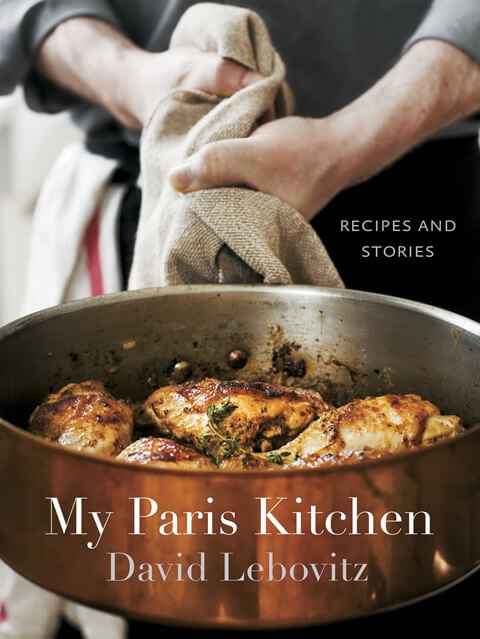
So I thought I'd write a bit about the darker, less-sweet, but multi-layered love of my life: onions and garlic.

I've been writing about the butter-packed cakes and pastries of Brittany for the past few weeks (and my expanding tummy), so I thought I'd introduce you to the other superstar of Brittany (and no, not superstar Brittany Spears, with her expanding tummy...although I suppose if I mention her name a lot here I'll get plenty of Google-ing from teenage girls searching for news of her impending delivery.)


oniosroscoff.jpg


The rose-colored onions of Roscoff, a small port village off the north coast of Brittany, which faces England. Beginning back in 1828, French farmers would load up boats with these pink onions to sell them from their bicycles in England, where the farmers were affectionately dubbed "johnnies" by the Brits.

When I arrived in France a few years ago, I was a surprised to find that red onions are rare and they were four-times the price of yellow onions. I reasoned that although French cuisine uses lots of onions, most often they're cooked to enhance their sweetness, and they become an essential backdrop for braises, stews, and casseroles...and most-notably in French Onion Soup.
Almost never will you be served raw onions served in France, and certainly not in Paris, where there is a distinct aversion to uncooked garlic, which surprises many Americans, who don't realize the people in Provence eat quite differently than Parisians. (Like the people in Chicago eat differently than people in, say, Hawaii or Texas.)


braids.jpg


Most of the appreciation for raw onions belongs to Americans (North, South and Central) and the British. And since the sweet red onions that I like so much are not only rare here, but expensive, on a recent visit to Roscoff, I lugged back to Paris a hefty 10-pound sack of the famed pink onions, recalling my Costco hoarding days, I suppose...(what the heck was I going to do with 10 pounds of raw onions?)


onionslices.jpg


The first thing I noticed when you cut open les onions roses, is that they're quite firm and fresh, with a appealing crispness with none of the softness common in yellow onions (compare cutting into a farm-fresh, crisp-art apple versus a soft, commercial apple, like the kind you buy at the airport, and you get the picture.)

So what was I to do with my fragrant, onion-y windfall?
When life gives you lemons, you make lemonade.
But Onion-ade didn't sound very appealing so I opened one of my favorite books, The Zuni Café Cookbook (which everyone should own) and turned to the recipe for Red Onion Pickles (page 270-271.) Since the Zuni Café is 6000 miles away in San Francisco, I have to make do with Judy's superb book in my efforts to recreate her dishes, with much success. I've been craving a hamburger for the past few months, I figured if I made the pickles, somehow a decent hamburgers would eventually find their way to me...right? A recent experiment making Salmon Burgers and trying to make American-style homemade buns (you try finding hamburger buns in Paris...) confirmed that when you really crave a hamburger, you should have a real hamburger, since anything else just tastes like a fishy substitution.


pickles.jpg


The Zuni Café's Red Onion Pickles


(Adapted from The Zuni Café Cookbook by Judy Rodgers)


Judy's recipe calls for 1 pound of red onions, peeled and sliced into rings. Make a brine with 3 cups white vinegar, 1½ cups of sugar, cinnamon stick, a few cloves, allspice berries and peppercorns. Add 2 bay leaves and a small dried chili, then bring it all to a boil in a 4-quart non-reactive saucepan.


The most vexing part was reading the instructions, which seemed to embody her philosophy of asking yourself, "Is there a more difficult way I can be doing this?"
Her instructions at first seemed complex (and since I'm an impatient cook, as you may notice, most of the recipes in my books are 1 or 2 pages, maximum), but when broken down into steps, her recipe was quite easy and took very little time but a bit of diligence.
The goal here is not to overcook the onions, preserving their crunch, sweetness, and delicate pink hue.


Simmer the onion rings, in three separate batches (that means, one-third of the onion rings at a time), for 20 seconds each (20 seconds for each batch) in the brine. Remove onions to a baking sheet using a slotted spoon to drain them, and let cool.


Then you do it again, simmer the onions in three separate batches, for 20 seconds each. Drain them, and cool.


Then you do it again...simmer the onions in three separate batches (yes, have you memorized it yet?... 20 seconds each...then drain them and let them cool.)


Finally you chill the brine thoroughly. Once chilled, add the onions and store in the refrigerator.

Sure enough, like all the recipes from Judy Rodgers, this one was a winner and tasted just like the Red Onion Pickles from Zuni in San Francisco.


Now what am I gonna do with the other 9 pounds of onions?
That's one pound down, nine more to go...

Is there anything more fabulous than something created through the wonder and miracle of caramelization?


kouignamanndone!.jpg


Is there no means and ends that one won't go to to experience that sigh with relief when one triumphantly pulls this perfectly-caramelized melange of butter, sugar, and salt out of their oven?
I think not.

Those wacky butter-lovin' Bretons invented this unique gâteau for delivering the maximum dose of caramel: an all-encompassing dessert, which does double-duty at tea time. And I've been obsessed with figuring out how to make a perfect Kouign Amann, one of my favorite caramelized things in the world.

And here are my results.

I searched long-and-wide for Kouign Amann recipes, which are rare...either they're really sketchy, assuming that no one will actually dare to make it, or they didn't work at all and I was left with a wet, buttery mess.

This week, I pulled disk-after-caramelized-disk out of my oven in a obsessive attempt to master this dessert that I love so much. This was also much to the delight of friends and neighbors, who never thought they could get enough Kouign Amann. After all my tinkering, by now they have.

I also learned why it was so hard to find a good Kouign Amann, it's a bit of a challenge. So if you'd like to make a Kouign Amann, here's a few tips I learned that will help you out before you get going...

It's been said the hardest thing about fresh shelling beans is finding them. If that's true where you live, you're missing something very special and one of the great treats of summer. You may have seen them at your market, but passed them by since you didn't know what to do with them. And for some, cooking beans bring up images of beanpots simmering for hours, which can turn your summertime kitchen into a sauna.


bean salad


But fear not!

Fresh shelling beans take just a few minutes to cook, and taste worlds away from those dusty dried beans in that crumpled brown sack that you got years ago at the health food store thinking at the time that they'd be fun to cook, but once you got them home, they lost their appeal and are withering away in your cupboard along with that rusting tin of ancient curry powder you used a teaspoon of a few years ago to make that recipe from one of the hottest chefs from the 1999 issue of Food and Wine from that chef with the wind-swept, and perfectly up-jelled haircut, named Grant who converted an abandoned loft into Charleston's super-hot new restaurant (it's now closed) with industrial fixtures his model/girlfriend found at the flea market and arty waiters (who seem to spend as much time at the gym as they do in their art studios) in jeans and tight black Banana Republic t-shirts and one waiter had kind of a cool tattoo, as seen in the close up shot of his arm while delivering a plate of grilled curried monkfish.


vertical bean plate


(Also in the back of that same cupboard is the bottle of dark corn syrup that you bought to make pecan pie and a few months later you found teeming with ants along the rim where the bottle didn't close tightly and you washed it in under boiling water, scattering ants around your sink, but made you fearful of re-opening the bottle and getting the rim and neck all sticky again and having ants scramble all over your fingers. You've think you've gotten them all, then you discover one three minutes later scrambling up your arm.)

I rest my case. It's better to buy fresh.


tomato plate


Fresh shelling beans are wonderful in summer soups, but I prefer them as unadulterated as possible. They're a snap to cook too. In France, there's even a shelling bean, les haricots de Paimpol, which have their own AOC status, which I used to make this simple summer salad. (If you want to see how reverential the French can be about their beans, be sure to click on the link.)


Fresh Shelling Bean Salad


To make a gorgeous summer salad with shelling beans, simply tear open the pods of the beans and pluck out the beans. A pound of beans will give you enough for about 4 people.

Bring a pot of lightly salted water to a boil and drop the beans in. Let them simmer for about 20 minutes. Taste one (careful, they're hot!). I like my just slightly firm, but not too crunchy. Most fresh shelling beans cook in 20 to 30 minutes. But cook them to your liking.

While they're cooking, make a simple vinaigrette using olive oil, your favorite vinegar, and if you have it, you won't be disappointed if you add a little pour of nutty walnut, argan, or hazelnut oil.

When the beans are done, drain them.
Toss the beans in the vinaigrette while they're warm, allowing them to absorb the lovely flavor of the vinaigrette better. If you want, add some chopped herbs, like basil and thyme, some freshly-ground black pepper and minced shallots (which are one of the great secrets of French cooking. Professional chefs use lots of shallots too. How come you don't use them?)
Let cool to room temperature. You can allow the beans to marinate for a few hours, which will improve their flavor.

Quarter some tomatoes, coarsely chop some fresh mint and flat-leaf parsley, and toss them with the beans. Taste for salt and seasonings.

Did someone mention tossing in some fresh, sweet kernels of corn?
Did I hear something about adding big chunks of crumbled feta cheese?
Isn't there anyone out there fighting for coarsely chopped green or black olives?

Yes, yes, and yes!

I eat bowlsful of this salad on it's own all summer long. It's great just as it is, or as an accompaniment to roasted chicken or pork loin, or grilled fish. And it's perfect for do-ahead entertaining.

Shelling beans: try 'em today!

Many people want to know;"How do you temper chocolate and why do you do it?"


rockyroad2.jpg

Homemade Rocky Road, from The Great Book of Chocolate, Enrobed in Tempered Chocolate


The short answer is that chemically, chocolate is composed of lots of different little crystals (six to be exact) but the desirable ones are called beta crystals. The development and formation of these beta crystals are what makes well-tempered chocolate.

If the cocoa butter rises to the surface, some people commonly think their chocolate's gotten moldy and toss it out. If you've done that, you've tossed out perfectly good, but unattractive, chocolate.


untempered.jpg


As you can see, there is a dull white sheen on the surface of this piece of chocolate.

So that's what happens to chocolate that's not properly tempered: the cocoa fat rises to the surface and "blooms", making it unappealing and unattractive. When you buy chocolate, like a candy bar, the chocolate's been tempered and it should be nice and shiny and snap when you break it. If you leave your candy bar in a warm car and later open it up, often it'll become white and gray. The heat caused your chocolate to lose it's temper. When you buy chocolate for baking, it should arrive well-tempered. But once you chop it up and melt it, the beta crystals change, the chocolate loses its temper, and you'll need to re-temper it again if you plan to use it as a coating. If you're going to cook with it, just use it in your recipe, as indicated.

Pages and volumes of technical research have been written about tempering chocolate, but here are the main reasons for all you home cooks out there:


  • To avoid fat (and sugar) bloom, characterized by unappealing white streaks or blotches on the surface.
  • To raise the melting temperature of finished chocolate so it doesn't melt on contact with your fingers.
  • To preserve the keeping quality of chocolate by stratifying the fat.
  • To cool chocolate quickly. Tempered chocolate cools fast, within 5 minutes.
  • To give chocolate a glossy, shiny appearance, and a crisp, clean snap when you break it.


As I've said, you don't need to temper chocolate is you're going to bake a chocolate cake or make chocolate ice cream. The only time you need to temper chocolate is when you need an attractive, shiny coating for candies that will sit at room temperature. You can get around tempering by dipping chocolates in melted, untempered chocolate and storing them in the refrigerator. Just remove them from the refrigerator a few minutes prior to serving them. The coolness of the refrigerator will stratify the cocoa fat and it's won't bloom.


Theo Chocolates


There's many different methods for tempering chocolate.
Some are really complicated, and some are really messy, especially for home cooks.

Many professional pastry chefs and chocolatiers can instinctively tell when chocolate is perfectly tempered by looking at it or touching a smidge it to their lip. However a few years ago I was doing a demonstration tempering a brand-new chocolate and it just didn't temper. I kept stirring and stirring, but I could visually tell those stubborn crystals wouldn't cooperate. So now I rely on a thermometer, which is foolproof.

After I studied chocolate-making and learning from the masters at Callebaut in Belgium and at L'école du Grand Chocolat Valrhona in France, I developed a simple 3-step method that's a snap for home cooks. All you need is an accurate chocolate thermometer, although a good digital thermometer will work. I bought one of those laser-thermometers just for fun, but there's a too-large margin-of-error and it only measures surface temperature, so mine's been retired to my kitchen cabinet.

Tempering Chocolate


1. The first step is melting the chocolate in a clean, dry bowl set over simmering water, to about 115° F.


2. The second step it to let it cool to the low 80°s F. I drop a good-sized chunk of solid (and tempered) chocolate in, which provides insurance by 'seeding' the melted chocolate with good beta crystals. While cooling, stir frequently. Motion equals good crystallization, aka, tempering.


3. The last step is the most important.

It's bringing the chocolate up to the perfect temperature, where it's chock-full of those great beta crystals. This occurs in most dark chocolates between 88° and 91° F. (Check with manufacturer if unsure about your particular chocolate.)


4. Remove what's left of the chunk of 'seed' chocolate, and your chocolate is dip-worthy: you can dip all the chocolates you want and all will be perfectly tempered. Don't let it get above 91° F or you'll have to begin the process all over again. If it drops below the temperatures, rewarm it gently to bring it back up.


For more chocolate tips, recipes, and information, check out The Great Book of Chocolate


GTCH.jpg


Related Posts and Links

Chocolate FAQs

Chocolate Thermometers

Agave-Sweetened Chocolate Ice Cream (Recipe)

Chocolate-Covered Caramelized Matzoh Crunch (Recipe)

Chocolate-Covered Salted Peanut Caramel Cups(Recipe)

The Easiest Chocolate Ice Cream Ever! (Recipe)


Caramel Corn


I tried various recipes of for caramel corn, some came out too dark, some not dark enough. So I worked and worked, until I settled on this one.


Caramel Corn


Adapted from Epicurious


2 tablespoons vegetable oil
1/3 - 1/2 cup popcorn kernels
1 stick (½ cup) unsalted butter
1½ cups packed light brown sugar
½ cup light corn syrup
½ teaspoon coarse salt
½ teaspoon baking soda
½ teaspoon vanilla extract
1 cup salted peanuts, or use any toasted nuts, such as almonds, pecans, or cashews.


Special equipment: a candy thermometer


Heat oil with 3 kernels in a 3-quart heavy saucepan, covered, over moderate heat until 1 or 2 kernels pop. Remove lid and quickly add remaining kernels, then cook, covered, shaking pan frequently, until kernels stop popping (or until your shoulder gives out), about 3 minutes. Remove from heat and uncover.


I ended up with 6 cups of popped popcorn.


(Premium American-brands of popcorn will yield more than mine did, about 8 cups of popcorn. If so, you may need to prepare 2 baking sheets in the next step.)


Line bottom of a large shallow baking pan with foil and lightly oil foil, or use a non-stick baking sheet.


Melt butter in a 6-quart heavy pot or Dutch oven over moderate heat. Add brown sugar and corn syrup, and salt and bring to a boil over moderate heat, stirring, then boil, without stirring, until syrup registers 300 degrees F on thermometer, 8 to 10 minutes. Remove pot from heat.


Using a wooden spoon or a heatproof spatula, stir vanilla and baking soda into the syrup, then quickly stir in peanuts and popcorn to coat. Immediately spread mixture over baking pan as thinly and evenly as possible.


Let cool completely, then break into bits.


Click here for more cookie and candy Recipes.


tomato plate


Recently the proliferation of heirloom tomatoes at greenmarkets harkens back to the days of yore, when tomatoes were beautiful and irregular and presumably so full of flavor that after one bite you could boast about how good it was for the remainder of your life and try to make everyone feel like you know something that they don't know and how much richer your life is than theirs because you've had this amazing tomato experience and they haven't.


Tomatoes


Nowadays the marketers and growers have gotten smart. It's fairly easy to come across tomatoes sold 'on-the-vine' that look old-fashioned. But when you get them home and slice them open, they taste negligibly better than any of the other tomatoes at the supermarket...and cost twice as much. They just have a redder color and come with their stems attached.


campari tomatoes


Here's an excellent recipe for encouraging flavor and sweetness from any tomatoes, even ones that are less-than-ideal, using a technique called making a confit. The slow roasting with olive oil concentrates and sweetens flavors, making ordinary tomatoes boast-worthy.


tomato.jpg


Confit of Tomatoes


Adapted from The Sweet Life in Paris


1. Buy some tomatoes, just about any variety will do. 2 pounds (1 kg) is a nice amount.


2. Wash and dry them, then slice them in half. Pour enough decent-quality olive oil in a baking dish so that it just covers the bottom of the dish, somewhere between 1/4 cup (60 ml) and 1/3 cup (80 ml) should do.


3. Sprinkle in coarse salt and freshly-ground black pepper, add a few branches of fresh thyme and/or a few sprigs of rosemary. Then line the bottom of the baking dish with the tomatoes, sliced-side down. Don't be bashful; it's okay to really pack them in.


4. Peel and slice 3 or 4 garlic cloves, slice them in half lengthwise and tuck them in the gaps between the tomatoes. Sprinkle the tomatoes with a bit more salt and a small sprinkling of sugar (less than 1 teaspoon) and add a few bay leaves.


5. Bake the tomatoes in a 350 F (180 C) oven until they are soft and cooked throughout (a paring knife should pierce them easily), which should take at least 45 minutes.


6. Once they're soft, remove them from the oven and let stand until room temperature. You can scrape the tomatoes and juices and herbs into a container and refrigerate them for up to 4 to 5 days or use them right away. They will actually improve as they sit.


Use them to toss into pasta, slightly chopped, or warm them and spoon them whole onto hot garlic toasts, perhaps with a few filets of good anchovies, and shower them with lots of fresh herbs. They're also nice served alongside a summer salad with some goat cheese, all drizzled with a bit of the tasty olive oil and juices.


Related Links and Posts

Canning Tomatoes (NCHFP)

Panzanella: Tomato & Bread Salad

Seville Orange Marmalade

Summer Tomato Salad

Cabbagetown Hummus

Apricots


I'm in heaven with all the sensational fruits that explode at the markets every summer. Each shopping trip, I invariably lug back with way too much fruit. But everything looks so good I can't resist; rosy nectarines, blushing apricots, and crisp, dark cherries.

So to help you choose the best summer fruits, here's some shopping tips. Best bets are often at Farmer's Markets, where the growers take primo care of what they're selling and often they encourage sampling before you buy.


sour cherries

Cherries

The most popular sweet cherry varieties are deep-dark red and plump, with moist, perky stems. Bing cherries are reliably excellent. Although some varieties, like Queen Anne and Rainier, are light red and yellow-colored, they have a more delicate taste, which some people prefer. Cherries should be washed, then stored in the refrigerator. Unlike most other fruits, cherries are more appealing when served very cold and crisp.

Avoid cherries that are wrinkled, which means they were picked a while ago. Split apart cherries means they got wet while growing and will mold quickly.


Mara de Bois

Berries

When buying berries that are packed in plastic or cardboard containers, peek underneath: moisture on the bottom indicates the berries below are soggy or moldy.

Strawberries should be uniformly red with no green at the tips or at the stem. (Did you know the cluster of seeds concentrated at the tip is referred to as a 'cats nose'?)
Strawberries should have a sweet smell. Some berries have been hybridized to be red on the outside, but disappointingly underripe within, so color's not always an accurate indication. Avoid buying commercial strawberries after rainy weather: since they grow near the earth, they're often sprayed with a rather nasty chemical to prevent mold. Look for organic strawberries instead.

If you're not going to eat strawberries the same day, store them on a plate in the refrigerator, in a single-layer, so they don't mush each other down.

Raspberries, blueberries, and other bushberries should be plump and dry. Blackberries should be inky-black and a bit soft, never rock-hard. There's nothing worse than a sour blackberry.

Blueberries should be firm. Most have no fragrance. Did you know that each blueberry can contain up to 100 seeds? If you don't believe me, slice one open and count. I never wash any berries since they're too fragile-except blueberries and strawberries.

Can you freeze fresh berries or pitted cherries? Yes. Lay the fruits out in an even layer on a non-reactive baking sheet (or line one with parchment paper.) Freeze. Once frozen, store in zip-top freezer bags. Frozen berries and cherries can be used for sauces, or added frozen mixed with other fruits for pies, crisps, and cobblers.


melons

Melons

It's been said that finding a good melon is like falling in love. Sometimes you have to try a lot of them to find the right one.

Judy Rodgers in The Zuni Cafe Cookbook insists that the best melons are the ones with lots of netting and claims not to have picked a bad one since learning that. I always take a good sniff. The most amazing melons I've tasted were melons that I could smell before I could see them.

Choose a melon that's heavy and relatively firm, but not-rock hard (except for honeydew melons.) Any mold by the stem end or mushy spots are indications of it being over-the-hill.

A simple melon dessert can be made by pouring sweet wine, such as Muscat or Sauternes, over slices of melon and berries and chilling them well. Store melons in the refrigerator.


Peaches, Elderberries, and Nectarines

Nectarines and Peaches

The best peaches have a sweet, perfumed aroma if you sniff the stem end. Peaches need to be picked a day before ripening, then ripened off the tree. Or better yet, the same day. If they're too green, they were picked too soon and will never taste good. Ditto for nectarines. Find fruits that are mostly red and blushing.
If faced with a bin of underripe fruits, find one that's rather soft and smell it. If it smells good, chances are the rest will be too, once ripe.


bag of apricots

Apricots and Plums

Neither of these fruits boast much aroma, but they make up for it with lots of flavor. Apricots should have an appealing blush and no green. Red-tinged apricots means they've received lots of sunlight and will likely be good. Apricots are best when they're gushy-ripe. They should be very soft, like a water balloon. My favorite variety are the Royal and Blenheim apricots.

Most of the flavor in plums are in the skin, and they make the best jam, especially when mixed with raspberries. Santa Rosa and Elephant Heart plums are reliably good.

Baked apricots are a superb, easy dessert: simply halve ripe, but firm apricots, place face-down in a baking dish, pour in a wine glass of white wine (dry or sweet), and drizzle with a copious amount of honey (use more than you think, as apricots get quite tart when cooked.) You can add a split vanilla bean too. Bake until the apricots are tender and juicy.

Delicious with vanilla ice cream!


Fruit Recipes

Baked Nectarines and Cherries

Berry Cobbler

Candied Cherries

Cranberry Raisin Pie

Lemon Tart

Persimmon Bread

Polenta Crisp Topping

Quince tarte Tatin

Red Wine-Poached Rhubarb

Rosy Poached Quince

Tropical Fruit Soup

Vanilla-Poached Quince

Warm Compote of Summer Fruits

God forbid you don't buy fresh bread every day in France. And I love bread, so it's not unusual for me to come home carrying more than I should.
So the problem is, it's rather difficult to eat all that bread.


Bread


So what to do with all that lovely leftover bread?

I make Panzanella, a Tuscan salad designed to use up lots of leftover bread, which we ate this weekend during an outing in the countryside. Tuscans don't salt their bread, which goes back to a long-standing rift between them and the people from Pisa, who controlled the prices of salt many years ago..and they say I hold grudges!

(But if you've had unsalted bread, you perhaps can understand why they have so much leftover.)

You can use any firm-textured bread you have on hand. I prefer levain bread, which is dense and won't fall apart when tossed around. But you should use what you have leftover as long as it's not too airy. And in spite of what everyone tells you, it's not vital to use pricey heirloom tomatoes:marinating them in copious amounts of fresh herbs will infuse ordinary tomatoes with summertime flavor. And feel free to use lots of chopped fresh herbs as well. Oregano, Marjoram, thyme, and fresh mint are all wonderful mixed in.


panzanellablog.jpg


Panzanella

About six servings


Adapted from The Sweet Life in Paris by David Lebovitz


4 cups torn pieces of hearty, country-style bread (approximately 1-inch/3 cm pieces)
1 teaspoon Dijon mustard
1¼ teaspoon sea salt
lots of freshly ground pepper
2-3 cloves garlic, peeled and finely minced
3 tablespoons red wine vinegar
1 red onion, diced
3/4 cup best-quality olive oil
8 medium tomatoes (1½ pounds/750 grams)
1 large cucumber, peeled, halved, and seeds scraped away
3/4 cup pitted black olives, preferably kalamata
1 cup packed (80 grams) coarsely chopped mixed fresh basil, mint, and flat-leaf parsley
(Note: I never measure herbs, so feel free to use lots and lots. The more the better!)
½ pound (250 grams) feta cheese


Preheat the oven to 400 degrees. Spread the torn bread pieces on a baking sheet and toast until deep golden brown, about 15 minutes. Stir once or twice as they're toasting. Set aside to cool.


In a large bowl, whisk together the mustard, salt, pepper, garlic, and vinegar. Add the diced onion and let sit for at least 30 minutes. Stir in the olive oil. Remove the stems from the tomatoes and cut into 1-inch (3 cm) pieces. Cut the cucumber into ½-inch (1½ cm) pieces.


Add the tomatoes and cucumbers to the bowl with the dressing. Add the bread, olives and fresh herbs and toss well. Taste, and add additional salt, oil, and vinegar to your liking.
Crumble the feta over the top in large chunks and toss briefly.

Stand back. This is gonna get messy.

cherries


I'm going to teach you how to make something without a recipe.

Before you panic, remember that your grandmother made lots of things without recipes and without measuring everything down to the last 5/9ths of a teaspoon. Just breath. That's right, it will be okay.

sour cherry jam

No-Recipe Cherry Jam


1. Buy as many cherries as you feel like pitting.

Usually I have the patience for about 3 pounds, but it's up to you. Figure one pound of cherries will make one good-sized jar of jam. Plump, dark Bing cherries work really well, although Burlats are good, and if you can find sour cherries, your jam will rock.


2. Wear something red. Or black. Rinse the cherries and remove the stems. Using the handy cherry pitter that I told you to buy a few weeks ago and pit the cherries. Make sure to remove all the pits since everyone is so litigious these days. Chop about ¾ of them into smaller pieces, but not too small. Leave some cherries whole so people can see later on how hard you worked pitting real cherries. If you leave too many whole ones, they'll tumble off your toast.


3. Cook the cherries in a large non-reactive stockpot. It should be pretty big since the juices bubble up. Add the zest and juice of one or two fresh lemons. Lemon juice adds pectin as well as acidity, and will help the jam gel later on.


4. Cook the cherries, stirring once in a while with a heatproof spatula, until they're wilted and completely soft, which may take about 20 minutes, depending on how much heat you give them. Aren't they beautiful, all juicy and red?


cherry jam


5. Once they're cooked, measure out how many cherries you have (including the juice.) Use 3/4 of the amount of sugar. For example if you have 4 cups of cooked cherry matter, add 3 cups of sugar. It may seem like a lot, but that amount of sugar is necessary to keep the jam from sprouting green whiskers after a few weeks in the refrigerator.


6. Stir the sugar and the cherries in the pot and cook over moderate-to-high heat. The best jam is cooked quickly. While it's cooking, put a small white plate in the freezer. Remain vigilant and stir the fruit often with a heatproof utensil. (Wouldn't it be a shame to burn it at this point?) Scrape the bottom of the pot as you stir as well.

And no matter how good they look, resist popping a warm cherry into your mouth. They are really hot, take it from me, and you will burn your mouth. Yes, take it from me.


7. Once the bubbles subside and the jam appears a bit thick and looks beginning to gel, (it will coat the spatula in a clear, thick-ish, jelly-like layer, but not too thick) turn off the heat and put a small amount of jam on the frozen plate and return to the freezer. After a few minutes, when you nudge it if it wrinkles, it's done.


wrinkle test


If not, cook it some more, turn off the heat, and test it again. If you overcook your jam, the sugar will caramelize and it won't taste good and there's nothing you can do. Better to undercook it, test it, then cook it some more.

Are you beginning to understand why all those gourmet jams are expensive?


Once it's done and gelled, add a bit of kirsch if you have it, clear cherry eau-de-vie which will highlight the flavor. Or add a few drops of almond extract, but not too much, or it will taste like a cheap Italian cake. Ladle the warm jam into clean jars and cover. Cool at room temperature, then put in the refrigerator, where it will keep for several months.


See, you did it!


Related Posts and Recipes:


Easy Jam Tart

Peach Leaf Wine

Quick Mincemeat Recipe

Red Wine-Poached Rhubarb

Seville Orange Marmalade

Shallot, Beer, Prune, and Cocoa Nib Jam

Strawberry Frozen Yogurt


USDA canning guidelines

Many people tell me this is one of their favorite recipes from my cookbook, Ready For Dessert. In addition to these fantastic Coconut and Chocolate Macaroons you'll find my infamous recipe for Fresh Ginger Cake which makes a fantastic summertime dessert served simply with sliced, juicy-sweet peaches or flavorful strawberries and raspberries.

macblog.jpg


I made a batch of macaroons for a Thai banquet last night here in Paris, where a happy alliance of French and American food bloggers (and food-lovers) got together for dinner. We chopped giant bunches of vivid-green herbs like cilantro, mint, and other greens with names that we learned have no English, or French translations. Jumbo prawns from Chinatown were quickly peeled and sautéed, and tiny branches of fresh green peppercorns were quickly skillet-cooked until tender.

Succulent beef was grilled and marinated in a spicy glaze then tossed with hot chilies, fresh cilantro leaves, and cooling slices of cucumbers. Things heated up as we simmered tea-smoked duck in red coconut curry sauce which was spooned over steamed rice fragant, with aromatic pandanus leaves. And I loved the shrimp stir-fried with vivid-green garlic shoots, which mellowed considerably once cooked quickly with the plump shrimp and Thai spices.


Coconut and Chocolate Macaroons

30 Cookies


From Ready for Dessert (Ten Speed)


4 large egg whites
1¼ cups sugar
¼ teaspoon salt
1 tablespoon honey
2½ cups unsweetened coconut (see note)
¼ cup flour
½ teaspoon vanilla extract
2 ounces bittersweet or semisweet chocolate, chopped


In a large skillet, mix together the egg whites, sugar, salt, honey, coconut and flour.


Heat over low-to-moderate heat on the stovetop, stirring constantly, scraping the bottom as you stir.


When the mixture just begins to scorch at the bottom, remove from heat and stir in the vanilla. Transfer to a bowl to cool to room temperature.

(At this point, the mixture can be chilled for up to one week, or frozen for up to two months.)


When ready to bake, line a baking sheet with parchment paper or silicone baking mat and preheat the oven to 350 degrees F.


Form the dough into 1 1/2-inch mounds with your fingers evenly spaced on the baking sheet. Bake for 18-20 minutes, until deep golden brown. Cool completely.


To dip the macaroons in chocolate, melt the chocolate in a clean, dry bowl set over a pan of simmering water (or in a microwave.) Line a baking sheet with plastic wrap. Dip the bottoms of each cookie in the chocolate and set the cookies on the baking sheet. Refrigerate 5-10 minutes, until the chocolate is set.


Note: Unsweetened coconut is available in most natural-food shops or you can purchase it online.


It goes under various names, such as coconut powder, medium shredded coconut, and coconut flakes. All will work well in this recipe.

The arrival of cherries means the dreariness of winter is definitely over, and I can finally look forward to a long, delicious summer of fresh apricots, raspberries, nectarines, peaches, and plums.
Once cherries became reasonable at the market (a little over a week ago, the Grand Epicerie had some for 50€ per kilo...about $30 per pound!) I'm using them as fast as I can pit 'em.

Although you might think it's funny to candy fresh something fresh, there are times perhaps your cherries aren't super-flavorful (like too early or too late in the season) and candying augments and intensifies flavor. And as a bonus, you'll end up with a lovely brilliant-red syrup which you can mix with Champagne for a fizzy and festive kir Royale. Once candied, these cherries will keep for a few weeks in the refrigerator. Spoon them over vanilla ice cream, stir them into yogurt, and toss them with nectarines or peaches for a summer cobbler.

candiedcherriesblog.jpg


Quick Candied Cherries

1 pound (450 gr) fresh cherries, rinsed
1 1/2 cups (375 ml) water
1 cup (200 gr) sugar
1 tablespoon fresh lemon juice

Remove the stems and pit the cherries (I use a handheld cherry pitter.)

In a large non-reactive saucepan (at least 4 quarts/liters) bring the cherries, water, sugar, and lemon juice to a boil.

Reduce the heat so the cherries are cooking at a low rolling boil. Cook for 25 minutes, stirring frequently during the last 10 minutes of cooking to make sure the cherries are cooking evenly and not sticking.

Once the syrup is mostly reduced and a brilliant ruby-color (with the the consistency of maple syrup), remove the pan from the heat and cool the cherries to room temperature.


Recommended Cherry Pitters

OXO Good Grips Cherry Pitter: Like all Oxo products, this one gets high marks from users.

Leifheit Cherry Pitter: All-metal cherry pitter, popular in Europe.

Leifheit Pro-Line Cherry Pitter: (I love that name!) This is a great contraption if you have a lot of cherries to pit. Keeps the cherries in a container, so it's less-messy to use than others.

There is nothing simpler to make than a fresh fruit granita. For me, the only hard part is finding real estate in my freezer for the pan to stir it up in.


But springtime means strawberries.

And lots of 'em!

gariguettes2.jpg

Years ago, taste was hybridized out of commercial strawberries in favor of firmness for long-term storage, but many farmers are growing varieties of berries that have lots of flavor again. At the San Francisco Ferry Plaza Market, you can get delicious Swanton organic berries from the coastal town of Santa Cruz. In France, I find lovely and fragile Mara de Bois now debuting in markets. But no matter where you live or shop, in supermarkets or greengrocers, you can determine quality by taking a big sniff. Where you find fragrance, flavor is sure to follow. And I find tossing strawberries in a bit of sugar and letting them stand for a bit releases their juicy sweetness and the berries become a rosy-red color.

juicy-berries.jpg

Granita is basically a shaved ice. No ice cream machine is needed. All you need is a fork. The mixture is simply raked while freezing. Once frozen, spoon the icy crystals over vanilla ice cream, or piled into a glass by itself, perhaps with a complimentary fruit sorbet, or maybe a dollop of sweetened whipped cream.

Strawberry Granita
About 6 servings

1 pound strawberries, rinsed and hulled
3 tablespoons sugar
1/2 cup water
optional: 1 teaspoon fresh lemon juice

1. Slice the berries into pieces.
Toss the strawberries with the sugar and let stand for at least one hour at room temperature, or up to four hours. The strawberries will be very juicy and a lovely red color.
Place a non-reactive shallow metal or glass tray in the freezer (a long, rectangular lasagna pan works perfectly, but you can improvise.)
2. After one hour, puree the strawberries and their juices with the water in a blender. Taste, and add a squirt of fresh lemon juice if desired. At this point, if you want to strain out any seeds, go ahead. I leave them in. What the heck.
3. Pour the mixture into a shallow pan in the freezer. Check after 30 minutes. As the mixture begins to freeze, use a fork to scrape the frozen puree that froze around the edges into the center. Return to freezer.

granita2.jpg

4. Check the granita every 30 minutes, and scrape again as before, perhaps with a bit more vigor as the mixture hardens. It should take about 2 hours of freezing and scraping to finish completely.

Purchase The Perfect Scoop from Amazon

bookcoversite.jpg

Purchase Ready for Dessert from Amazon

Twitter Updates

Loading Tweets...
Purchase The Great Book of Chocolate from Amazon

Recent Comments

  • Margaret said: "Central Market in San Antonio sells Mt. Tam -- can..."
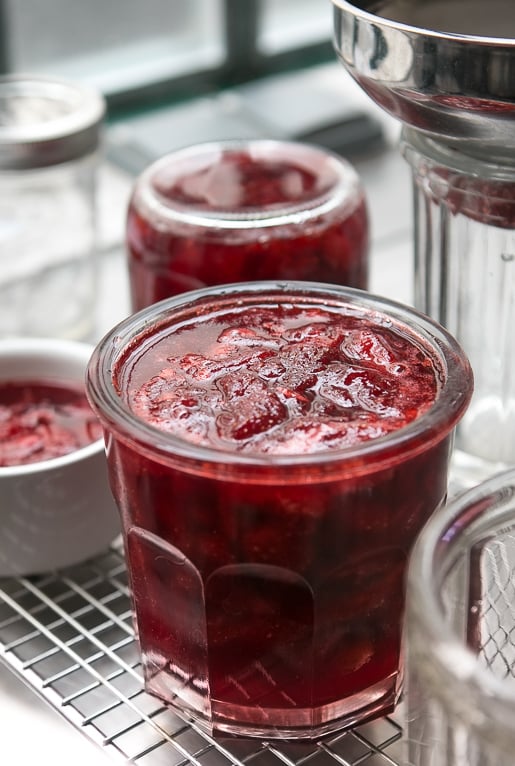
  • Jenny said: "David, Now that the iPad is out, when are you goin..."
  • Zang said: "David, I don't know what happened either. After n..."

Subscribe

David's Amazon Store

Monthly Archives

Archives By Date »

Browse by month: 2010

Browse by month: 2009

Browse by month: 2008

Browse by month: 2007

Browse by month: 2006

Browse by month: 2005

David Lebovitz

Purchase Room for Dessert from Amazon

Purchase Ripe For Dessert from Amazon

Marthacircle.gif