David Lebovitz
circle  Home My Books Bio Chocolate Tours My Paris Schedule Recipes Links
corner Circle     corner
 
Search My Blog:


The Perfect Scoop


Tours
Click Here For Exciting Information About Upcoming Chocolate and Culinary Tours


Visit the Travel Blogs Ad Network and the Food Blog Ad Network to advertise here.


Categories...


Add me to your RSS:


Room For Dessert


Read My FAQs


Ripe For Dessert


Visit David's Flickr Page
www.flickr.com
This is a Flickr badge showing public photos from daveleb. Make your own badge here.


Archives
March 2008
February 2008
January 2008
December 2007
November 2007
October 2007
September 2007
August 2007
July 2007
June 2007
May 2007
April 2007
March 2007
February 2007
January 2007
December 2006
November 2006
October 2006
September 2006
August 2006
July 2006
June 2006
May 2006
April 2006
March 2006
February 2006
January 2006
December 2005
November 2005
October 2005
September 2005
August 2005
July 2005
June 2005
May 2005
April 2005


Best Chef's Food Blog 2006
"Best Chef's Food Blog 2006"


The Independent
"The best food blog in the world"


The Wall Street Journal
"Blog Watch 2006"


About
"Top Ten Food Blogs" by About.com


WellFed.com Best City Food Blog
"Best City Food Blog 2005"


David Lebovitz Archives: May 2006

« April 2006
Main
June 2006 »

Paris is Degrading
line

May 31, 2006 | Comments (16)

According to LOI n° 2006-11 du 5 janvier 2006 d'orientation agricole, article 47...


parisnectarines.jpg

Go France!


...as of January 1, 2010, all plastic bags in France will be compostable and biodegradable. The new sacks are being introduced this week as part of a campaign to promote people shopping at the outdoor markets. Aside from their obvious ecological advantage, they're incredibly soft and supple. I told my fruit vendor that they felt "comme un fesse du bébé" ("like a baby's bottom") and he just looked at me, sort of perplexed and stunned.

I guess that didn't translate very well, and I'm certain I'm now on some master liste de dégradeurs at the Préfecture de Police.


Permalink


A Salt With A Deadly Weapon
line

May 29, 2006 | Comments (27)

"You're A Winner!" said the email.
"You've won a Katana Series Nakiri knife, from Calphalon."


knives.jpg


While I seem to be the quintessential person who never wins anything (except the fabulous no-expense paid trip to Paris that I'm enjoying), and I don't remember putting my business card in the raffle fishbowl, I was happy to accept. And the knife made a lovely addition to my Katana kollection, joining the smaller one that I already owned. I've been using both, and they're really rather incredible knifes. I love the handles, and the blades are scary-sharp. Which is good.

While we're on the subject of deadly weapons, let's talk about salt. Everyone is scared of salt.
I don't pay much attention to hot-shot chefs, but I'd read that Thomas Keller was once asked what makes a good cook, and he replied, "salt". He summed it all up in one simple word, and that's truly what it all comes down to...and that's why he's a great chef and I bought his French Laundry book even though there's no way in h-e-double-toothpicks I'm ever going to make anything from it. But if he can use it, so can you.
So no matter what you do to food, whether you whip it into a foam, toss it on the grill, spend 17 hours cutting it into little itty-bitty cubes that people wait 6 months to taste, or churn it in your ice cream maker, salting makes all the difference in cooking and baking.

A lot of people are afraid of salt, citing health concerns. Yet experts tell us that if you stay away from pre-packaged convenience foods, the average person only consumes about 1 1/2 teaspoons to salt per day. Although I should talk...I can't have enough of it and sometimes buy it by the kilo. So maybe at this point you'd be wise to just scroll down to the recipe.


fleurdeselenorme.jpg


I mostly sprinkle top-quality salt on top of things, as a finish, where you're going to taste it rather than adding it all at the beginning of the recipe where it can get lost. Whatever salt you use, I recommend coarse salt crystals, since the larger pieces take longer to dissolve, thereby giving your palate more time to experience the complexity of flavors, rather than just dissolving into a salty mouthful like fine salt does. Plus most commercial salt has additives which give the salt a bitter, acrid taste.

If you don't know what fleur de sel is, you should. It's fine crystals of salt that's hand-harvested in marshes in Brittany, off the Atlantic coast of France. Although lots of fleur de sel-style salts have been showing up from Italy, Portugal, and elsewhere, the best fleur de sel is from the Guérande. I use it on everything; its fine, delicate taste is best appreciated when sprinkled over things, as mentioned above, rather than dissolved (like in soups) so it's best to save it for places where it can be appreciated.

Fleur de sel is admittedly pricier than ordinary table salt, but when people balk at paying 5 or 6€ for a container of salt, that will cost them pennies (or centimes per day), they get all freaked-out. (Hey, it's cheaper than gas, and lasts longer.) Just a last-minute flurry over a slab of foie gras or dark chocolate bark will give it a curious, other dimension. When you start using it, you'll be as hooked as I am. You'll never go back to ordinary table salt again.

I only buy fleur de sel harvested in Brittany, and I've recently befriended a récolteur who invited me to his marshes this summer to rake and harvest salt. His salt is incredible; light and flaky, with the fine, delicate taste of the sea. He sells his salt in Paris and I always tell guests to stock up here, since it's one of the true bargains in Paris. A 250 g bag costs just 4€ ($5), which translates to .0136986 cents per day.

fleurdesel.jpg


So I hereby give you permission to spend a little bit more on salt. It will improve your cooking, just like upgrading to a good olive oil will improve your salads (and really, how much do you use?) If you don't believe me, take this simple test: Taste a few grains of fleur de sel. Then taste a few grains of commerically-available fine table salt. I can almost guarantee that you'll never use ordinary table salt again.

This is one of my favorite recipes for using fleur de sel, crispy Salt-Roasted Peanuts. These are terrific with cocktails or aperitifs, but I also like to enrobe them in bittersweet chocolate and if you're making Hot Fudge Sundaes, they dynamite sprinkled over the top.
They also make a great snack when you're updating your blog.


peanutsblog.jpg


Salt-Roasted Peanuts

2 cups (300 g) raw peanuts
1/4 cup (80 g) light corn syrup
2 tablespoons (30 g) light brown sugar or cassonade
1 1/2 teaspoons fleur de sel

Preheat the oven to 350 degrees F (175 C).

Lightly oil a baking sheet or line it with a silicone baking mat.

In a bowl, mix togther the peanuts, corn syrup, and light brown sugar, until the peanuts are well-coated.
Sprinkle the salt over the peanuts and stir just a few times, but not enough to dissolve the salt.

Spread the peanuts evenly on the baking sheet and bake for 25-30 minutes, stirring three times during baking, until the nuts are deep-golden brown and glazed.

Cool completely, then store in an airtight container immediately, to preserve their crispness.

Store in an airtight container for up to 1 week. Makes 2 cups.


FAQ's

I can't find raw peanuts.

You can use roasted, unsalted peanuts, and reduce the baking time to 15 minutes. I buy raw peanuts in Asian markets.

Can I use other nuts?

I never have, but let me know how they turn out if you do.

What if I can't get light corn syrup where I live?

Use glucose, available at professional pastry supply shops.

Can I use honey or golden syrup?

Yes, but they'll be stickier and not as crisp.

Can I use another salt?

You can use any coarse sea salt, but choose one that's light-tasting. I like Maldon salt from England very much, as well.


Permalink


Ten Thoughts For The Weekend
line

May 26, 2006 | Comments (31)

1. I would like to state, once and for all, to clear up the persistent rumors: It was indeed a Grilled Cheese Sandwich.

2. I became a Treehugger.

3. I learned that if your French doctor prescribes suppositories, it's not a good idea to take one just before going to yoga.

4. Am I the only one that hopes that if Star Jones Reynolds keeps losing weight, she'll eventually disappear for good?

5. The Good News: I discovered that Amazon just started carrying high-quality frozen passion fruit puree from an excellent source.
The Bad News: They don't deliver to Paris.

6. I found a great method for using up my mini-marshmallows.

7. Pim's coming to town.

8. Will Tom and Katie, Charlie and Denise, and Britney and Kevin just divorce already, so I can finally move on with my life?

9. There's a new product that can change everything, everywhere.

(Be sure to check out the voicemail "Testimonials" too.)

10. Please help me explain to my French friends: Martha Stewart, foods designed specifically to be eaten while driving, Betty Crocker, "The Customer Is Always Right", The B-52's, why public schools need to hold bake sales, a treehugger, the Pillsbury Dough Boy, Rocky Road Ice Cream, and the electoral college?


Permalink


Paris Organics
line

May 22, 2006 | Comments (34)

When I take Americans to a market here in Paris, a common query is, "What do they think about organics in France?"

The two markets I shop at regularly, the Richard Lenoir Market and the Marche d'Aligre, don't have much in the way of anything organic. There is one vendor who regularly shows up at the Richard Lenoir market with a gorgeous array of fruits and vegetables. The downside is the price is much, much higher than conventional produce, often 3 to 6 times higher. Still, I always stop to take a look and admire what she has and since it can be difficult to find unusual vegetables here, such as parsnips and multicolored Swiss chard, I sometimes buy from her, but wish that I wasn't so frugal.
*sigh*, I am my mother's son.


bioasparagus.jpg

Asperge Sauvage: Delicate Wild Asparagus


I've spoken to a several French chefs about organics, inquiring why it's not really a movement here in France like it is in the United States.

Surprisingly, every response is similar; "Why are Americans so obsessed with organics? We use very little pesticides on the produce in France."

While I don't have exact facts and figures, from the looks of fruits and vegetables, I would take an educated guess that the French probably use as much, or as few, pesticides as any other industrialized nation. Is the movement really a major cultural change in the United States? Are Americans finally taking a much closer look at the foods we eat? I would definitely say "yes", as evidenced by the popularity of natural-foods megastores, artisan chocolates, and the like, but that doesn't seem to be happening here. Maybe it's because the French never strayed that much from their agricultural roots to begin with. Farmhouse cheeses and good breads are easily available, even in supermarkets, and wine is chosen based on the region, not by the grape variety (which is changing, in a rare nod to globalization.)

Most French chefs seem primarily interested in the terroir, that vaguely-translatable term that means that the product is a sum of the elements from where it's grown; the soil, the climate, the cultivation techniques...the 'territory' of origin, gives food its certain "Je ne sais quoi." That's why the sweet corn in New England will always taste different than the corn in California, even if it's the same variety. Or brownies in America taste better than the ones in Paris (I think I'm the first person to ascribe terroir to brownies). And why baguettes taste much more authentic in Paris than the ones in America.


biochips.jpg

Going bio in Paris? No need to deprive yourself of les chips.


I seem to be one of those people who goes organic when it's truly better tasting, when buying or eating American beef, or isn't priced stratospherically high. The organic carrot juice at Trader Joe's that's 50 cents more seems to be a price difference I can live with. But there's no Trader Joe's in Paris, yet, and I don't forsee their arrival anytime soon. And I try to live responsibly; I bring my own basket to the market, I schlep my lettuce-washing water to my plants after washing salad greens, I don't drive in Paris (which is why I'm still alive), and I've never, ever thrown away a twist-tie in my life, and guard my stash of them with my life (...thanks for that one too, mom.)

But then I worry if washing my plastic bags for re-use wastes more energy in water usage than simply tossing them out. Is sporting a wicker basket at the market mark me as a tourist? And my first (and last) experience buying 'green' toilet paper made from recycled wood pulp was, um, rather unpleasant.

I spent over 13 years working at Chez Panisse, where Alice Waters insisted that we forage as much of our ingredients as possible from organic producers and sources. At first we had some difficulties, but soon we found we were able to get most of what we wanted organically and developed wonderful relationships with farmers. Since we paid more, they'd spend more time growing what we wanted. Alice didn't mind that food costs were very high, spending $5 per pound for organic butter, and the like. She encouraged us to be leaders in a global movement, which was possible due to the high profile and popularity of Chez Panisse. Being in sympathetic Berkeley perhaps didn't hurt either.


biobreads.jpg

Organic Breads


But it seems now it's fashionable to complain about organics and there's lot of articles I've read lately that attack organics. I wonder about the backlash that's happening. Yes, the organic movement is criticized for being hi-jacked by big business. But don't we want Frosted Flakes to go organic? (Not that I eat Frosted Flakes...) And don't we want Coke without all the preservatives? (Not that I drink Coke either...) But isn't it better than all those chemical being dumped into our eco-system?

The same people who joke about the high price of shopping at "Whole Paycheck" don't seem to remember that a little over a decade ago, finding anything like radicchio, goat cheese, espresso, blood oranges, and hearth-baked breads was practically unheard of. And they also don't seem to mind spending a fortune on cars, gym memberships, and watery soy lattes. Just a few years back, if you wanted anything organic or 'natural', you had to brave getting trampled by Birkenstocks or getting strangled by someone's dashiki drawstrings while sorting through crinkly apples rotting in wooden bins at the health food store.

There's been lots of press about the downside of organic. We've all been saying how we wanted better foods available to all (Safeway has introduced an organic line) and how it's out-of-reach for the less well-off (Wal-Mart is soon to introduce several lines of organic goods.) But the scare to small farmers and growers is that the large corporations will flex their muscles to force down prices, and the little guys will go out of business, who can't compete with corporate organic agri-giants. That's why I'm a 'local trumps organic' kinda mec. I feel it's far more important to keep local businesses and neighbors afloat. Still, I can't help but give credit to large corporations for responding to the public and expanding the availability of organics to the masses.


green&blacks.jpg

Green & Black's organic chocolate...coming soon to a superstore near you.


We have two thriving organic markets here in Paris and even though they're across town, I'm trying to visit them more often. One is the Batignolles market in the 17th, and the other at Boulevard Raspail, which draws a bit more of an upscale crowd, including an occasional Brangelina sighting. On Saturday, we braved the intense rainstorm, which alternated with moments of brilliant sunshine, and sloshed around the Marché Biologique Batignolles.


biovegetables.jpg

Organic vegetables at the Batignolles market.


There were beautiful vegetables everywhere, that the crowd seemed to be buying. Yes, prices were higher, but to me, they seemed proportional to the exceptional quality of most of what was available: rounds of organic camemberts and wheels of brie de meaux, mounds of golden-yellow butter riddled with flecks of sea salt from Brittany, and meaty pâtes and pintades, of Guinea fowl, raised in the open-air of the French countryside.

One of the most curious things we saw people frying up the globally-loathed veggie-and-lentil patties, which resembled what people used to think of as 'health food' back in the days of yore....although I'm probably guilty of frying up perhaps a few of them a while back as well. Still, to do it publicly should be a crime. Especially here in Paris.

There's a certain amount of potions, creams, and tinctures for what ails you, as well as lots of beautiful, dense, grainy breads. One vendor had wood-oven baked breads made with everything from kamut to buckwheat, quinoa to cornmeal, and dark Russian rye that was as black as charcoal, which I would have bought except I had three loaves of bread sitting in my kitchen. My 'French Bread Crisis', as I call it...how can I possibly eat all the bread I seem to collect?

So there is a thriving organic movement here, although I got the feeling that most people were like me; shopping there because of the exceptional quality of the food. Now that the weather's nicer (mostly), I'm going to venture across town more often to the Batignolles market on Saturdays, to support the local producteurs.

Perhaps if I support organic cheesemakers and boulangers, I won't feel quite so guilty buying non-recycled toilet paper.

Now if I could only find some that was locally-produced, then I'd be in business.


Marché Biologique Batignolles
Every Saturday morning
Métro: Rome

Marché Biologique Raspail
Every Sunday morning
Métro: Sèvres-Babylon

Permalink


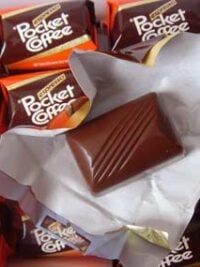
Pocket Coffee® Haiku, Revisited
line

May 19, 2006 | Comments (17)


Trim cube of chocolate

Gush out liquid espresso!

Clever caffeine cloak


pocketcoffees.jpg


On the exact same day I received an email asking if I knew of any sources that ship my beloved Pocket Coffee®, my friend Maureen Fant from Rome, sent me a source which ships Pocket Coffee® to the United States. And this month they're offering free shipping until the end of May.

(Even though we share a common border with Italy, they're not available in France. Can I get an explanation, please?)

So get 'em before summer...when Pocket Coffee® sadly goes on worldwide distribution hiatus.

Except here, of course, where we're on permanent Pocket Coffee® hiatus.


Permalink


Favorite Paris Restaurants
line

May 17, 2006 | Comments (24)

Here are some of my favorite places to eat in Paris. This is not an exhaustive list, and I've mentioned many of my other top picks here on the site, so you can use the search engine to find them. And there's others on My Paris page here as well.
I don't normally write up restaurants that I eat at here on the site since, to be honest, when I go out, I'd rather just enjoy the experience and not think about what I'm going to write about as I'm eating, setting up a tripod and taking pictures, and they giving you a play-by-play retelling of what-course-came-after-what-course.

(Actually, the truth is, we're all usually having too much wine and too much fun to remember much, other than if I had a good time or not. I'd make a lousy restaurant reviewer.)

Several of these are also not fancy places. Sure, many people come to Paris for fine-dining, and you can find many of those addresses floating around guidebooks and online. But sometimes you just want a big plate of vegetable salads instead of half a carrot garnished by a shredded basil leaf with a dot of saffron sauce. I've included a few stand-by, reliably decent restaurants in case you happen to be in Paris on a Sunday, when many places are closed.

If you have some favorite places that you'd like to share, I'd love to hear about them since I'm always looking for new places to try and I'm sure others would too.
Feel free to leave your dining suggestions in the Comment area.


meat.jpg

Before you start, here's a few tips when dining in Paris:

  • It's always a good idea to reserve a table. Even if you arrive and the place is virtually empty, they like to know you're coming and you'll get a warmer welcome. Unlike the US, often you can call most restaurants that afternoon and get in easily. Hot restaurants, or ones that are fancier, you should call about a week in advance, or longer. Don't bother using email links on most restaurant's websites here since you're unlikely to get a response.

  • Don't be embarrased to order wine or water by the carafe. You probably think you'll feel like a cheapskate...but get over it. If you look around, most of the Parisians are doing the same thing. And yes, the water is safe to drink in Paris. Why do people keep asking that?

  • Adding a tip is not required, but in spite of what you hear, most people leave a little extra for good service. If the check is 28€, you could leave 30€ if you were pleased. Or if your meal is 95€, you could leave 100€. But remember that it's not required and if they don't bring you back your change, request it. I've had a few places pull that one (in Paris and in the US.) It's rude and presumptuous.

  • LIke anywhere in France, always say Bonjour or Bonsoir when entering a restaurant, and when you leave, say Merci. Preferably add a Monseiur or Madame along with it.

  • Many restaurants have 'deals' at lunch, or fix-price menus that are often a bargain. Some have them at dinner as well, and they're generally a good value.

  • Please, do not bring out your hand sanitizer at the table. Do your grooming in the bathroom.

  • No one has doggie bags, so don't even ask. (Although a friend of mine showed some cleavage and got one. Once.)

  • No one has ice, so don't even ask. (Ok, well, you might get one or two. Wear something low-cut if you plan to ask.)


Rôtisserie Beaujolais 19 quai des Tournelles, tel 01 43 54 17 47. Grilled and spit roasted meats, and typical French fare. In the 5th. Avoid seats just next to the opening to the oven...it's très hot and they like to stick out-of-towners there, who they think won't complain. But I do since they invariably lead me to it. Open Sunday night.

Chez René 14, blvd St. Germain. Tel 01 43 54 30 23. Great French classics. The best Coq au Vin in town, with a sauce as smooth as velvet. If you don't order the fix-priced menu, be prepared for a lot of food. It's quite an experience and the cheese plate(s) is/are insane. Dinner menu, approximately 40€. In the 5th. You didn't hear it from me, but there's a clear brandy digestive hidden behind the bar...with a snake in it!

Cuisine de Bar 8, rue Cherche-Midi (M: Sevres-Babylon), tel 01 45 48 45 69, in the 6th. Open-faced tartines, or sandwiches, served on pain Poilâne, the famed bakery next door. Order the 12€ formule with a salad, tartine (I like the one with sardines and flakes of sea salt, or poulet with anchovies), a glass of wine or bottle of water, café and a spiced cookie. Very casual yet chic. And friendly. No reservations...lunch only. If the wait it long, they'll often pour you a welcome glass of wine.

L'As du Falafel On 34, rue des Rosiers in the Marais (M: St. Paul), closed Friday night and Saturday for the Jewish holidays. The best falafel anywhere! Join the crowd clamoring at the window. A dive & definitely a must...decent frites as well. One dining room is non-smoking. No reservations.

For something vegetable-oriented, Chez Marianne in the Marais at 2, rue des Hospitalieres St. Gervais, tel 01 42 72 18 86. Come here for decent Mediterranean salads. You choose a combination plate of 4, 5, or 6 salads. This is a good address to know about if you're craving something without a lot of meat. Perfect with a bottle of house rosé. Approximately 20€. Reserve, or wait for eternity. Can be a bit smoky, but open every day and night.

Chez Omar is one of my favorite restaurants in town. Specialties are couscous and they have excellent steak and French fries as well, but I always have the roasted lamb, or méchoui d'agneau. Very lively, no reservations. Open daily for lunch and dinner, as well as Sundays. If you go for dinner, be prepared for a wait after 8:30pm. Don't let any Parisians cut in front of you! A simple shove with your shoulder, followed by a very apologetic "Oops! Pardon" is usually all it take to get them to recede. Do it firm enough and you'll only need to do it once. Trust me. Moderate prices, which do seem to keep climbing each time I go. In the 3rd, at 47 rue de Bretagne. (M: Temple or Arts and Metiers)

Another great couscous place that's less-hectic is L'Atlas, with fine Moroccan food. Feathery light couscous and savory tagines. Skip the first courses. Not fancy nor too pricey considering the fine food and gracious service. DIne in the lovely tiled dining room, or outside in fine weather. Located at 12, St. Germaine des Pres. Vegetarians will love the large selection of seafood tagines. Tel 01 44 07 23 66 (M: Maubert-Mutualité), in the 5th.

Bistrot Paul Bert 18, rue Paul Bert, tel 01 43 72 24 01 (M: Faidherbe-Chaligny) Out of the way, but definately worth going to. I love this restaurant. Some of the best desserts in Paris too. Offers a 3-course fixed menu for 32€. In the 12th.

Les Papilles 30 rue Gay-Lussac, tel 01 43 25 20 79. Wine bar and light, 'market-fresh' food. Menu approximately 30€. In the 5th. Small portions, but cheerful staff. (Update: Follow link...I stand corrected about portion sizes!)


Permalink


Save The Internet Day
line

May 16, 2006 | Comments (4)

I love the internet.
It allows me to trans-Atlantically track the demise of Star Jones Reynolds, witness the triumph of man over beast (which some might say bears an eerie resemblance to the previous scenario), and allows otherwise successful writers to fritter away his... I mean...their talents, in lieu of earning a living.


blog_image.jpg


Today is Save The Internet Day.
Living abroad often makes me forget how the US government valiantly fights on behalf of its citizens; making sure that you won't suffer the dire consequences posed by raw milk cheese, ensuring that 47 million people living in the richest country on the planet don't have to worry about that pesky health insurance, racking up a staggering $305 billion dollar deficit, and introducing legislation making high-speed internet accessible only to the highest corporate bidders, blocking or slowing access for other web users using search engines, telecommunications devices, and visiting a host of web sites and, gulp, food blogs.


If you can't imagine your access to the internet being reduced, think again. It's about to happen. And soon. Really.

Concerned? Read more about it here.


Permalink


A Maison of Chocolate
line

May 14, 2006 | Comments (20)

We often take things for granted.
Me, for example. I take things for granted. I get messages from readers, "You're so lucky! You get to live in Paris!".

(In addition to the other messages, like..."If you hate Paris so much, why don't you leave!")

To be honest, it wasn't like one day back in San Francisco I came home and there was an envelope waiting for me with an airline ticket, an apartment lease, and all the blanks filled in on the paperwork filled for a French visa. It's a lot of work living in a foreign country; it's so much easier just to stay 'home'. So when people say I'm 'lucky', I prefer to substitute the term 'fortunate', as living in Paris has some challenges (nasty salespeople and Steve Seagal concerts) but also its rewards.

But each and every time I step out of my apartment, I'm amazed at the beauty that surrounds us here. Everywhere you look is something special, from the stately Place des Vosges to the over-the-top Opera Garnier. Perhaps I'm a dork, but each time I pass something of significance, I stop and take a long, deeply-felt look. There's fresh bread everywhere too. I can have a buttery croissants, a rich, cream-filled éclair, a yeasty kugelhof, or a scoop of glace Berthillon whenever I want.

(Except on Monday and Tuesday, when Berthillon is closed. Or in July or August. Or on Tuesday and Wednesday, when my bakery with the good croissants is closed. And in August. Although this year it might be July. Or on weekends, when the place I go for kugelhof is baking them. If they're in the mood, of course. But I won't know that until I get there. Unless there's a holiday. Or a strike.)


lamaisonchocolate.jpg


Anyhow...I spend a fair amount of time here exploring the chocolate shops, which seem to keep reliable hours. Nowhere in the world is more devoted to chocolate than Paris, and there are really excellent chocolatiers here, who I visit and write about often. But although we're often excited by what's new and unusual, sometimes we return to the classics for a reason: the simple fact that they're really good.

Robert Linxe founded La Maison du Chocolat in 1977. He was a young man from the Basque region, famous for its abundance of chocolate shops, although many are sadly gone. When he opened shop in Paris, M. Linxe distained fillings heavy with nuts, spices and sugar (which had quite a long shelf life), in favor of smooth, creamy (and highly-perishable) ganache, that suave mixture of pure chocolate and heavy cream, which has since become synonymous with fine chocolates that we enjoy today.

Last week we held a private tasting at La Maison du Chocolat for my guests, which reminded me that I had forgotten how absolutely extraordinary their chocolates were, and still are.

Each time I bit into one, I found something new and delicious, wondering how a chocolatier could consistently hit it exactly right with every bite of chocolate. Each one was melting, pillowy-soft, with the true, fresh flavor of whatever M. Linxe had infused.

Zagora is my favorite. A melange of dark chocolate ganache steeped with fresh mint leaves. Bacchus is filled with Smyrna raisins soaked in the best Caribbean dark rum, then flambéed. And a life-changing Andalousie, where just the right amount of grated lemon peel is mixed with the ganache, is resplendent with spritzy lemon oil without a hint of bitterness, tasting remarkably like grated lemon that was zested just moments before.

When I went back a few days after the tasting to personally thank them for their warm and generous hospitality, I was offered a few more chocolates to sample. Not wanting to be rude, I pulled up a seat at the counter and unwrapped Cerise Griotte, a house-made candied sour cherry enrobed in dark chocolate, which exploded in my mouth, a wash of bitter-sweet cherry liquid bathed in alcohol with a thin, dark chocolate coating...it was pure heaven. Before I could even ask, the salesperson came by with a napkin for me to spit out the pit. (Wow, a salesperson that doesn't argue with you.)


linxebook.jpg


I felt like I was coming back home, as I'd first discovered chocolates from La Maison du Chocolat what seemed like so long-ago while on vacation a long time ago in Paris. And here I am now, rediscovering them all over again. La maison means home, and I do feel indeed fortunate, and just a bit lucky, that I get to live here.
And that this is home.


La Maison du Chocolat
52, rue François 1er
Tel: 01 47 23 38 25

Other locations across Paris, as well as in London, Tokyo, and New York. All chocolates ordered through the La Maison du Chocolat web site are handmade in their Paris workshop.


LATE-BREAKING NEWS: I just tried the Rigoletto Noir, buttery caramel mousse enrobed in dark chocolate.
Wow...simply sensational.


Permalink


Concert...Exceptionnel?
line

May 12, 2006 | Comments (18)


stevenseagal.jpg


Permalink


The Goofus and Gallant of Chocolate
line

May 10, 2006 | Comments (25)

I can't tell you how many times people ask me, "Aren't Parisians rude?"


nocones.jpg


Unlike Americans who are nice 100% of the time, yes, there are rude Parisians. And today I met one.

I took my guests into a well-know chocolate shops, whose name I won't mention (ok, twist my arm...Jean-Paul Hèvin). My normal mode for visiting chocolate shops is this: We go inside, we meet the chocolatiers or salesperson, I explain the chocolates, often we'll do a tasting, then guests will buy some chocolate to bring home. On occasion, some folks like to take a photo.
And I always ask politely before taking photos anywhere in Paris, even if I know it's okay. It's a courtesy. If someone says, "No, we don't allow that here", I'm fine with that. Several places in Paris have a no-photo policy, as do several places in the US (Central Market, Trader Joe's, and Whole Foods, for example). My thoughts are that we're on private property and it's the owners right to deny or approve photos.

Fine.

So I ask at Jean-Paul Hèvin if it's okay. The salewoman looks at me and says (and I'm not making this up), "You can only take a picture after you buy something."

Incredibly tacky. Oui?

After I had a few 'words' with the shopkeeper, we finished our tour and I came home and deleted any and all references to Hèvin in the two magazine articles I'm writing and a future book project.
Au revoir.

One of my guests, however, said it was a very interesting lesson, illuminating the difference between rude & unwelcoming vs generous & gracious. And speaking of generous and gracious...


michelchaudun.jpg


This is Michel Chaudun.
He's the owner and chocolatiers of his own shop, Michel Chaudun, located just a few blocks away. M. Chaudun was the head chocolatier at La Maison du Chocolat before striking out on his own twenty years ago.

When we showed up at his shop, M. Chaudun was preparing to make a delivery but when he saw me, he came over to warmly greet me and my guests. As you can see from his charming smile, M. Chaudin clearly loves what he does. I not-so-secretly wish that he was my grandfather.


pavechocolate.jpg


We tasted many chocolates, from cocoa nib-flecked disks of pure dark chocolate to tasty bits of crisp caramelized almonds enrobed in bittersweet chocolate, but my favorite are always Les Pavés, tiny squares of singularly-perfect ganache. Each one is the perfect bite of chocolate. He also had us sample a new chocolate, filled with a smooth paste of toasted sesame seeds and surprisingly, peanuts. (He created them for his shop in Tokyo since the French have the same distaste for peanuts in chocolate that Americans have for bull scrotums in tripe sauce.)

He's also the master of chocolate sculptures and whimsical forms, including an exact replica of a Dremel drill, a full-sized perfectly-detailed feathered duck, and a miniature Hermès Kelly Bag with a matching orange sack that is a few thousand euros less than an original and certainly more tasty (although I've never tried to eat a Kelly bag, so I can't be sure. But that's my story and I'm sticking to it.)


chocolatesausage.jpg


And yes, these are replicas of sausage made entire of chocolate. Wow!

There's a moral to this story somewhere here, but I can't quite find it...and am heading off to bed early, since we have an exclusive private tasting at La Maison du Chocolat.

But I would advise visitors to Paris to come to the boutique of Michel Chaudun.
And skip one of the others.


Michel Chaudun
149, rue de l'Université
Tel: 01 47 53 74 40

Permalink


Chocolate Tasting With Jacques Genin
line

May 9, 2006 | Comments (19)

I began our week-long Paris Chocolate Exploration tour here in Paris this week, starting with a private tasting with famed chocolatierJacques Genin, the elusive chocolatier who works out of his very small laboratoire hidden away in the 15th arrondisement. Ten of us, including Mort Rosenblum, crammed into his tiny workshop while he explained how he began his career, the methods he uses to fabricate and enrobe his chocolates, and divluged some of the secrets (I said some...) of his exceptional chocolates.

For well over an hour, we tasted everything from ganache-filled chocolates infused with exotic tonka beans, lively peppermint leaves, and fragrant (and expensive) Bulgarian rose oil. There were soft pâte de fruit made with elusive Charontais melon, fresh black currants, and fruity raspberry. All the while his staff worked around us, packing boxes of chocolates destined for the finest hotels and restaurants in Paris, including the George V and Le Comptoir. Some were destined for Chez David as well.


mintchocolate.jpg

Chocolates Infused with Fresh Mint Leaves


The best, unquestionably, were his caramels. No pun intended, but I really have a soft spot for caramel. Caramel is a combination of cooked sugar, usually with butter or cream added. But much skill is needed to get it just-so. The sugar needs to be cooked to the exact temperature. Enough so it's got a bit of a burnt 'edge' to offset the sweetness, and to give it a texture so it retains its shape with remaining toothsome but not tar-like and gummy. Jacques caramels were truly brilliant.
Each nugget was the perfect combination of sticky-soft and intensely flavored.

The first one we tasted was a bright-yellow caramel sharpened with tangy mango puree. We followed that with dark bitter chocolate caramels, oozing with the taste of buerre fermier, aka French farmhouse butter. When I'd reached my limit, which is admittedly high, Jacques stuffed my pockets with salted-butter caramels, which I ate this morning just after breakfast.
Is that wrong?


coffeecard.jpg

Cardamom and Coffee Chocolates


jacquesgenin.jpg

Jacques Genin and his chocolates...coming to a city near you?
Maybe...


Jacques Genin
18 rue St-Charles
Tel: 01 45 77 29 01
Not open to the public, but may sell chocolates if you stop by and get lucky. Advisable to call first.

Pain de Sucre
14 rue Rambuteau
Tel: 01 45 74 68 92
Sells Jacques Genin chocolates.

Update: I recently was in there (11/07) and found Pain de Sucre no longer carries Jacques Genin's chocolates and at present, there's no other outlets where they're sold in Paris that I know of.

Permalink


Treats From 'My Island'
line

May 8, 2006 | Comments (4)

Financiers from Kayser bakery: Green Tea and Black Sesame, Chocolate, and Nature (Almond).


financierskayser.jpg


Eric Kayser
85 Boulevard Malesherbes
Tel: 01 45 27 70 30
(Other locations throughout Paris)

Permalink


No Man Is As Island. Except Me.
line

May 7, 2006 | Comments (20)

When I decided to move from San Francisco, the two places I narrowed it down to were Honolulu or Paris. The beauty of living in Hawaii is...well, the beauty of Hawaii. Lots of warm beaches and surfing, alarmingly-fresh sushi, tropical fruits galore in your backyard, and an accumulation of frequent-flyer miles from trips to the mainland.

Paris, on the one hand, was France.

So I moved to France.
Here I am, going about my everyday life: in line at the boulangerie waiting for my baguette, negotiating with the fromager for the most interesting cheese of the season, and sitting in cafés all afternoon reading Kant and Kafka.

So this year I won a blog award, and was thrilled that my prize was being donated by 'Ono Kine Grindz from Honolulu. The prize turned out to be two oversized, heavy cookbooks on Hawaiian cuisine. So instead of the books (one of which I had), Reid offered to send me a selection of tasty Hawaiian products instead.
"Awesome", I thought, "I can't wait."

But wait I did.
And wait some more, did I.

Then then I waited some more.

I know it's kinda rude to ask, but I finally shot him an email asking him if he had indeed sent it, which he had way back when.
Now I don't know if it's La Poste or the US Post, but living in the US I always received packages, most arriving relatively quickly. But in just a few short years in Paris, the arrival rate for packages is hovering at about 26.4%. I mean, where are they going? Are they sitting in some warehouse? Are they being pilfered or stolen? Do packages just simply vanish?

(Note: If any French people have anti-US Postal service stories, post the link to your blog entry in the comments section. Similarly, if anyone works for La Poste and would like to anonymously give some clues as to the whereabouts of my other packages...no questions will be asked. And I promise never to write anymore about lost or stolen packages.)


island.jpg


So even though I didn't move to the island of Honolulu, I realize that I'm living on an island right here. One that is impenetrable when it comes to deliveries.

Anyhow...so my second package from Reid managed to arrive this week, and I was so happy when I unwrapped all the fabulous things:


hawaiianproducts.jpg


Loose-leaf Pacific Place Tea, which I am busy brewing. This dark, long-leaf tea is beautiful, scattered with colorful little petals of marigold and cornflowers, with tropical fruit aromas as well. I hope it's not sacrilegious, but I'm brewing up some iced tea with it.

A sack of real Kona Coffee! Most of the time if you go to Hawaii you'll get served something called 'Kona' coffee, but if you look at the percentage of real Kona coffee in it, you'll find it's blended and the actual amount of Kona beans in it is around 10% (my delivery rate is better than that!) I was at Peet's coffee once and was served true, 100% Kona coffee. And it was amazing and well worth the lofty price tag.
And mine was a gift!

I screwed open the jar of Kiawe White Honey and stuck my finger in the blank-colored, crystallized honey. Boy, was that good! This very rich organic honey is made from the flowers of the kiawe tree which grows from the volcanic soil of Mauna Kea.


pohajam.jpg


Poha Berry Jam. Poha berries are related to what are called physalis in France and Cape Gooseberries (or Ground Cherries) in America. Poha Berries resemble tomatillos with their papery leaves hiding the dull-orange fruit inside. At the market recently, a Frenchwoman told me they were called, "les feuilles d'amour", the leaves of love, in French.


lilikoicurd.jpg


I remember reading about Lilikoi Curd from Planted by the river from Heidi. I adore anything with passion fruit in it, one of my favorite fruits ever. This jar of curd has li hing mui, dried salted plums added. I'm thinking of making Heidi's Lilikoi Passion Fruit Curd Cake but I fear I'm going to eat it all for breakfast instead. (In fact, I'm certain I will.)


hawaiianvanilla.jpg


Being a baker, I am avidly interested in vanilla and always looking for unusual pods to sniff and bake with. Vanilla beans are the most labor-intensive crop in the world, hence their price and scarcity. In 1998, Hawaiian Vanilla began planting vanilla orchids in Hilo, and now they sell vanilla beans and extracts, all cultivated and made in Hawaii. When I pulled the pod out of the glass tube and gave it a sniff, it was sweet and fragrant, one of the best-smelling vanilla beans I've had. I'm going to use it to make some Vanilla Ice Cream, plain and simple.

Mahalo to Reid at 'Ono Kine Grindz. Go visit his site.

Permalink


Two Milk Chocolates
line

May 5, 2006 | Comments (17)

While I was teaching chocolate classes at Central Market stores across Texas last month, in my free time I would wander the aisles of the store. I don't think I'd ever been in a place that had such a terrific selection of chocolates from around the world. It was a chocolate-lovers dream!
I was particularly intersted in these two, which I had never seen before and was eager to sample.


2milkchocolatesparis.jpg


In the US, to be called 'milk chocolate', the chocolate must contain a minimum of 10% cacao solids.(Cacao solids are the ground paste made from pure cocoa beans.) In the European Union, the legal minimum hovers between 25-30%, although some companies get around it by calling their tablets 'family chocolate' or 'dairy bar', which is somewhat misleading since people often grab the bars thinking they're getting milk chocolate when they're getting something else.

So I've taken it upon me to re-name these higher-percentage bars of milk chocolate as 'dark' milk chocolate. Both bars shown contain about 35% cacao solids.


plastic&chocolate.jpg


The first bar, the darker and thinner of the two, is Santander milk chocolate, made from Columbian beans. I found the chocolate to be a bit peanutty and malty. It was sharp and acidic but left little lingering aftertaste. It had a nice snap when sliced and had a faint butterscotch finish. I would imagine this would be good for chopping and substituting the pieces for chocolate chips in your favorite recipe for Chocolate Chip Cookies. I'm going to use mine to make a batch of Dark Milk Chocolate Ice Cream.

The lighter of the two is Caro milk chocolate. This was far 'milkier' tasting with a very creamy taste and texture. It looks a bit whipped and its flavor was somewhat elusive and candy-like. I have to admit that this one left a rather funny taste behind and I wasn't eager to eat more. Still, it was interesting to taste the two side-by-side.

I'm going to do the David Lebovitz Let-Them-Sit-In-My-Apartment-And-See-
Which-One-Is-Left-By-The-End-Of-The-Week
Test®.

Wish me luck.


Permalink


Buy The Guide
line

May 3, 2006 | Comments (11)

Paris is reported to be the most popular tourist destination in the world. Each year people come from all over the world for their vacations. I'm sure they spend months and months making arrangements, searching the internet looking for a charming, affordable hotel, scouring web site for decent airfares, and searching my blog for places to eat.

So after all that, what do most people depend on to get around this most fabulous of all cities? The free maps from Galleries Lafayette that the hotels give out. Not that there's anything wrong with those maps...ok, yes there is.

They suck. Yes, they're free (so is herpes), but they only show, like, 19% of the streets of Paris. And the ones they do show, they only list the names on the major streets. I mean, if you're going to go through the trouble of drawing two parallel lines that resemble a street, would it kill them to put little lettering between those fine black lines saying what the name of the street is?
I guess those maps are great if you're planning on confining yourself to Monsieur Haussmann's grand boulevards, but if you're planning to go anywhere else in Paris and spend more than 24 hours here, you should buy a Guide des Arrondissements.


guidebook.jpg


Let's face it, Paris hasn't changed much in the past 100 or so years or more, and it ain't gonna be changing much in our lifetime either. So next time you come, on your very first day, stop by a Presse, or newstand, and buy one of these booklets. They cost about 5 to 7 euros, and are available in various sizes and formats. Few Parisians leave the house without this handy little booklet in their handbag or man-purse. It easily slips inside a coat pocket as well.

Mine lists all the outdoor markets in the city by day and location, addresses for all the cemetaries in Paris, the location of gas stations and taxi stands, where all the big department stores are, schools and universities (ok, you probably don't need those), and a complete overview and map of the extensive métro system. And the last kicker: you can use it each and every time you come back to Paris. No need to buy a new one.

A bargain at twice the price!


Get your Paris Visite Pass for Métro Travel and More here, before you arrive.

Permalink


Do You Own This Machine?
line

May 2, 2006 | Comments (7)

Do you have a Chef's Choice Waffle Cone Express machine?


waffleexpress.jpg


If so, I have an exciting proposition for you.
Contact me.

Permalink


« April 2006
Main
June 2006 »

David's Amazon Store


David Lebovitz
Photo courtesy of
Christopher Hirsheimer


BlogHer Ad Network
More from BlogHer
Advertise here
BlogHer Privacy Policy


The Great Book of Chocolate


Subscribe to Receive Periodic Email Updates from David
enter your email address
   subscribe
   unsubscribe


Corner       corner
     

homemy booksbiochocolate toursmy parisschedulerecipeslinks

© 1999 - 2008 David Lebovitz, All Rights Reserved