oatmeal-toffee cookies
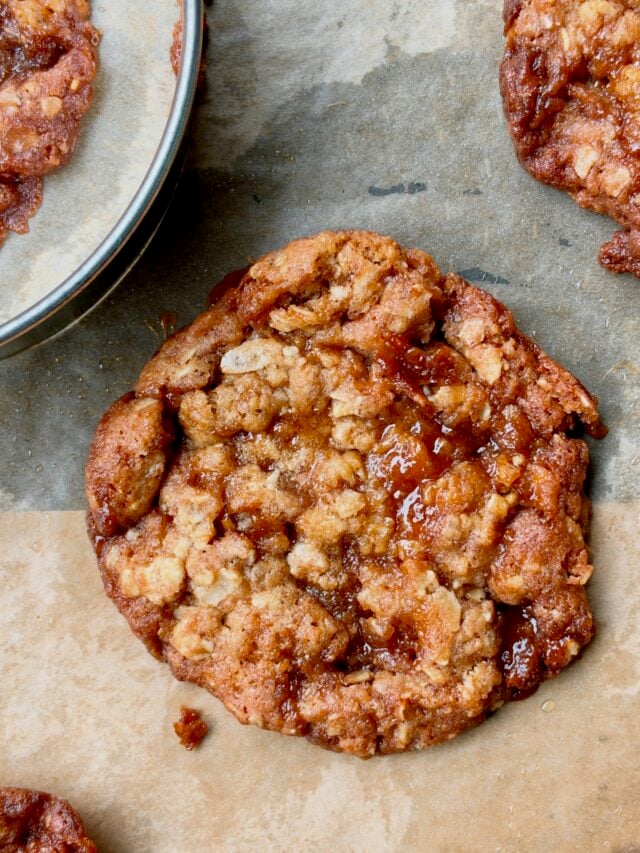
I’m a big fan of oatmeal cookies. I grew up eating them, which is definitely one of the fondest memories I have of my childhood. But now that I’m a full-grown adult, I found a way to ramp them up.
I know some people like raisins in their oatmeal cookies, others prefer them without. And I’m sure there are other variations, but this recipe has an ingredient that makes them stand out: Toffee
I came across these cookies while browsing through my copy of The Joy of Cookies by Joanne Chang, who runs the amazing Flour bakery and café in Boston. I was there on book tour a few years ago and meeting Joann was a highlight of my baking life. She’s now expanded to having several bakeries around Boston and Cambridge, and while I live in Paris, the land of bakeries, Flour is certainly right up there with the best of them. And I can’t wait to go back.
Brimming with enthusiasm, and yes – unbridled joy, Joanne is one of the best bakers I know. While I wait to get back to her bakery, I’m happy to have her latest book, which features “new classics, and old favorites to share.” And this recipe fits both of those bills.
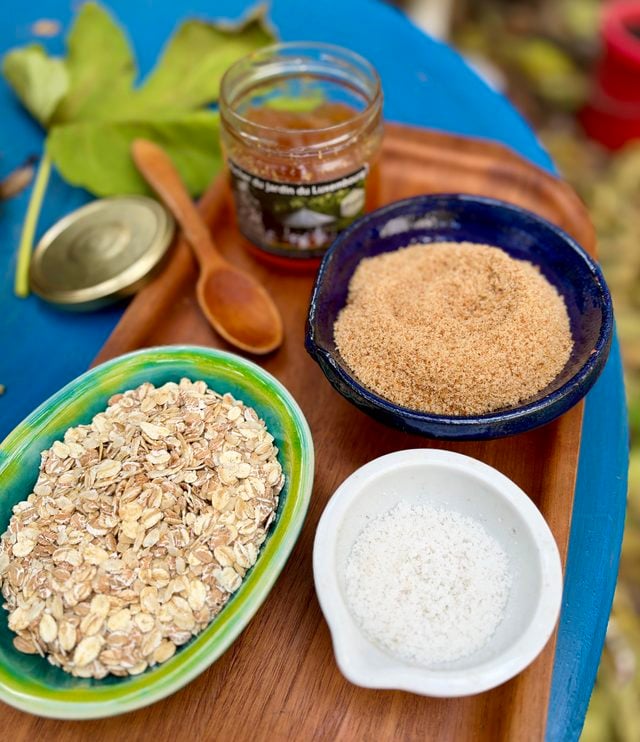
You may be intimidated making toffee if you haven’t made it before, but this recipe is a snap. You simply heat butter, brown sugar and salt together in a small saucepan, stirring it as it cooks.
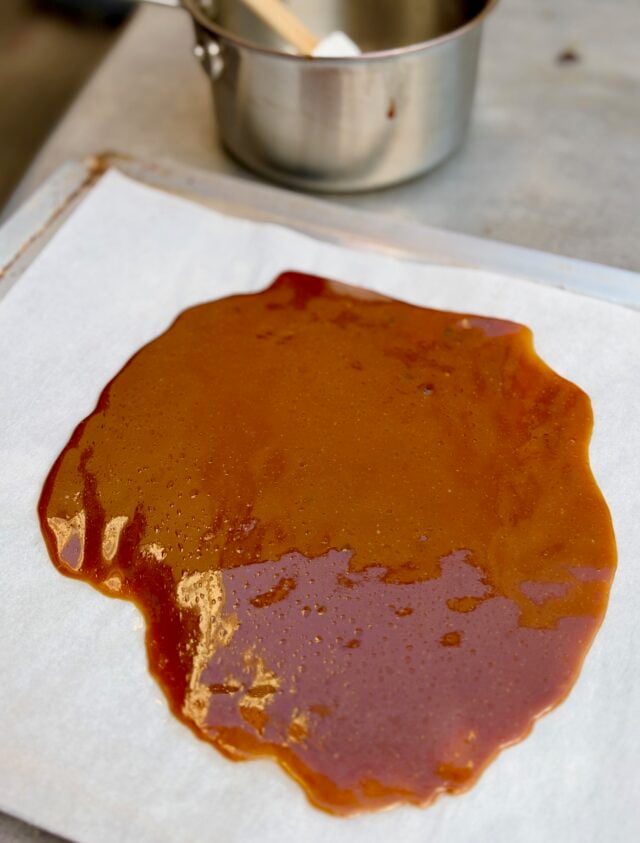
When the color of it turns a deep golden brown, which just takes a few minutes, a little vanilla gets whisked in and, voilà…you’ve got toffee. Well, you do need to let it cool first, but it’s worth the wait.
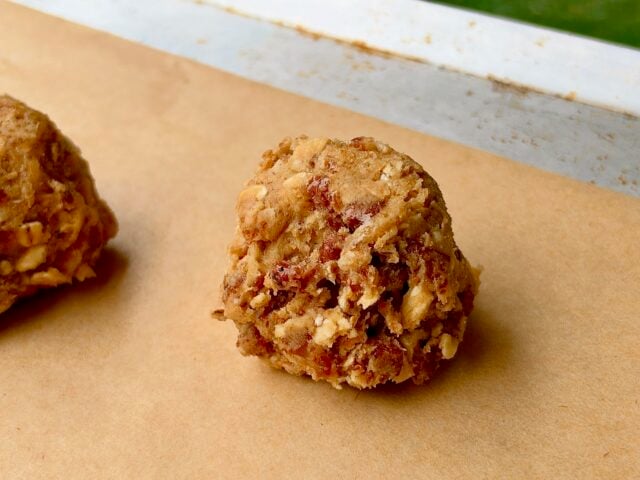
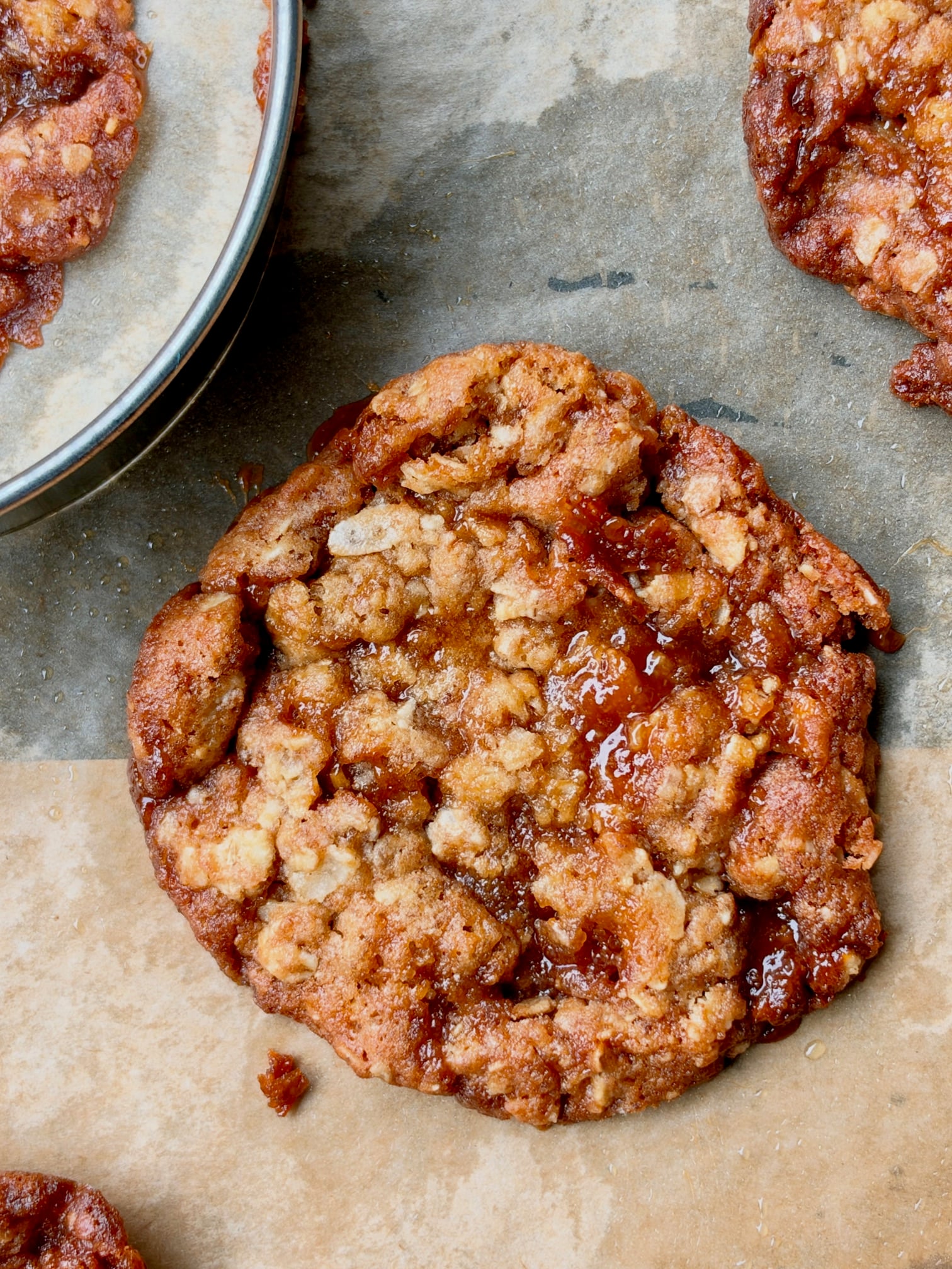
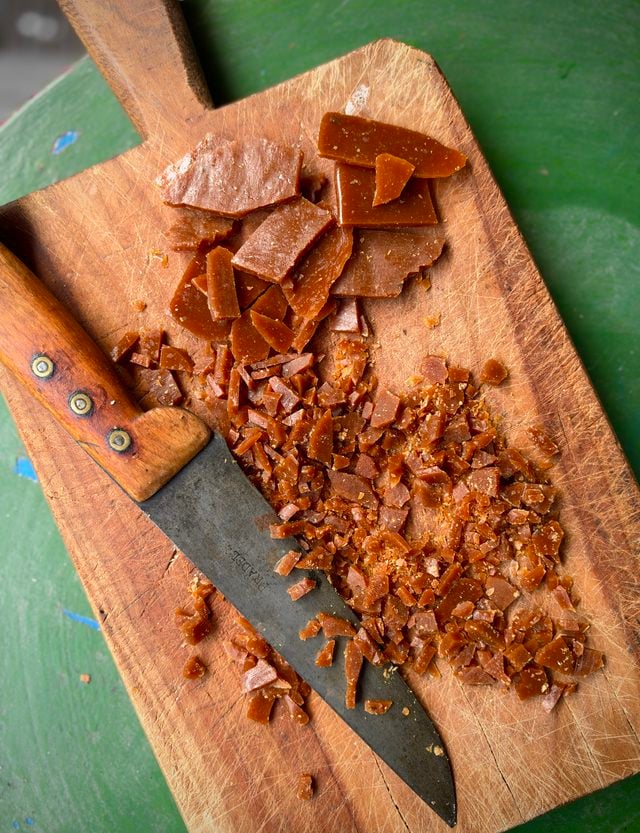
Once the toffee is cooled and chopped, it gets mixed into the dough. When baked, the magic happens in the oven and the toffee melts into little puddles and pockets, resulting in one incredible cookie, with hints of candy.
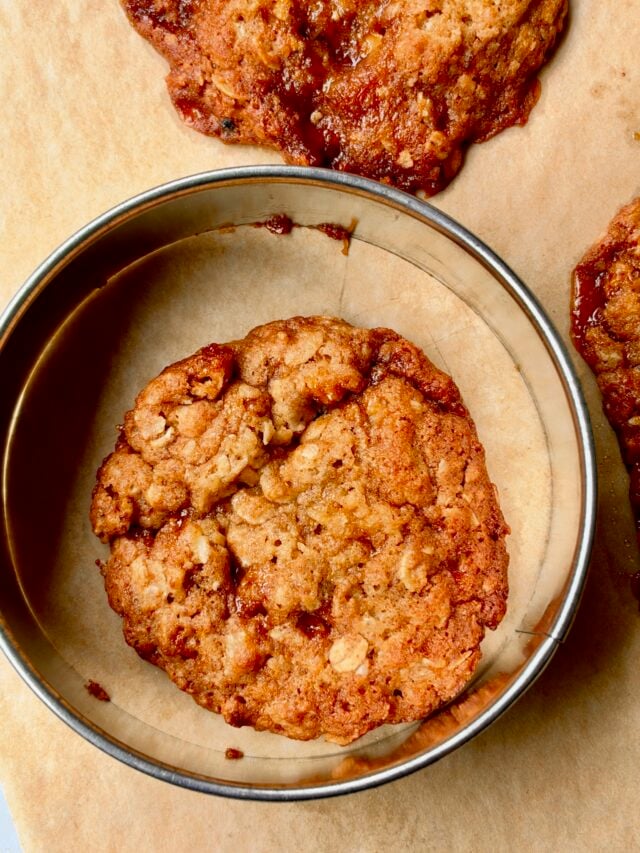
The key to these cookies is a baker’s secret. When the cookies come out of the oven, while still very warm, you take a round cookie cutter and use that to encircle the cookies, coaxing them into neat rounds. It’s a technique that can be used on other types of cookies, such as chocolate chip cookies. Give it, and these cookies, a try!
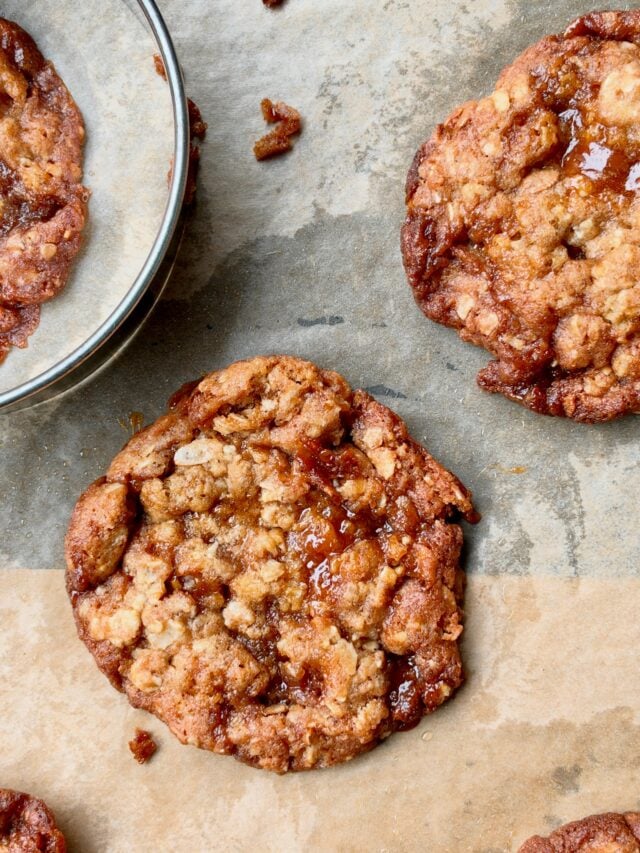
Oatmeal-Toffee Cookies
Oatmeal cookie dough
- 1/2 cup (115g) unsalted butter, at room temperature
- 2/3 cup (140g) packed light brown sugar
- 3 tablespoons honey
- 1 large egg, at room temperature
- 1/2 teaspoon pure vanilla extract
- 1 1/2 cups (150g) old-fashioned oats
- 1 cup (140g) all-purpose flour
- 1 teaspoon kosher or sea salt
- 1/2 teaspoon baking soda
- 1 recipe toffee, chopped (see below)
Toffee
- 1/4 cup (55g) unsalted butter
- 1/2 cup (100g) packed light brown sugar
- 3/4 teaspoon kosher or sea salt
- 3/4 teaspoon pure vanilla extract
To make the toffee
- Line a baking sheet with parchment paper and keep it near the stove.
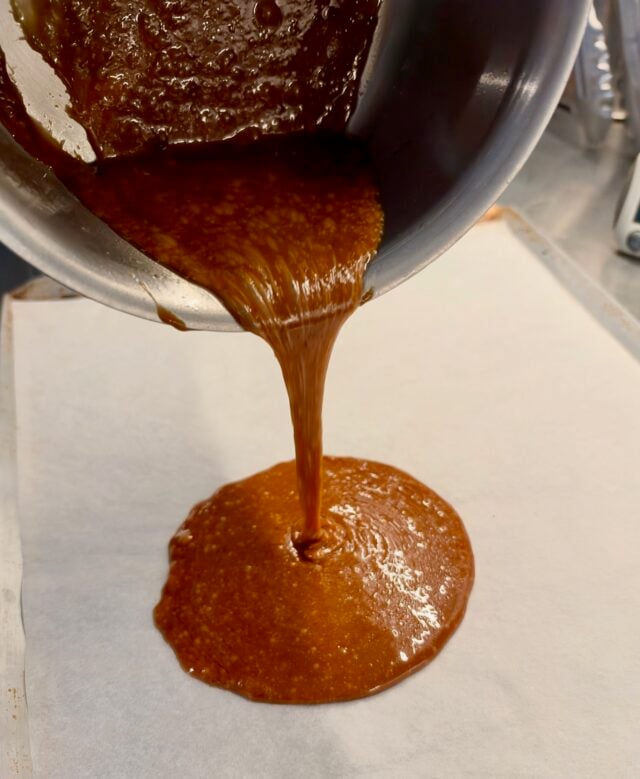
- Melt the butter in a small saucepan then whisk in the brown sugar and salt. Bring the mixture a boil over medium-high heat, stirring occasionally. The mixture will become foamy. Keep stirring and cooking until the foam subsides and the mixture becomes a deep brown color, similar to an old copper penny. (While cooking, if the mixture starts to burn on the bottom of the pan, reduce the heat, and stir with more frequently.)
- The toffee will take about 3 to 4 minutes to cook. When ready, immediately pour the toffee onto the prepared baking sheet and right away lift and tilt the baking sheet, holding the parchment paper in place, to spread the toffee as thinlyas possible. Let the toffee cool completely, then chop into bite-size pieces. (The toffee can be made up to a week in advance and kept in an airtight container at room temperature.)
To make the cookies
- In a stand mixer fitted with the paddle attachment, or by hand in a large bowl with a spatula, beat the butter, brown sugar, and honey on medium speed until well-combined, about two minutes. Stop the mixer, scrape down the sides of the bowl to make sure all the butter is incorporated, then mix in the egg and vanilla, scraping the sides of the bowl again.
- In a separate, medium bowl, mix together the oats, flour, salt, and baking soda. Stir the dry ingredients into the butter mixture then mix in the chopped toffee bits until they're evenly dispersed. Cover and chill the dough overnight, or at least 2 hours.
- To bake the cookies, line two baking sheets with parchment paper. Move the rack to the center of the oven and preheat the oven to 350ºF (180ºC.)
- Using a cookie scoop or spring-loaded ice cream scoop with a 2 tablespoon capacity (or use a soupspoon and your clean hands to form the cookies), scoop the dough into rounds and place them evenly spaced apart on the baking sheets. The cookies will spread as they bake, so they should be at least 3-inches (8cm) apart.
- Bake the cookies one sheet at a time, on the center rack of the oven, until the cookies are light-to-medium golden brown across the top, about 10 minutes. The original instructions said 12-14 minutes, but they took less time in my oven. So best to rely on visual clues for doneness, rather than a strict baking time.
- Remove the baking sheet from the oven and place a 4-inch (10cm) round cookie cutter over each very warm cookie and gently rotate the cookie cutter in a circle around each cookie, to shape each cookie into a neat round. If the batter has spread a little too much, don't worry. Simply corral the dough inside the cookie cutter using the edges of the cutter to drag any errant edges of the baked cookies inside the cookie cutter, then shape rotate the cookie cutter around them.
- Let the cookies cool 5 to 10 minutes on the baking sheet, then remove them to a wire cooling rack to let them cool completely. Bake the remaining cookies the same way.