July 2005 Archives

closed!.jpg

"Without ice cream, there would be darkness and chaos..."

-Don Kardong
1976 Olympic Marathoner

Ladurée

11 comments - 07.30.2005

Ladurée makes what many consider the best macarons anywhere.
I agree. And so do many others. The four shops of Ladurée in Paris sell 12,000 macarons each day, over four million per year.


macarons2.jpg


Many Americans raise an eyebrow when confronted with their first French macaron, since macaroons in the US are normally chewy, egg white-based cookies heaped with shredded coconut. But both the French macaron and the American macaroon are based on the crisp Italian meringue cookies made of whipped egg whites, sugar, and ground almonds or bitter apricot kernels, called amaretti. However Ladurée gives credit to Pierre Desfontaines, a distant cousin of founder Louis Ernest Ladurée, who they claim first joined two disks of crisp macarons together with buttercream and ganache fillings in mini-sandwiches to create the now-classic Ladurée . But prior to Ladurée's creation, the original French macaron had no filling; while still warm from the oven, macarons were joined together at their bases, fusing together as they cooled.

Aside from taking credit for providing Paris with their now-legendary macarons and other sweet treats, the wife of Monsieur Ladurée decided soon after the original bakery opened in 1862 that she would open a the first salon de thé in Paris, where a woman could sit unescorted and not be considered 'loose'. (My French dictionary doesn't have a definition for 'loose woman'...but if you come to Paris and want to see zaftig dames offering their services, take a stroll down the rue Blondel.)
Perhaps I'll elaborate in a future post...

Recently, the macaron wars have been raging in Paris, as pâtissieres try to outdo each other by introducing wild and over-the-top flavors and outrageous packaging. Ladurée has of course entered the fray but with dignity and class, avoiding some of the silliness I've seen.
Non merci, I don't want my macarons tasting like a salad.

Recent Ladurée macaron flavors include jet-black reglisse (licorice), herbaceous anis vert (anise), and the au courant flavor-combination-of-the-moment in Paris, citron vert-basilic (lime-basil).

But to me, the there's nothing better than the Ladurée classics: chocolat amer (bittersweet chocolate), dark café, and my absolute favorite, caramel-beurre-salé, a duo of almond-rich macaron cookies oozing smooth caramel...
...enriched with salted butter.

Ladurée
16, rue Royale
Tel: 01 42 60 21 79
Mètro: Madeleine or Concorde


LATE-BREAKING DISCLOSURE:
The macarons shown above (and the 10 delicious other ones that I ate before taking the picture) were a gift from the staff at Ladurée for being such a good customer over the past 3 years!

Judging from the dearth of excited commentary about my recent discovery, I assume few of you empathized with my enthusiasm for finding popcorn in Paris.

Well, try living for 3 years without Caramel Corn and see how you like it!

(One cannot live on Laduree macarons and glace Berthillon alone...)


caramelcornsmackdown.jpg


Although I was inspired by Heidi's spiced-up recipe, a comment from Judy (who lives in Tuscany) bemoaned how much she missed Cracker Jacks™ and Fiddle-Faddle™, which confirmed in my mind that what I really, truly craved was just good-'ol American Caramel Corn. I knew that I could tinker around and devise the perfect recipe (and quickly blow through all my precious popcorn), so instead I decided late last night that globalization must again rear it's ugly head: I went to the experts on all-things-popcorn.

Scanning the Jolly Time web site, I clicked under the topic "Healthy Creations" under 'recipes'.

Isn't Caramel Corn healthy?

I scrolled through a recipe for Crunch Popcorn Salad, a stunning first-course, calling for fat-free mayonnaise, fat-free sour cream, 1¼ teaspoons dry ranch buttermilk salad dressing mix powder, and 3 slices of fat-free cheddar cheese 'product'. Ick.
It does indeed sound like a "Creation", but where's the "Healthy" part?

In another recipe, East-is-obliterated-by-the-West in Chocolate Berry Chai Morsels which calls for 3 tablespoons instant spiced chai mix, ½ cup berry-flavored jelly beans and...½ teaspoon sugar-free raspberry-flavored gelatin powder.

These recipes were too, um, "Healthy" for me, so I scanned down to the 'Favorites' recipes. The easiest one was for Baked Caramel Corn, touted as "A Smith family favorite -- easy to make and delicious!"
I didn't know who the hell the Smith family was...and to be quite honest, the whole "Smith family" scenario sounds a tad suspect and about as authentic as baking alongside Stepford's Betty Crocker™. Couldn't they have come up with something more original-sounding than the "Smith" family? Couldn't they have picked a real family...for example, "A Tom Cruise-Katie Holmes Family Favorite"?

So I tried their basic recipe for Caramel Corn, the non-baked variety that was untainted by faux family approval. I began by popping my popcorn the old-fashioned way: on the stovetop.
Since I only have a professional-quality (meaning "ridiculously heavy") copper saucepan with a lid, I nearly dislocated my shoulder popping my first batch.

At this point, I really miss my KitchenAid microwave oven. Every so often during my bittersweet life in France, I get a pang of nostalgia for something I've left something behind in the states. My microwave popcorn popper was indeed missed as I ducked away from sizzling-hot, oiled popcorn violently bursting towards my face (with remarkable accuracy, I might add) each time I peered under the lid. Following the recipe, I popped ¼ cup of popcorn which made a measly 1 quart of popped corn.

Not enough. I'd have to make more. So I went to ice-down my shoulder before I popped another batch.

Curiously, almost all the Jolly-Time recipes are for microwavable, pre-packaged popcorn popped in micro-pouches. And most of the recipes calls for adding yummies (apologies for channelling Rachel Ray) like, for example, butter-flavored crystals or other alarming ingredients. (When I was 16, I worked at a movie theatre concession booth. We had to add an orange powder in when we popped the popcorn, called Flav-O-Sol™. The package exclaimed in big letters that it would create "Traffic-Building Aroma!", a phrase that's stayed with me for the past 20 years. I think about it every time I develop a recipe for cookbooks...)
..."Hmmm, does this gâteau Lebovitz have traffic-building aroma?"

But even if you're a purist, a label I've worn (sorry Julie Powell), I advise finding microwave popcorn without all the crap in it and using it.

Popping popcorn on the stovetop is a real dart-in-the-ass.

Once re-popped, I carefully picked out all the unpopped kernels (I'm terrified of French dentists, which is why I haven't been in a year to see one. I don't know why. I'm sure they're good, but I've heard a few stories...)
Then I was ready to make my first batch of "classic" Caramel Corn, which tasted okay, but not what I was looking for.


lightpopcorn.jpg


This was becoming not such a jolly time. It was getting late in the evening, and I was tired of picking errant popcorn kernels out of the carpet and my hair. I reasoned that now was the time to open that emergency bottle of rosé that I kept chilled in the refrigerator.

I wanted something more dark, and caramelized, so I turned to the trusty test kitchen's of Gourmet.

So here's the recipe that I adapted from them...

Caramel Corn

2 tablespoons vegetable oil
1/3 - 1/2 cup popcorn kernels
1 stick (½ cup) unsalted butter
1½ cups packed light brown sugar
(or half white sugar and half brown or cassonade sugar)
½ cup light corn syrup
(Corn syrup is 6€ a bottle at the Bon Marché, so I used glucose.)
½ teaspoon coarse salt
½ teaspoon baking soda
½ teaspoon vanilla extract
1 cup salted peanuts, or use any toasted nuts, such as almonds, pecans, or cashews. Next time I want to throw a handful of cocoa nibs in too

Special equipment: a candy thermometer

Heat oil with 3 kernels in a 3-quart heavy saucepan, covered, over moderate heat until 1 or 2 kernels pop. Remove lid and quickly add remaining kernels, then cook, covered, shaking pan frequently, until kernels stop popping (or until your shoulder gives out), about 3 minutes. Remove from heat and uncover. I ended up with 6 cups of popped popcorn, (premium American-brands of popcorn will yield more than my did, about 8 cups of popcorn, which is better to use. If so, you may need to prepare 2 baking sheets in the next step.)

Line bottom of a large shallow baking pan with foil and lightly oil foil, or use a non-stick baking sheet.

Melt butter in a 6-quart heavy pot over moderate heat. Add brown sugar and corn syrup, and salt and bring to a boil over moderate heat, stirring, then boil, without stirring, until syrup registers 300 degrees F on thermometer, 8 to 10 minutes. Remove pot from heat.

Using a wooden spoon or a heatproof spatula, stir vanilla into the syrup (and baking soda!...see below...), then quickly stir in peanuts and popcorn to coat. Immediately spread mixture over baking pan as thinly and evenly as possible. (I used my fingertips, which at this point have zero-feeling, but I strongly suggest using a heatproof spatula or clean rubber gloves since the mixture's still gonna be hot.)

So at this point, I'm feeling all satisfied with myself. Proud of my caramel corn. I'm picking at bits and pieces, which are still warm but hold the promise of caramelized crispitude. Yum!


darkcaramelcorn.jpg


Then I turn around and start gathering my dirty pots and pans, ready to wash up and go to bed.

And there it is on the counter.

Quietly sitting there, waiting to be noticed...

...the ½ measuring spoon with the baking soda that I forgot to add.

Argghh!!
Luckily I didn't need to re-clean the thermometer or the candying pan.
So after I poured myself another sip of rose, I re-did the recipe, this time adding the baking soda. Later, I taste both side-by-side and while the third (and final) batch of the night with the baking soda was the best.
The Jolly Time batch, while it had that all-American taste (like Popcorn Balls) I ended up eating some of the darker batch with the rest of the bottle of rosé late last night, then finishing most of it up before, during, and after breakfast this morning.

Raimo

3 comments - 07.27.2005

Raimo...Glaciers depuis 1947

raimo.jpg


Raimo
59-61 Boulevard de Reuilly
Tel: 01 43 43 70 17
Mètro: Daumesnil

One of the great things about having a food blog is that instead of doing something productive (like, perhaps, work on your next cookbook, for example...) I scan what others post then immediately hop on the mètro and whiz over to the newest and most exciting pastry and chocolate shops in Paris at a moments notice, sans hesitation.

When Louisa posted about discovering a new pastry shop, Xavier Le Quéré, I ran over to taste right away. I trust her judgement since she's a pro and gets to work with famous chefs. (Kinda like I used to do...before I moved this continent where all the chefs speaks funny languages.) It's hard work, and often not as much fun as it sounds, but I'm glad she found this place and shared it with us.


So here's what I found...

pastries.jpg

Beautiful pastries, including a delectable caramelized pine nut tartlet on pâte sucrée, buttery tart dough.


financierrasp2.jpg

Almond financiers studded with plump-sweet framboises. Financiers get their name because they're shaped like little bars of gold, although I like to think it's because they're so rich.


piemonte.jpg

I walked away nibbling a Piemontais, twin hazelnut sablés smeared with homemade gianduja filling.
I couldn't resist walking down the street while wolfing it down.

Terribly un-Parisian of me...


Xavier Le Quéré
121, rue Mouffetard (5th)
Mètros: Place Monge or Censier-Daubenton
tel: 01 58 10 00 32
www.xavierlequere.com
(website coming soon)

I've been craving popcorn for quite a while.
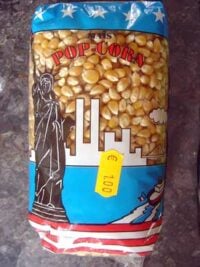
Then Heidi came along and posted a recipe for spiced caramel corn, one of my favorite treats. I scoured the ethnic shops in Paris to track some down and...violà!


popcorn.jpg


J'adore the soupçon of patriotism...

C'est très americain!

Because of the congés d'été, almost every boulangerie in Paris shuts down for one month of vacation. Luckily it's carefully coordinated with the other bakeries in each neighborhood so that Parisians never have to go too far to find fresh bread daily, one of life's necessities in France.


boulnger.jpg

le Boulanger de Monge


I see it as an excuse to leave the confines of my quartier and try other bakeries. Now that the weather in Paris has cooled down enough so that taking a stroll is possible without ending up feeling like you just crossed the desert, ending up drenched in sweat, I mètroed across Paris to a bakery on the rue des Martyrs which Clotilde confided had the best baguette aux cereales in Paris.

But as I arrived (after having to exit the first mètro due to a breakdown, then taking one bus and two mètros, which took about an hour including the time it took me persuading each driver and station agent to let me through using the canceled ticket I'd validated at the first mètro), the window shades were drawn and on the door was the all-too-familiar sign "Fermature pour les Congés".

"Zut!"

Make that..."Merde!"

So yesterday, I hiked up towards the Pantheon to the rue Mouffetard, a rather well-known market street that I generally avoid since it's rather pricey. Nevertheless, there's some great places on that street including Octave ice cream from Toulouse, and a new pastry shop that's really spectacular, Xavier Le Quéré which Louisa sleuthed out. And I wanted to return to le Boulanger de Monge.

On page #1 of Le Guide des Boulangeries de Paris, there are only three bakeries in Paris given the lofty 3-star status, and le Boulanger de Monge is one of the lucky few. It's located at a busy intersection and there's generally a queue of locals waiting for their daily bread. My first visit was a few months back with my friend Frank, and to be quite honest, I wasn't won over.


appletart.jpg


In the window was a multi-layer cake, similar to a Napolean, with alternating layers of puff pastry and cream. Draped across the top were the broken end-shards of the cakes, which I suppose were meant to be decorative, but was suprisingly clunky and amateurish. The tarte aux pommes looked better, but tasted somewhat sec and not-really-all-that-interesting (especially in a city full of very interesting tartes aux pommes.) Perhaps it serves me right for ordering apple tart when apples aren't in season. But since Frank wrote the book on apples, it just seemed like the right alignment of elements.

But what I came for was the bread.
Le Boulanger de Monge is an open bakery. The bakers are right there beside the patrons making the bread, everything in plain view; the organic flour, the bakers (dusted with organic flour), and the wood-fired ovens with crackly, fresh-baked bread emerging every so often. I loved the look of the levain bread, which is slashed prior to baking so comes out with a crusty sunburst baked into the surface. It's perhaps the most beautiful bread I've seen in Paris. But when I got home and tasted it, I missed the sourdough-tang characteristic of my favorite levain bread from Poilâne (which deserves the 3-stars it got from the same guide), as well as the Bay Area's Acme bakery. The bread also had a cake-like texture that crumbled when you cut it, rather than gluten-y nooks and crannies and holes, the appeal of well-crafted bread.


bread.jpg


Yesterday I thought I would try their pain aux cereales, since as many of you know I am smitten with hearty breads chock-full grains and seeds. It cost a whopping 2.60€ for the small loaf they bundled up for me. From the looks of the exterior, I didn't have high hopes for the loaf but ordered it anyways. When I hurried home and sliced it open, there were so few grains that I wondered where they got off calling it aux ceriales?


cakesdemonge.jpg


I suppose that I should have simply ordered a baguette, since that's how these bread guides judge bakeries in Paris, so perhaps I need to go back since the third-time may be the proverbial charm. They did have beautiful looking little round cakes, which I will try next time; the chocolate ones in particular look rich and tasty.

Le Boulanger de Monge
123, rue Monge, 5th
M: Les Gobelins or Censier-Daubenton
tel: 01 43 37 54 20
Closed Monday.

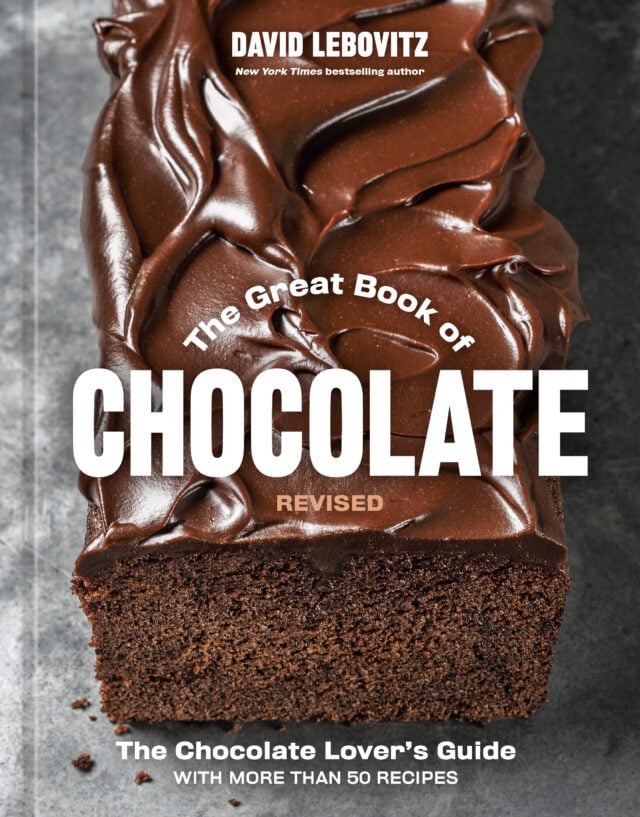
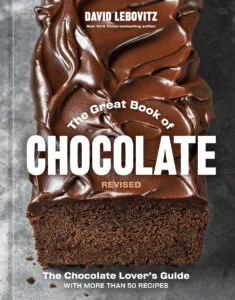
Since I wrote the book on chocolate I realize that I should be blogging more about chocolate, but all the answers to many of your chocolate questions can easily be found in The Great Book of Chocolate. This book is the ultimate guidebook to the world of chocolate and a wealth of information with delicious recipes. If you're like me and can never have enough chocolate, this is the book for you.

Want to know the difference between bittersweet and semisweet chocolate? What's the difference between Venezuelan and Ecuadorian cocoa beans? Which country produces the best chocolate? Which chocolatiers worldwide produce the most interesting and scrumptious chocolates? All the answers, and everything else you've ever wanted to know about chocolate, can be found in The Great Book of Chocolate.

GTCH.jpg


Why not get your copy today?


One of the most common misconceptions about appreciating chocolate is that you should base your opinion on the percentage of cacao in the bar. The was reinforced this week when a close friend came to visit, and brought me a tablet of the fantastic chocolate from Cacao Sampaka in Barcelona, which I profiled for Saveur magazine last year in their 100 Best issue. Like everyone that I bring into chocolate shops, he was raving because the chocolate tablet that he graciously brought me (albeit half-eaten) was 71%! (...insert his enthusiasm here.) Like lots of people, everyone seems to expound upon the theory that the higher the better. (...insert everyone's question here... "But what about anti-oxidants?...)


cacaosampaka.jpg


I like my friend very much and he may be reading this and if he is, I want him to continue to bring me care packages from Target and Trader Joe's on his return visits so I don't want to make him feel cuplable (well, maybe a little.) But I feel compelled to get folks to understand that the exact percentage of cacao in the bar is truly unimportant to the taste or even the bitterness. I've had chocolate bars that are 99% cacao that were palatable and other bars that were 80% cacao that were bitter and inedible (and I like very bitter chocolate.) I've had 90% bars that were amazingly good and smooth, while others were 60% and were crumbly and mushy.

So quit throwing your nose up in the air and saying, "I only eat chocolate that's at least 75%." To me, the numbers are, um, interesting, but not what I look for when evaluating chocolate, since by muddy chocolate-colored logic, that argument means that the 75% chocolate is inherently better than a 70% chocolate. It's amazing with this analytical mind that I didn't make my mother proud and become the lawyer (or better yet, the doctor) that she always wanted in the family.

Look what I have. Two Italian chocolates from Baratti & Milano in Torino:


mailoaandbarata.jpg


One is 65% and the other is 80%. Does that mean the 60% is the worse of the two and should be avoided at all costs? You'll also notice one is made from beans from Ghana and other from beans from Grenada. Quick: which one is better?

It means little to judge a chocolate based simply on a number (or origin, but that's information that can be found in the book.)
Why?
The percentage doesn't take into account...

The variety of beans,
or...
The quality of the beans,
or...
The careful roasting of the beans,
or...
The blending of the beans by the chocolate-maker,
or...
The sweetness of the beans themselves,
or...
The acidity of the beans themselves.

I think part of the reason many of us Americans are hung up on high numbers (which is why we never adopted the metric system) because It sounds so much better to say, "Oh my gosh! It was 105 degrees today!" rather than, "Mon dieu, it was an unbelievable 40 degrees today!"

John Scharffenberger of ScharffenBerger chocolate says to pretend you're Helen Keller when tasting chocolate; Don't read the label and don't listen to what others tell you. Taste the chocolate and judge for yourself.
If you like it, it's good chocolate!

Holy Pschitt!

3 comments - 07.21.2005

As seen in a Paris café...


pschittblog.jpg


Kudos to Gideon for having the fortitude to try it.

It seems like everyone has nostalgic tales about summertime tomatoes.

The stories abound of big, bursting, glowing tomatoes full of juice and flavor, capturing the magic of summer in one compact little orb. I have to admit that I just don't have those fond memories. Perhaps I was born too late and tomatoes had their flavors hybridized out by the time I was eating them. I don't know, but if one more person waxes-on about how miserable my life is because I don't know real tomatoes I will be compelled to slap them.

Maybe these people just need to complain about how bad things are in comparison to days-gone-by, to make us feel like we've missed something really special so my generation would feel empty and lost and without direction with only the internet as a feeble substitute for actual communication and Sex and the City has ended and we feel lost without Carrie and her cool and attractive friends who have amazing lives, who understood and shared our problems and failed relationships, trying to make it in a tough urban landscape, facing the daily challenge of maintaining 27-inch waistlines while eating ice cream sundaes and cupcakes from Magnolia Bakery and downing Cosmopolitans, and whose most pressing problem is which overpriced shoes to buy and showing that women don't-need-men-to-be-happy-thank-you-very-much but...well, just kidding folks maybe in the end, ultimately they do and you've wasted six years of your life watching this show only to have it end where the main character is actually a total loser with nothing more than a silly wardrobe of clothes that no one would ever actually wear on the street and a gig modeling Gap khakis.

But I digress...
(And you may be asking, "Where is he going with this?"...which indeed is a very good question.)

Recently the proliferation of heirloom tomatoes at greenmarkets harkens back to the days of yore, when tomatoes were beautiful and irregular and presumably so full of flavor that after one bite you could boast about how good it was for the remainder of your life and try to make everyone feel like you know something that they don't know and how much richer your life is than theirs because you've had this amazing tomato experience and they haven't.

But I've digressed again...

Nowadays the marketers and growers have gotten smart.
It's fairly easy to come across tomatoes sold 'on-the-vine' that look old-fashioned (they're the idea of good tomatoes: you really want to like them, but they don't taste all that much better) but, hmmmm, that they might be as good as those tomatoes people keep telling you you've missed out on, but when you get them home and slice them open, they taste negligibly better than any of the other tomatoes at the supermarket but cost twice as much. They just have a redder color and come with their stems attached and you feel superior at the cash register to those cheapskates who're buying those other tomatoes.

Before I digress any more, here's an excellent recipe for encouraging flavor and sweetness from any tomatoes using a technique called making a confit. The slow roasting with olive oil concentrates and sweetens flavors, making ordinary tomatoes boast-worthy. This is an amalgamation of a few techniques I've learned from Susan Loomis and my friend David L. in Switzerland, who I worked with at Chez Panisse and will henceforth be referred to on my web site as DL-2.


tomato.jpg


Confit of Tomatoes

Buy some tomatoes, just about any variety will do. 2 pounds (1 kilo) is a nice amount.

Wash and dry them, then slice them in half. Pour enough decent-quality olive oil in a baking dish so that it just covers the bottom of the dish, somewhere between 1/4 cup and 1/3 cup should do. Sprinkle in coarse salt and freshly-ground black pepper, add a few branches of fresh thyme and/or a few sprigs of rosemary. Then line the bottom of the baking dish with the tomatoes, sliced-side down. Don't be bashful; it's okay to really pack them in.

Peel and slice 3 or 4 garlic cloves, slice them in half lengthwise and tuck them in the gaps between the tomatoes. Sprinkle the tomatoes with a bit more salt and a small sprinkling of sugar (less than 1 teaspoon... you're not making dessert) and add a few bay leaves.

Bake the tomatoes in a 350 degree (180 centigrade) oven until they are soft and cooked throughout, which should take at least 45 minutes.

Once they're soft, remove them from the oven and let stand until room temperature. You can scrape the tomatoes and juices and herbs into a container and refrigerate them for up to 4 to 5 days or use them right away. They will actually improve as they sit.
Use them to toss into pasta, slightly chopped, or warm them and spoon them whole onto hot garlic toasts, perhaps with a few filets of good anchovies, and shower them with lots of fresh herbs. They're also nice served alongside a summer salad with some goat cheese, all drizzled with a bit of the tasty olive oil and juices.

Look who's come to Paris...


oceanspray.jpg


Cosmos... pour tous!

Just an hour or so from Paris is the medieval market at Le Neubourg where each wednesday locals crowd the market, choosing their fresh fruits and vegetable, regional raw-milk cheeses and just-churned golden-yellow crocks of butter, along with meats and hand-stuffed sausages from the jovial local bouchers, doling out crispy morsels of sautéed charcuterie.

It's the kind of market where if you ask the poultry person for a quail, they'll stick their hands in a box, there'll be a flurry of activity within, the unsettling sound of ruffling feathers and squalking...then calm. A few seconds later, your dinner will emerge. The medival market at Le Neubourg is the real thing and has existed for hundreds of years and some of the wares are not for the squeemish.
Nowadays you'll find vendors selling crisp frites sprinkled liberally with crystals of sel de Guérande, cheery Arabic vendors hawking frangant olive oil soaps, and rubber-booted fishermen presiding over piles of glistening mussels from nearby Brittany.

Being a baker, I think (and hope), has good karma. No animals have been harmed in the making of any of my desserts.
So aside from the live birds and furry bunnies for sale, what wowed me of course was the abundance of berries on display. Juding from the sweet perfume of the raspberries and the plumpness of the currants (as well as the stained fingers of the farmers) they'd obviously just been picked.


sourcherries.jpg

Perky sour cherries, which they've dubbed for some reason 'cerises anglaise'.


whitecherries.jpg

Unusual crispy white cherries, a variety I've never seen before.


gooseberries.jpg

Black currants, red gooseberries and loganberries, which I've never found in France. The vendor told me they were framboises americain (American raspberries).


currnats.jpg

Tiny white and black currants, called cassis. Black currants have heavy tannins when eated raw, and but are unctuous and deeply-flavored when cooked. They're widely used (and best known) for the syrupy crème de cassis.


melon.jpg

A jumble of juicy and vibrant summer melons.

Beginning with choosing teams for third-grade Dodgeball to food blog memes, I'm accustomed to being the last one picked. But then I get tagged twice in one week! Along came my new gal-pal Meg, from Too Many Chefs, who snagged me for the cookbook meme that's been going 'round.
Here goes....

1. Total number of cookbooks I've owned:
Well, er, when I moved out of San Francisco, I packed them all in boxes for storage, and there are about 18 per box. And, um, there were about 30 boxes, so that would make around 540. And that number was considerably higher before I sold a few off prior to the 'big move'. In my petit Paris apartment, I have about 35 cookbooks.

2. Last cookbook I bought:
Fine Chocolates, Great Experience by Jean-Pierre Wybauw.
Jean-Pierre was my teacher in Belgium when I went to chocolate school at Callebaut and he's one of the great talents in the world of chocolate. He worked deftly (and never got a drop of chocolate on him...ever) and was so patient with all his students. His book explains much about chocolate including how to make chocolates, enrobing them, and extensive information about the fabrication of chocolate. Much of it is geared towards professionals, who are distraught, since many are having a hard time finding this book in the United States.

3. Last food book I read:
On Food and Cooking: The Science and Lore of the Kitchen by Harold McGee. Harold spent 10 years updating his original book (which no one initially wanted to publish...but eventually went into 17 printings!) This book answers every question you could have about food and cooking. Every cook should have a copy of this revised edition in their library. I read it cover-to-cover.

4. Five cookbooks that mean a lot to me:
In the last meme, I mentioned food writers who I admire, so I'll list here 5 cookbooks that I actually use for everyday cooking...

Chez Panisse Desserts by Lindsey Shere
Naturally, I've made more desserts from this book than any other and my kudos were echoed by Claudia Fleming, who I considered the best pastry chef in the US while she was at Grammery Tavern in New York. She told me it was her favorite dessert book of all time.

From Tapas to Meze by Joanne Weir
This is one book that I cook from often. The Feta-Cucumber Salad is the greatest recipe, in my humble opinion, although there's lots to choose from. I love serving all the salads and vegetables and small-dishes from the regions represented: Spain, Italy, Morocco, Lebanon, and more.

French Farmhouse Cookbook by Susan Loomis
Since moving to France, this cookbook helped immensely with the transition, as I learned about French ingredients and the way food is prepared here. Interspersed are informative stories about food production across France, as well as easy-to-follow recipes from farmhouses across the countryside, where the best traditional cooking is found.

Chocolate and the Art of Low-Fat Desserts by Alice Medrich
Stop snickering. Just because the desserts are low-fat, doesn't mean they aren't fabulous. Nobody but Alice Medrich, the chocolate-guru, could create such amazing chocolate-rich desserts with reduced amount of butter and cream but no icky ingredients. It was here I learned when you adjust the amount of fat in desserts, you let the other flavors shine through. Everything I've made from this book, all these desserts, are winners, and not just the chocolate ones. The Chocolate Buttermilk Pound Cake is moist and has rich-tasting chocolate flavor and texture, and the Apricot Vermouth Cake is exceptional too. And that lofty Chocolate Souffle!

The Zuni Cookbook by Judy Rodgers
Someday I will get around to making the justly-famous Zuni Roast Chicken with Bread Salad, but I have made many other things from this book with grand success. Judy has the rare ability to explain something like it's never been explained before, sans the fluff. Her instructions for salt-brining have changed the way I cook; I've learned so much about food and cooking just leafing through this book. When Judy worked at Chez Panisse, she made me the best thing I ever ate in my life. Truly.
And you gotta love a book that starts off the dessert chapter with... "Dessert has the interesting duty of teasing out the last gasps of your appetite."


5. Which 3 people would you most like to see fill this out in their blog?

Well, considering that last 3 people who I tagged with the previous meme aren't speaking to me anymore, I'd better hit some 'fresh meat'...

Lisa, aka the Amateur Gourmette

Stephanie, from Adventures of Pie Queen

The fine folks at Becks & Posh who may have already been tagged, but I like corresponding with them...so there!

Recently, I was thumbing randomly through cookbooks and came across a recipe. Here was the first ingredient in one...

"One Octopus, cleaned"

That's it. No explanation.
It's like saying...

"One Whale, de-boned"

or

"Three Puffins, feathers and beaks removed"


I think those actions require perhaps a modicum of an explanation.
Yes? No?

On the other hand, if a recipe says...

"1 cup almonds, chopped"

or

"8 ounces Parmesan cheese, grated"

...I don't think chopped or grated need further explanation. And indeed adding those instructions to a recipe would make it unnecessarily long and daunting. Honestly, any recipe longer than one or two pages freaks me out.

Is it worth the real estate on the page to say...

"Lift the almonds from the bag or storage container and distribute them in an even layer on a clean and dry wooden or plastic cutting surface. Be sure the surface is flat and preferably waist-high. Use your hand to grab the wooden handle of the knife, being sure to avoid the sharp blade end. Lifting from your elbows, direct the knife over the almonds on the cutting board and press downward while gently rocking the knife back and forth, moving the knife as necessary over the almonds, to cut them evenly. If some almonds fling across the counter, set down the knife and retrieve the errant almond pieces. Add them back to the mound of almonds and continue chopping."

Whew.
Now wasn't that a mouthful?

A few years back a very talented pastry chef from New York came out with his first book. In the book was a three-page recipe for brownies, complete with full-color step-by-step photos. Holy Mother of Betty Crocker! Is there anyone in America who doesn't know how to make brownies? It's one thing to present a recipe, and to show how neat and fabulous they look when stacked on a lovely white Crate & Barrel plate, but do we need to see what the nuts look like when scraped into the brownie batter or an instructional photo of the bowl of melted chocolate and butter?


Kate recently went on a bender about cookbook authors that don't list water as an ingredient. Often that's not up to the author, but an editorial decision based on space (space=money, especially in magazines.) Believe it or not, one or two sentences can throw a whole page off-kilter. I've had copy editors direct me to go through a page and get rid of 7 words (in editor-speak, the "widows and orphans".)
But Kate's right, it is annoying to be making a recipe and find that the 2 cups of water that your supposed to divide between the chocolate cake batter and the frosting, you've just added to the mixture, which now looks like a muddy lagoon instead of a smooth, luscious glossy chocolate batter.

While Adam's on vacation, Lisa's been dubbed the Amateur Gourmette by Pim and was making a recipe for Butterscotch Pudding and it didn't come out right.

The recipe calls for "2 cups milk", but there in her photo is a carton of 2% milk. She is so busted. The recipe turned out to be a disaster. In her defense, the main reason the recipe didn't taste good is it only calls for ¼ cup of brown sugar, which would add negligible butterscotch flavor. But did the recipe indicate "whole" milk or just say "milk"? Whole milk is normally critical to a pudding recipe. In that case, the recipe writer is so busted.

I decided to let her slide by on this one since she's just the substitute and everyone likes to pick on the substitute, but I'm sure when Adam gets back, there's gonna be hell to pay.

So here's a concise, and photo-free, recipe for Butterscotch Pudding:


Butterscotch Pudding

1 cup (packed) dark brown sugar
2 tablespoons butter (salted or unsalted), melted
3 tablespoons cornstarch
2 1/4 cups whole milk
½ teaspoon salt
3 large egg yolks
2 teaspoons dark rum or whisky
½ teaspoon pure vanilla extract

1. In a large bowl, make the butterscotch base by mixing the brown sugar with the melted butter (note the lack of a picture here.) Set aside.

2. Put the yolks in a small bowl and stir briefly (no photo here eith...Huh? ok, I'll stop...it's getting obnoxious.)

2. In a small bowl, whisk the cornstarch with a small amount of the milk until smooth. Pour the rest of the milk into a heavy saucepan and scrape in the slurry of cornstarch and the salt.

3. Cook over medium heat, stirring with a whisk constantly, until the mixture thickens and begins to boil. Whisk a small amount of the hot milk mixture into the egg yolks and then scrape the warmed egg yolk mixture back into the saucepan.

4. Keep cooking and stirring the custard until it comes to a boil again. It will become quite thick and mound up like mayonnaise. Remove it from the heat and pour it into the butterscotch base. Add the rum and vanilla and whisk until the butterscotch has dissolved into the custard. Pour into large serving bowl.

Chill (...in the refrigerator, duh!)

Note: I've updated the recipe since several readers thought there was too much butterscotch flavor. Feel free to use light brown sugar in place of the dark brown for a milder flavor.

When people ask me the rather silly question, "Why do you live in France?", I simply direct them to the nearest fromagerie. Yes, there's great food to be found everywhere: Spain has great ham and crisp, almondy turrone, Italian olive oil and gelato is the best anywhere, and I love the briny oysters from the San Francisco Bay Area. When in New York who can resist the chewy bialys and bagels? And the puffin in Iceland is reputably delectable.
But there is nothing comparable to the cheeses of France...


cheeseblogsusans.jpg


In the small city of Rouen, in Normandy, is one of the few remaining affineurs in France. As you may know, once milk is formed into molds, it needs to be properly ripened to become cheese. The ripening can be for just a few hours or can last up to several years for a hard grating cheese such as Parmegiano-Reggiano. There's just handful of affineurs left in France, who ripen cheese in caves just below their shops. The last time I visited François Olivier with my friend Susan Loomis, he welcomed us into the caves. This time, he told us that as of a few months ago, European Union regulations forbid visitors. Perhaps that's one of the reasons the French voted against the constitution.
(Don't toss those old francs quite yet...there's fear we'll be using them again.)


francoisblog.jpg


Of course, I was immediately attracted to the butter that François salts himself. While I was there, a steady stream of customers came in for a hunk. (Of butter, that is.)


butterblog.jpg


But mostly I came for the camembert, since François carries one of the few artisianally-made camemberts left in Normandy. Although camembert is the unofficial symbol of France (there was a giant wheel of camembert balloon 'float' to lead off the parades at the commencements of the Tour de France this week) but there are few remaining true camemberts left. Like Brie de Meaux, which I mentioned in a previous post, true camembert is actually called Camembert de Normandie and will be labeled au lait cru (raw milk) so if you come to France, be sure to choose a cheese labeled as such, not simply 'camembert'.


gooeycheeseblog.jpg


The French are a famously stubborn lot and are refusing to compromise the integrity of their cheeses (as well as a few other things...)
But why not? They make the best cheeses in the world. And Normandy is arguably the most famous cheesemaking region here in France. At François' fromagerie, you'll find the elusive Maroilles, a hulking square of cheese aged for 100 days and weighing in at a hefty one-pound, with a powerful, pungent fragrance that cheese-expert Steve Jenkins describes as "...about as subtle as a bolt of lightening--get out a clothespin."
One whiff, and I agreed.

More subtle was the soft, dewy-white wheels of Delicor. When sliced open, the pleasantly chewy rind gives way to a soft, milky cheese that is sweet and slippery on the tongue. This is the one cheese that François makes entirely himself and is justly proud of it. Another famous cheese of the region is represented here, Neufchâtel (not to be confused with the low-fat cream cheese in the United States) which is often heart-shaped since the women cheesemakers would often make them for their sweethearts. You'll find Graval, a mound of buldging Neufchâtel, enriched with extra cream with a velvety yellow mold on the exterior. The nutty, complex vieux Comté, aged for 2 years, was the best I've had. And I've had a lot of Comté.

Properly made raw milk cheeses have been consumed for centuries and he noted that raw milk that's less than 1½ hour old is full of natural antibodies. He compared cheeses made with cooked milk to wine made with cooked grapes.

When reflecting on the new changes in cheesemaking because of EU regulations and strict US importation laws, François sadly noted that in most of the world, quality means hygienic, whereas here, quality means good taste.

Fromagerie François Olivier
40, rue de l'Hôpital
Rouen
tel: 02 35 71 10 40


050612buttontcnd.gif


I was tagged by Adam, the Amateur Gourmet who picked me for this food meme. (Then split for 2-3 weeks of vacation!) Here's my responses...


What is your first memory of baking/cooking on your own?

Good Seasons salad dressing.

images.jpg

The measuring!
The mixing!
The magic!

No wonder I became a pastry chef.

Who had the most influence on your cooking?

Lindsey Shere, who was the original pastry chef at Chez Panisse. I was so fortunate to have someone like that influence me right from the start. I learned how to really taste things from her, and how important ingredients are to good cooking. Much more so than fancy techniques.
Alice Waters also was a positive influence as well. She has a great deal of belief in what she's doing and is truly dedicated and passionate about her ideals.

Do you have an old photo as "evidence" of an early exposure to the culinary world and would you like to share it?

Don't have one on my hard drive. A downside of the digital age.

Mageiricophobia - do you suffer from any cooking phobia, a dish that makes your palms sweat?

Squid (or anything with tentacles.) I refuse to touch it or even look at it. Squid scare the shit out of me. Those suckers are U-G-L-Y!
My first day on the job at Chez Panisse in 1983, the chef handed me a huge bus tub of squid and told me to clean it.
Only after years of therapy was I able to overcome the trauma.

What would be your most valued or used kitchen gadgets and/or what was the biggest letdown?

Favorite:
My KitchenAid 5-quart Mixer
Oxo Salad Spinner (and zester and whisks)
Heatproof Spatulas

Biggest letdown:
Where do I begin?
Ok, I'll choose the 3 worst offenders:
1. Those thick rubber heatproof gloves. You can't get a grip on anything.
2. I hate silicone baking molds for cakes. Every time I teach a class, people keep asking me if I like them. So quit asking.
3. The French Press is perhaps the worst apparatus for making coffee. I don't care what anyone says, so don't try to tell me otherwise. The coffee comes out muddy, over-caffeinated, and gets cold fast. Plus they're hazardous; I had one fly across my kitchen as I was pressing down, spraying my entire kitchen (and me) with coffee grounds. I hear about complex methods for brewing good coffee in them, but who wants to deal with that in the morning? I'll stick with my espresso pot.

BONUS RANT: The Le Creuset Tagine that has no flange on the lid. The first time I used it, the hot lid slid right out of my hands and crashed (there's no way to hold onto it.) They refused to give me a new one, although they did change the design eventually. I'm sure I wasn't the only one who complained. And since I sacrificed my lid for the good of others, they should send me a new one, don't you think?


Name some funny or weird food combinations/dishes you really like - and probably no one else!

I like to eat dried pasta right from the box. Especially elbows.

What are the three eatables or dishes you simply don't want to live without?

Dark Chocolate-Covered Marshmallows
Fried Chicken without gravy (so it stays crisp) but lots of salt
Caramelized Salted Peanuts (or anything caramelized, for that matter.)

Any question you missed in this meme, that you would have loved to answer? Well then, feel free to add one!

...from Nicky at Delicious Days
Your favorite ice-cream...

The chocolate and caramel ice creams at Berthillon on the I'le St. Louie in Paris, and the Gianduja gelato at Caffè San Marco in Torino.

You will probably never eat...
Anything with tentacles.
Or Puffin.

Your own signature dish...
Fresh Ginger Cake from Room For Dessert which I've been served in lots of restaurants and bakeries. I've received more emails and kudos (from home cooks as well as people who serve it in their bakeries and restaurants) for that cake than anything else.

...from the ChefDoc at A Perfect Pear
Any signs that this passion is going slightly over the edge and may need intervention?

I'm blogging when I should be cooking.

...from Clement at A La Cuisine!
Any embarrassing eating habits?

I used to eat lunch in the shower because I was so busy when I worked in the restaurant business and never had time to eat.

...from Sarah, of The Delicious Life
Who would you want to come into your kitchen to cook dinner for you?
Aside from hauling out my Ouija board and raising Julia Child from the great beyond, the warmer-blooded Elena Arzak from Arzak restaurant is an astounding contemporary cook and is mindful, yet playful, without being silly or pretentious.

...from Adam, of The Amateur Gourmet:
Who's your favorite food writer

Hard to pick just one. It's definitely between Roy Andries Di Groot who wrote The Auberge of the Flowering Hearth which is the best food book ever written...(and the dude was blind!), Jane Grigson's Fruit Book is full of great recipes and superb writing, and Richard Olney, who had the amazing ability to deftly describe a technique or taste without pretentiousness. He was American, but wrote and cooked while living in France, wandering around his kitchen in skimpy briefs drinking Scotch straight from the bottle.

...from David Lebovitz at David Lebovitz.com:
What's the best food city in the world?

San Francisco and Barcelona.

Three people to pass it on to...


Judy at Over A Tuscan Stove

Kate at French Kitchen Adventures

Pascal at C'est moi qui l'ai fait!

While snooping around a friend's kitchen, I opened a drawer and found this.


chocblog.jpg


She swears it wasn't directed at me.

Patriotic Pie

4 comments - 07.04.2005

Happy Fourth of July!


jello_Patriotic_Pieblog.jpg

Forget Catherine Deneuve and Carole Bouquet.

The most photographed and revered woman in Paris is Denise Acabo. With her braided pig-tails, necktie, and crisply-pleated kilt, Denise is the sweetest babe in Paris. Her shop, A l'Etoile d'Or, has an etherial selection of artisan confections and chocolates from France and whenever I go, I invariably find something new to try, something tasty, something that is so amazing, that I'm compelled to go back for more. What's a guy to do?


denise.jpg


I give myself at least one hour to shop. Minimum. Words fly out of her mouth in rapid-fire French. She'll often use the tu word, instead of the formal vous, which suggests immediately comradery.

Don't understand a word of French?
That's ok, Just nod. She'll keep going.

...I-T-A, that's BRITA™!

It lurks in my kitchen, waiting...and waiting. It thirsts for the precious fluid of life. And it will stop at nothing to get it.

It is voracious.

It is unstoppable.

And it doesn't care who gets in its way.


britablog.jpg


I can't leave it alone.

I hydrate.
The water level drops, it needs to be filled. It craves it. Seeking completion. It hungers to be satiated. Quickly. I am its slave. What would happen if the filter dried out? There's dire consequences, too horrible to mention. But there they are, the warnings, buried deep within the paperwork.
But what if I ignore it...it...I can't, it sits there, mocking. Waiting for me to forget its presence. It's ghastly presence.

Someday it will make its move. I know it. I sense it.

Do I dare bring bottled water into my house? My first step towards independence.
No. I mustn't upset it. I mustn't.
What's that? No really, I wasn't thinking about getting rid of you, no, heh-heh, just kidding...really.

I type.
It watches.
I think.
It drips.

And waits...

I spend my waking hours thinking about it, plotting, making sure to keep it content, brim full with water. I mustn't upset it. I don't sleep without making sure it's full. I won't leave without checking the water tank. Should I take it with me if I leave? If I leave it behind, I'll come home to...to...to what? What awaits me if I do?

Help!
I'm a prisoner of a water filtration system...

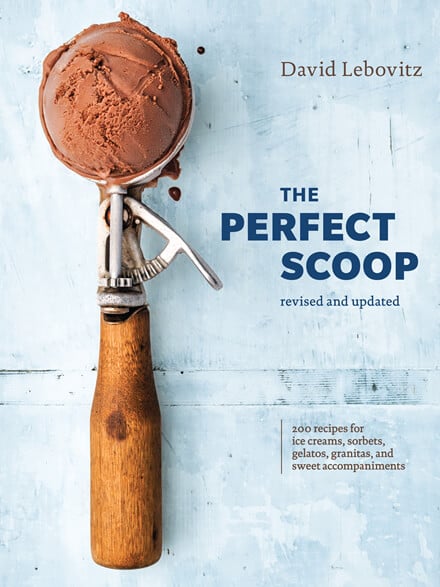
Purchase The Perfect Scoop from Amazon

David Lebovitz

Purchase The Great Book of Chocolate from Amazon

Monthly Archives

Archives By Date »

Browse by month: 2008

Browse by month: 2007

Browse by month: 2006

Browse by month: 2005

Purchase Room for Dessert from Amazon

Purchase Ripe For Dessert from Amazon

David's Amazon Store

Subscribe

BlogHer Ad Network

More from BlogHer

Advertise here

BlogHer Privacy Policy