November 2009 archives

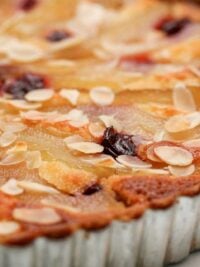
Apple Spice Cake

Recently I ate at one of those small neighborhood restaurants whose fame spreads beyond the quartier and people come from other neighborhoods, as well as from other countries, to eat at because it is très reputé.

cake dusting

Le Repaire de Cartouche (99 rue Amelot) is one of those restaurants in Paris. It’s known for very good food and an especially compelling wine list. The prices aren’t too high (although not too low, either) and you can eat very well without spending the equivalent of a three-star restaurant.

dishofapples

Almost immediately after we sat done, something seemed up. Within moments of handing us our menus, the waiter asked if we were ready to order. I was with Maria Helm Sinskey, a well-regarded chef from the Bay Area and co-owner of a vineyard, with her husband. I’d chosen the restaurant because they’re known for excellent game dishes and I figured it was something she couldn’t easily get back in the states.

As she pondered the wine list, the waiter told us we had to order our meal before we could order wine. When we said we needed a moment to scan the interesting wine list, he quickly turned and scampered away in a huff.

Continue Reading Apple Spice Cake…

Thanksgiving in Paris…and above & beyond

olivier winetasting instructions

When folks ask me what the French do for Thanksgiving, I don’t think the word they’re expecting to hear are “Um, nothing.” And why should they? It’s not as though America shuts down for le 14 juillet.

Still, a few places around here do get into the spirit and you’ll see a few bags of cranberries at the market, a few more sweet potatoes piled up, and smart volaillers stocking whole turkeys, normally a rare site in France.

wine taster

Since it’s pretty much life-as-usual around here on the fourth Thursday of November, when a message from Olivier Magny of O-Château popped up in my Inbox earlier in the week, asking if I’d like to go to a wine-tasting, at 30,000 feet that day, I said, “Sure!”

So there I was, stepping out of my apartment, at 7:15 am Thanksgiving morning, heading to Orly airport to meet up with Olivier and his team of sommeliers.

Continue Reading Thanksgiving in Paris…and above & beyond…

How to Make French Vinaigrette

One assumption that I’m going to make about the French is that they’re not afraid to make things au pif, or “by the nose”.

utensils

I don’t know if a precise recipe for sauce vinaigrette actually exists. But if there is, I bet few people follow it very closely. And Romain is no different from his compatriots when it comes to recipes, and rules.

They are both for other people—and don’t apply to him.

adding salt salad basket

Vinaigrette is just one of those things. It’s a few simple ingredients which come together so well, when done right. Anyone can make it: you just pour, stir, marinate, then taste until it’s just right. But the salad dressings in France always taste better to me than elsewhere. So thought I’d follow Romain when he made a true vinaigrette. He was surprised at the idea of measuring anything, so I follow him through the steps, taking a few notes along with way (see Recipe, at the end) and along the way, I learned two French secrets for a great salad dressing.

One is that you must use good Dijon mustard.

Continue Reading How to Make French Vinaigrette…

French Sugar

sugars

Many people who tackle French recipes get stumped by the sugars, which don’t necessarily correspond to the sugars available elsewhere. All supermarkets in France carry white granulated sugar and there’s often unrefined sugars, such as cassonade, which grocers stock and are widely-available. In America and elsewhere, bakers often have to do a bit of hunting around to find the corresponding sugar.

French brown sugars are quite varied and don’t always neatly fit into substitutions. In general, if you have a recipe that calls for brown sugar, you can use moist cassonade, vergeoise, or any unrefined amber-colored sugar that’s not granulated. For the sake of these descriptions, moist brown sugar is sugar that clumps together easily if you pinch it. Crystallized sugar is granulated, or free-flowing, and pours easily.

For caramelization, you need to use refined white sugar; impurities in unrefined sugars will cause crystallization. There’s some controversy in the pastry community that sugar refined from beets, which the majority of the sugar in France is, will give you difficulty if you try to caramelize it. But I haven’t experienced any problems.

I’ve listed a few places outside of France where these sugars, and others, are available at the end of the post. Depending on where you live, your best bet is to search online or find a store that specializes in baking ingredients for professionals or dedicated home bakers. There are also links to various sugar companies and websites where you can learn more about these sugars.

Sucre cristallisé or sucre cristal

This is plain white sugar, whose crystals are a bit larger than what’s considered granulated sugar in the United States. You can use this sugar for almost all baking and cooking applications.

Sucre semoule and Sucre en poudre

This is sugar whose crystals are very fine. In America, this would be similar to what is called superfine or baker’s sugar. In other countries it’s called castor or caster sugar. Its fine texture means it melts quickly and will give a finer crumb to many cakes, meringues and cookies.

You can make your own by pulsing granulated sugar in a food processor or blender a few times until it’s in smaller crystals.

Continue Reading French Sugar…

Community Supported Agriculture, in Paris

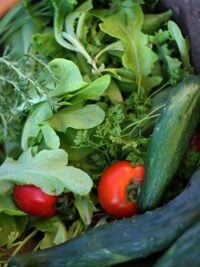
About a year ago, I was having supper in a friend’s apartment and everything we ate was simple, and tasted really good. He’d lived on a farm near Toulouse for many years, where he worked for one of France’s agricultural organizations. Now he lives in Paris and I was surprised when he told me that the onions we were eating on the tart he’d made were from a panier, or a Community Supported Agriculture (CSA) box.

pannier

He gets a weekly panier from Les Paniers du Val de Loire. I kept hemming and hawing, thinking how nice it was to shop at my local market and pick out everything myself. But I finally signed up a couple of weeks ago, and got my first panier yesterday.

Living in San Francisco and working closely with a lot of farmers and small-producers in my restaurant career, I have a weakness for hard-working small producers who are trying to do the right thing. I remember a woman showing up at our back door with a box of amazing French butter pears, asking us if she planted more trees, would we would buy them? (We took a bite and said that we’d take any and all that she wanted to bring us, a promise we made good on.) I remember an organic dairy sending us their first samples, and customer reaction made us realize that people weren’t ready for the strong taste of farm-fresh dairy products.

And there was Mr. Hadsell, a frail old man who could barely walk, who’d open the kitchen screen door and shuffle inside, balancing a few flats of just-picked raspberries from his backyard. You could feel the warmth of the sun radiating from each basket of plump, perfect berries. Those were the best raspberries I ever had in my life and I hope the lucky customers that got them felt the same.

beet greens

But elsewhere, it can be an uphill battle to find just-picked, fresh produce, even in a country with strong ties to its agricultural traditions, like France.

Continue Reading Community Supported Agriculture, in Paris…

Israeli Couscous with Butternut Squash & Preserved Lemons

Israeli Couscous

When I started this site, I had forums, where people could chat and post messages. Before we took it down (because my brain was about to implode), one of the burning questions on there was this: Is couscous pasta?

My contention was that it wasn’t, since it wasn’t a ‘paste’ (or as the French would say, un pâte), which is what I believe—in my limited intelligence—that pasta is.

On the other hand, perhaps it is pasta, because couscous is flour mixed with water, then rolled until little granules form. Theoretically, then, it is a paste before it’s broken down into little bits. Which makes me wonder if kig ha farz is pasta, too? (Although back then, no one would have know what that was, so it wouldn’t have bolstered my argument.)

flat leaf parsley

Then, to make matters even more complicated, there’s Israeli couscous, whose springy, chewy texture wouldn’t raise an eyebrow if someone called it pasta.

Continue Reading Israeli Couscous with Butternut Squash & Preserved Lemons…

Saint Marcellin

saint marcellin

If you go to Lyon, you’ll find Saint Marcellin pretty much everywhere. It’s the best-known cheese from that region, and the user friendly-sized disks are inevitably piled high at each and every cheese shop you step in to. Locals bake them at home and slide the warm disks onto salads, and I’ve not been to a restaurant in that city that didn’t have Saint Marcellin on the menu doing double-duty as the cheese or the dessert course. Or both. At the outdoor market stands, you can see how popular they are with les Lyonnais. And if you don’t believe me, their presence is so pervasive that I once bought a ticket on the bus in Lyon and instead of change, the driver handed me a ripe Saint Marcellin instead.

Because they hover around €3, I used to pick one up at the fromagerie since they’re an inexpensive way to add variety to a cheese platter. The ones I’d buy were decent, although I never heard anyone put a dab on their bread and say, “Good gosh David, that cheese is friggin’ amazing!” (Although I’m not sure “friggin” is a well-used word around here.)

Continue Reading Saint Marcellin…

Pumpkin Ice Cream Recipe

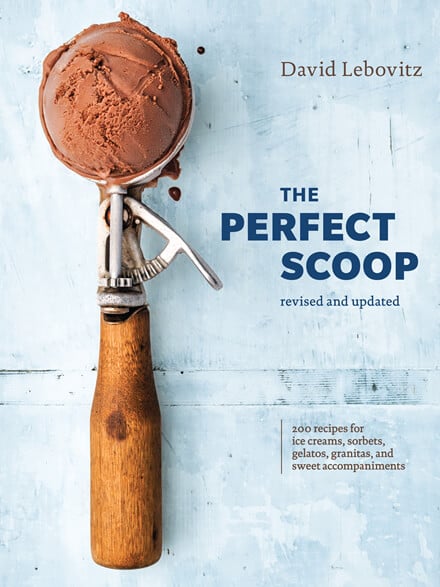
Every year I get a slew of requests from people looking for a recipe for Pumpkin Ice Cream. While in The Perfect Scoop I have a recipe for Sweet Potato Ice Cream studded with maple-glazed pecans, there’s something about the fall that makes people think of all-things pumpkin. I’m a big fan of sweet potatoes, personally, but old traditions die hard I suppose. And Pumpkin Ice Cream got put on my to-churn list.

pumpkinicecreamblog scooppumpkinicecream

As luck would have it, I was leafing through a copy of The Craft of Baking by Karen DeMasco, former pastry chef at Craft in New York City, and landed on a picture of Pumpkin Ice Cream. Quelle chance! So I thought I’d give her recipe a spin in my ice cream machine.

butternutsquash moresquashpuree

Karen uses canned pumpkin, which a lot of people like to use because it’s easy and consistent. But it’s not so easy to find in Paris. And even though I’m an outcast for using sweet potatoes, I’m still a bit old-fashioned and like to make my own puree. So there.

Continue Reading Pumpkin Ice Cream Recipe…