David Lebovitz
circle  Home My Books Bio Chocolate Tours My Paris Schedule Recipes Links
corner Circle     corner
 
Search My Blog:


The Perfect Scoop


Tours
Click Here For Exciting Information About Upcoming Chocolate and Culinary Tours


Visit the Travel Blogs Ad Network and the Food Blog Ad Network to advertise here.


Categories...


Add me to your RSS:


Room For Dessert


Read My FAQs


Ripe For Dessert


Visit David's Flickr Page
www.flickr.com
This is a Flickr badge showing public photos from daveleb. Make your own badge here.


Archives
April 2008
March 2008
February 2008
January 2008
December 2007
November 2007
October 2007
September 2007
August 2007
July 2007
June 2007
May 2007
April 2007
March 2007
February 2007
January 2007
December 2006
November 2006
October 2006
September 2006
August 2006
July 2006
June 2006
May 2006
April 2006
March 2006
February 2006
January 2006
December 2005
November 2005
October 2005
September 2005
August 2005
July 2005
June 2005
May 2005
April 2005


Best Chef's Food Blog 2006
"Best Chef's Food Blog 2006"


The Independent
"The best food blog in the world"


The Wall Street Journal
"Blog Watch 2006"


About
"Top Ten Food Blogs" by About.com


WellFed.com Best City Food Blog
"Best City Food Blog 2005"


David Lebovitz Archives: Parisian Culture

Squirrel Bread
line

March 2, 2008 | Comments (43)

I can't remember the last time I saw a real, live squirrel.

Yes, yes, I know. I live a city. But when I go out into the French countryside I just don't see them there either. I never realized how much I missed the little rascals until I was back for a visit to the states and there were hoards of squirrels going about their business everywhere, from the wilds of Central Park to the streets of San Francisco.

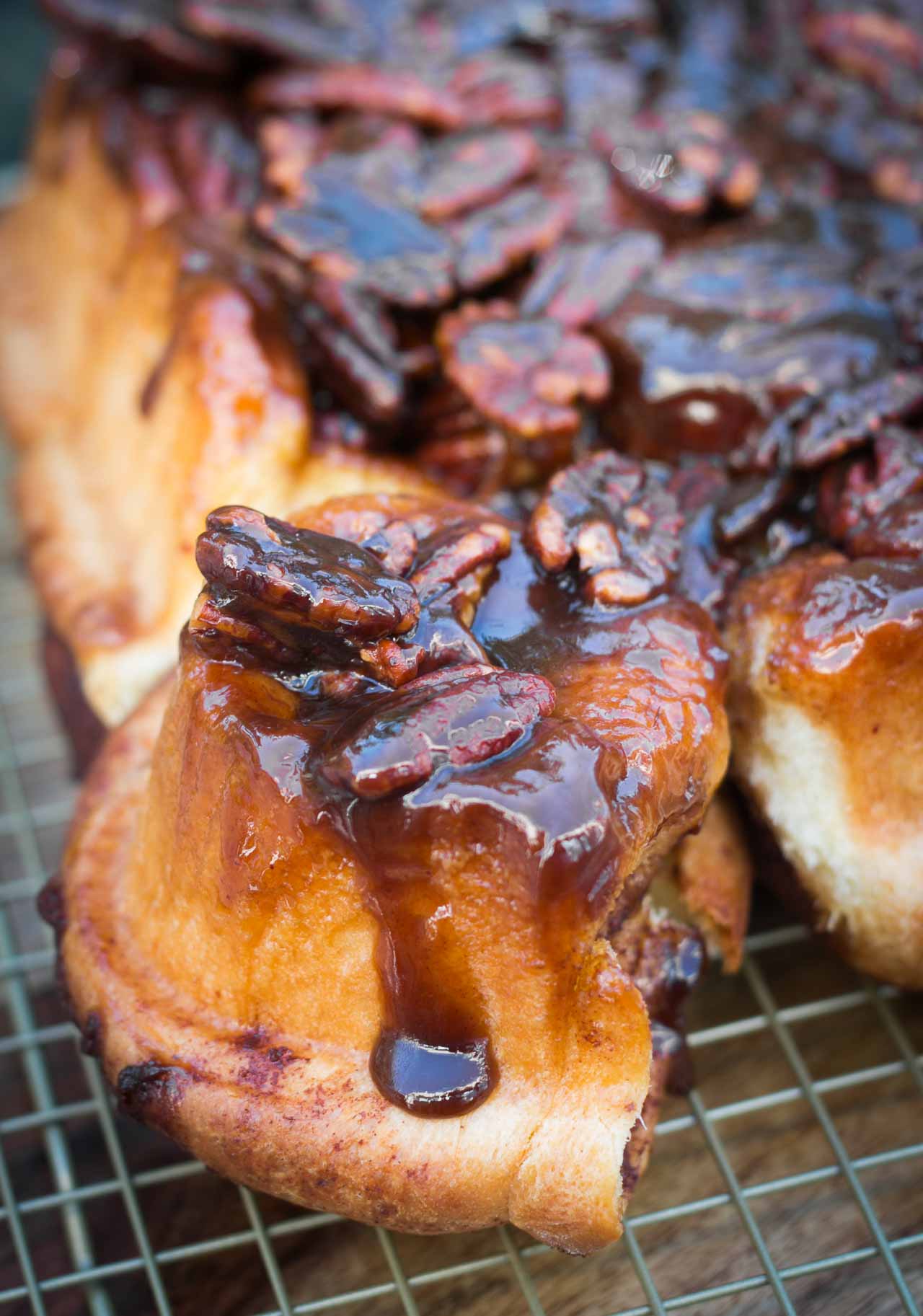
Pain Ecureuil

French people when they go to the states, on the other hand, don't miss squirrels. They miss bread.

Fresh bread is a given, an integral part of life in France and lining up daily at your local boulangerie is just another task one does during the course of your day. For me though, it's a little more complicated. I'm no longer content to get the bread from the bakery just across the street from me and I'll spend half a day hunting down grainy breads near and far, a type of bread I'm hopelessly partial to.

Continue reading "Squirrel Bread" »

Permalink


French Classes in Paris
line

March 1, 2008 | Comments (20)

Whether you're coming here to live, or even on vacation, there's plenty of classes for everyone from débutants to those looking to master the elusive French verbs.

While I don't personally make any recommendations, you can visit their sites to check for class times, size, and prices. Some schools do offer housing for longer programs and you can even get student visas if you sign up for longer sessions, helpful if you'd like to stay in Paris for a while.

Another plus about enrolling in a school is with your student ID, you can get discounts in museums and at the movies. Plus many gyms and sporting facilities give substantial student discounts and there's travel deals to be had as well.


A few tips:

Continue reading "French Classes in Paris" »

Permalink


A Little Confused
line

February 9, 2008 | Comments (49)

I'm a little confused.

I just watched House Calls on CNN.

Everyone agrees there's a crisis in America, part of it being that 15% of the population is uninsured. But people keep saying they don't want a system like in France because they didn't want the government making decisions about their health care.

Except in France, the government doesn't make decisions about health care; your doctor does.

Presidential candidates on both sides keep talking about changing the system, yet they're also saying, "We're not advocating a system like the one in France."

But if French health care is considered the best in the world, covers everyone, and the average premium per family is less than $150 per month—why not advocate a system like it?


Permalink


The Not-So-Sweet Smell of Excess
line

November 18, 2007 | Comments (50)

Something around here stinks.
And it's not just my neighbor.

unscented

When I moved to Paris, I remember my first load of laundry that I proudly pulled out of my little machine tucked in the corner.

After I figured out the seven different dials and nine different buttons on the machine (actually, I've still only managed to figure out what about a third of them do), I remember extracting my clothes from the machine and hanging them all out to dry on my shiny new rack that took me a few hours to buy at the BHV. In Paris, few people have dryers since it's verboten to cut holes in buildings to vent to the outside. And even though each load of laundry takes me the better part of 3 days instead of...say, an hour...I'm happy to report I've reduced my carbon footprint.

And I've also reduced my productivity at doing anything else.

Continue reading "The Not-So-Sweet Smell of Excess" »

Permalink


Gluten-Free Eating and Dining in Paris
line

October 26, 2007 | Comments (5)

Here's a few tips for those traveling to Paris, or around France, who are avoiding gluten.

France may present more of a challenge than other countries, which was confirmed when I tried to find some tips online for gluten-free dining in France and turned up almost nothing

So here are a few helpful hints that will help you navigate French restaurants and dining, how to deal with waiters, and where you can find gluten-free products in Paris.


  • Familiarize yourself with some of the natural foods shops in France.

    Well-known ones include Naturalia, La Vie Claire and Biocoop.

    Many carry gluten-free products and grains. Natural food stores here are some of my favorite places to shop anyways since they carry many regional, organic, and unusual products which are hard-to-find elsewhere in France. Biocoop is perhaps the most varied, although Naturalia has more shops.


  • Vegetarian restaurants may offer good options and be more receptive to special dietary needs.

    You can find a list here, or do a Google search. It's a good idea to call to make sure they're open before heading over since they come-and-go in Paris.

    Continue reading "Gluten-Free Eating and Dining in Paris " »

    Permalink


    The Man-Purse
    line

    September 27, 2007 | Comments (63)

    A French friend asked me recently, "David, do I look gay?"


    Le Man Purse


    Without a second of hesitation, I replied, "Yes, absolutely."

    "Why?" he said.

    "Well, for one thing," I told him, "You're French—which makes you suspect. Another is that you're wearing a pink polo shirt. You also answer your emails quickly and you spend an inordinate amount of time worrying about your hair."

    "And you have a nice butt," I added for good measure, perhaps because he's a rugby player.

    So how does one tell the difference between a man who's European or one who's gay?

    Continue reading "The Man-Purse" »

    Permalink


    Paris x 3
    line

    September 20, 2007 | Comments (20)

    Parisian Etiquette

    When I go back to the states, one of the questions I'm most-commonly asked is—"Aren't Parisians rude?"

    I recently got in my elevator and this was posted:


    bonjourexcuseznous.jpg


    It's a notice that my neighbor is having her birthday party and to please excuse her in advance of any noise that may be a nuisance. I've been told some newcomers see these posted and incorrectly assume that it's an invitation to all in the building to stop by. So read carefully.

    If you've ever been on the receiving end of the French 'stare' you know that's because French people talk rather softly in public places and it's considered rude to impose your conversation on others. Unfortunately that politesse don't carry over to cigarette smoke. Yet.

    But I think letting your neighbors know your having a fête is a nice, not very rude gesture, so you can plan accordingly with an Ambien or whatever.

    Continue reading "Paris x 3" »

    Permalink


    Don't Pipi Here
    line

    September 5, 2007 | Comments (17)

    Don't Pee Here


    Yes, really.


    Permalink


    Can't...No...Won't Touch This
    line

    August 24, 2007 | Comments (49)

    serpiellierefretoy.jpg


    What are the absolute last words you want to hear when invited to someone's home for a meal?

    Well, how about...


    "We had some fish that was about to go bad, so we're having it for dinner."


    Welcome to my world. A world you thought was all baguettes and chocolate.

    Well it now includes dubious fish too.


    The rules for hygiene are a little different here than in America. I was pretty shocked to see on my trip to the US in June, little bottles of hand-sanitizer dangling from people's belts and fanny packs, as well as available in supermarkets with towelettes to wipe down the handles on shopping carts. But I'm equally shocked that people think it's okay to leave stock-based preparations on the counter for a day or so, then consume then. (They use stock in science labs to grow bacteria since it's such an inviting medium. Just so you know.)

    Although Dorie Greenspan thinks we might need those little bottles of sanitizer around here pretty soon for Vélib' hands, after riding around town for a few weeks, I'm almost inclined to agree with her after riding around for the past few weeks.


    Velib' Hand


    Although I've been certified in food sanitation, sometimes I just need to suspend logic around here and just go with the flow. The fish, though, I pushed aside. I'm thrilled to be accepted by the locals, but let's not take this "I'm so French" thing too far...

    Continue reading "Can't...No...Won't Touch This" »

    Permalink


    But I Do Have Tomatoes
    line

    August 3, 2007 | Comments (26)

    tomatoes


    Most larger buildings in Paris have a concierge.

    But before you think that I live somewhere that's all fancy and stuff, it's basically another name for the gardienne, normally a woman who takes care of things like delivering the mail and making sure repairs get handled. But even more importantly, she ensures that not even the slightest infraction of the rules or smallest detail of gossip gets by her, and at my friend's apartment in the 5th, theirs has a one-way mirror on her front door...so be careful who you drag home.

    In French, there's an expression; 'faire la gardienne', which means to 'make like the gardienne'—'to gossip'.

    Continue reading "But I Do Have Tomatoes" »

    Permalink


    I Saw Breasts
    line

    July 16, 2007 | Comments (31)

    entreadults


    One of the biggest cultural differences between the French and Americans is the acceptance of public nudity.

    I don't think I need to tell you which side I'm on: I'm a big proponent of it.

    As long is I get to keep my clothes on in public.
    But for others? Allez-y, mes amis!

    In spite of their alleged laissez-faire, free-wheelin' attitudes, San Franciscans are not quite the wild-and-crazy bunch you might think. Like...yes, you have the right to be nude, but I have the right not to see it. So as long as your right doesn't infringe on my right, then you have the right to do it. Of course if you want the right to do it, we can have a public referendum on it or introduce an initiative so the supervisors can debate and vote on it. The it becomes a question of: do we have the right to be nude and is that right greater than your right but do they have the right to tell me what to do either? And shouldn't my right to express myself be greater than your right not to have to look at me? Then it goes on to, well...what about all those naked dogs running around town? Do they have the right to be...etc...etc...

    Oy.

    Anyhow, on my trip back last month, I went to a yoga class.
    In the communal changing area, I innocently slipped off my trousers and slid on my shorts. It wasn't a big deal and took me perhaps all of three quick seconds. I was wearing my euro-skivvies, which are about as modest as a Speedo, and you can't really see anything (because of the light, not for other reasons...) unless you're really, really trying to get a look. It was a simple, economical 'off-on' motion and if it excited anyone, I'd be very surprised. (Although I'm sure there are pictures floating around on the internet somewhere. Let me know if you find any.)

    "Excuse me!" this woman huffs nearby. "You know, there's a changing area behind that curtain!"

    I look around, and yes, there is an lonely, tiny curtained-off section in the corner. But yikes, I lived in San Francisco for almost twenty years and I've seen far, far greater displays of flesh on the streets (and on the streetcars) that I had shown in those few not-very-revealing moments. It wasn't like I was trying to put on a public show or anything and at my age, I can't believe anyone's actually looking either. I'm thrilled if they are—believe me.

    But I was simply changing and it seemed fine, in a PG-13 kind of way. After all, we're all adults and there was nothing you can't see in a Beyoncé video on MTV (and if I have to hear her once more going on about how she's so 'conflicted' having this sexy imagine with her religious beliefs...I mean, it's not like she's being forced to wear those ugly outfits with her girl-things spilling out, is she?)

    But let's contrast my San Francisco experience to that at my yoga class back in Paris.

    Our communal changing room is about the size of a Hummer and we're packed in there tight, commes les anchois. I mean, when you pull up your trousers, your elbows are bound to bump someone where you don't intend to bump 'em. But what's even more shocking, if you're so inclined to be shocked, is that the women take everything off. All off. Everything. And yes, I mean, yes, everything.

    Continue reading "I Saw Breasts" »

    Permalink


    France Goes Non-Smoking January 1st
    line

    August 28, 2006 | Comments (16)

    France, one of the last countries to ban smoking in restaurants, is ready to ban smoking, alledgedly on January 1st, 2007. Like most things here, it's not quite a 'done deal'...(in French, there's le conditionelle, a verb tense that gives politicians a bit of wiggle room, like shoulda-woulda-coulda).

    Restaurant and café owners feel the ban will hurt business. But I'm wondering: Won't it help? People will tend not to linger, smoking 4-5 cigarettes après dinner, and clear the tables sooner. Will smokers really stop going out to dinner? That same arguement was brought up in California and New York, and hasn't proved to be true. And smoking will still be allowed in bars, nightclubs, and Tabacs.

    Since there's a big election coming up next spring, the issue's rather touchy. No one seems to want to ruffle any feathers and alienate anyone, as Prime Minister Villepan learned when he snuffed out his chances of becoming the President of France when he imposed new employment laws for students, who reacted rather fiercely a few months back, forcing him to backtrack and lose much of his political clout. And French folks aren't necessarily fond of change; Ségolène Royale, a candidate for President, had to backtrack recently when she mistakenly said that French workers need to be flexible, and quickly changed, saying workers needed to be souple, or supple, instead.


    Here's two articles (from the thread at eGullet):

    From Le Figaro, in French, and at Expatica, in English.


    Any guesses as to what's actually going to happen?


    Permalink


    Stupid Boy
    line

    August 11, 2006 | Comments (33)

    One of the hardest things about living in any foreign country is, of course, the language. Seriously, learning any language is really hard I'm sure, but anyone who can master French, who wasn't pushed from the womb and spent their lifetime in an all-French speaking environment, I take my chapeau off to you. For the rest of us, it's a challenge. Even the most mundane task, like writing a check, often requires a consultation with le dictionnaíre.


    rareconditioned.jpg

    English ain't so easy either. And perhaps, inadvertently, they're closer to the truth.


    Last week, for example, I was looking for hand lotion (sans le dictionnaíre). As I combed the aisles at Monoprix, I finally found the moisturizer aisle, lined with lots of pretty pink and white bottles. So I picked a few up, reading the labels. After a careful reading and I finally found one that seems like what I was looking for, "Hmmm, that seems about right," I thought to myself. As I go, I notice I'm getting some strange looks from the women milling around me, but assume it's because they're not used to people reading the labels of moisturizers as if they were Camus. As I make my way to the caisse, the cashier, while standing in line, I re-read the label, picking up a line on the label noting the lotion I'm toting around was intended for cleansing, um, shall we say, 'intimate areas'. And presumably not for men.

    (And even if I was, do you think I'd share that with you here?)

    So it was no wonder that I got a few strange looks going back, trying to be non-chalant, and returning it to the shelf avoiding eye-contact with anyone in the process.

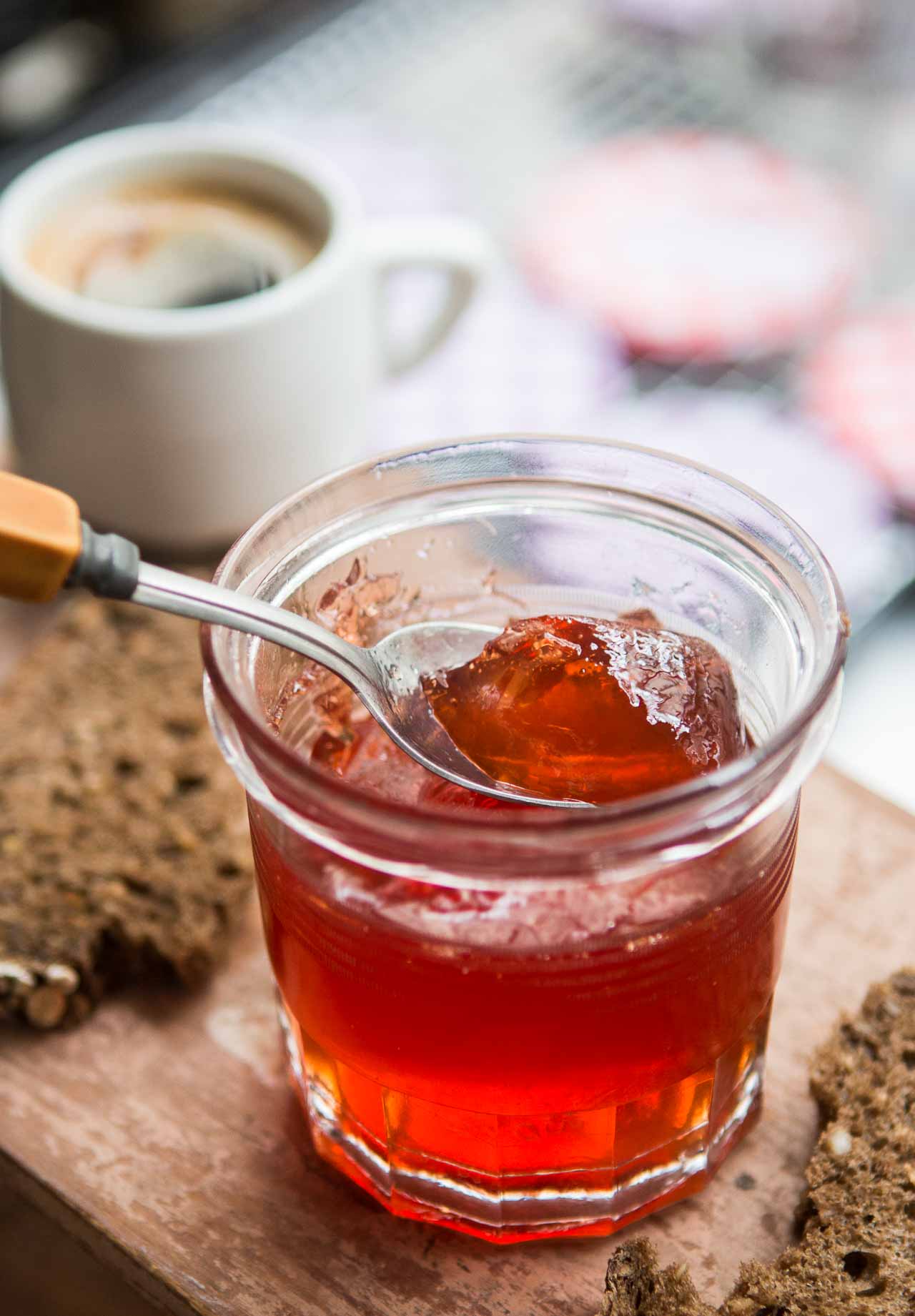
    I've gotten in so much trouble mangling the language it's no longer funny (well, actually it is...) One of my most infamous stories, that I think I may have recounted here before, I was at my favorite épicerie and I wanted red currant, or groseille jam.
    So in my picture-perfect French, I said, "Je voudrais le confiture de gros selles (which I pronounced as 'gross sells'), s'il vous plait." She looked at me, her eyes incredulous that she couldn't possibly believe her ears.
    It was after a moment, I realized I meant groseilles (pronounced 'gro-zay').
    I had asked for Big Turd Jam.


    But even the French have trouble with their own language. I was at the Petit Palais museum recently with a gal pal (see video above), and came across a Nature Morte, which literally translates to 'Dead Nature', but actually means 'Still Life'. There was one Nature Morte 'aiguière', a still life of a peeled orange. So I asked the attendant what an 'aiguière was, and she was stumped. So she asked another attendant, who didn't know either. It's not even in my dictionary, which boasts 120,000 traductions. (Béa...help!)

    About a year ago, I had just returned for leading a tour to Italy. My group visited Biella, a city famous for its mountaintop convent. One you've made the climb up to the majestic mountain, ensconced in the convent is a Madonna, made of black wood. She's known, of course, as The Black Madonna (not to be confused with the Jewish Madonna, in America.)

    At a dinner party back in Paris, I was recounting how exciting it was to climb this mountain in Italy, to see the 'Verge noir'.
    "It's amazing, so beautiful to see," I continued, "and people came from all over to see and worship the verge noir!"

    Meanwhile, everyone's looking at me with a bit of shock, and panic. As I keep talking, I'm explaining the beauty and magnificence of le verge noir. "It's fantastic. Really a magnificent work of art", until a friend leans over and says that he thinks I mean the magnificent 'vierge noir', the black virgin.

    Not the magnificent 'verge noir', the black penis.

    Ahem!

    So I took it with a grain of salt when a French friend started calling me "Stupid boy!, which I told him was somewhat impolite. Then I realized what he meant to say, perhaps, was "Silly boy." Or I hope he meant to say that.
    Now to Anglophones, they are two very different things, but to a non-native English speaker, they're rather different in meaning. "Don't be stupid" is far different than "Don't be silly."

    And, yes, sometimes even I am a stupid boy. For example, I know very little about some things, like Armagnac.
    But the great thing about being a wonderful, giving, and caring person, is that occasionally you get rewarded for it and lavish gifts get bestowed upon thee.
    Or me.


    armagnac.jpg

    The Best Armagnac in the World


    After leading a Paris Chocolate Tour last spring, some of my guests bestowed upon me these lovely bottles of Armagnac. Of course, I was thrilled especially since the packaging revealed they were from Michel Chaudun's chocolate shop and one had a lovely box of his superb chocolates discreetly hidden inside. But I wasn't aware of how truly special those bottles were. When I wrote Kate about them, who lives in Gascony (the epicenterfor Armagnac), I could hear the gasp all the way to Paris, and she told me that I didn't just have "the best", but that I had "the best of the best".

    Living in France, I like to try a new cheese, wine, or whatever I can get my hands on (except tripe, which I don't feel any great need to familiarize myself with), tasting new things while mulit-tasking and expanding my vocabulary. And although I thought my precious bottles of Armagnac might remain on my Too Good To Use shelf, they didn't for very long.

    So I may be a 'Stupid Boy', but I do know about baking and chocolate. And so you're not a 'Stupid Boy' (or girl) you might want to know that Champagne Chocolate Truffles don't contain any Champagne, but are made with Cognac. I got into an online tiff on eGullet with someone who insisted I was wrong (and some of those eGullet folks get real nasty). She had seen a New York-based French chocolatier on television pour Champagne into his truffle mix. When I went to look at his recipe, sure enough, he did use true Champagne. He also called for a specific brand, and after some checking, I found out...surprise!...the Champagne company is one of his many sponsors.

    But for the most part, Champagne in truffles means Cognac and derives from the old French term champaigne which means 'open-field', according to the Bureau National Interprofessional du Cognac.
    (If that woman from eGullet is reading this, take it up with them, girlfriend...)

    Both Armagnac and Cognac are distillations made from grapes, varieties which are generally not used for making ordinary table wine. Like Cognac, Armagnac is a region in France. It's closely associated with Gascony and it's cuisine (prunes and Armagnac, for example) and produced in the Pyrenees.

    Cognac is farther north, on the Atlantic coast, near where oysters are farmed off the Ile de Ré. The salt from the region is famous as well. Armagnac is distilled once, while Cognac is distilled twice and I find when tasting the two, Armagnac feels more rugged to me, which is part of its appeal. Its flavors seems to be fuller and more complex while Cognac is more delicate and refined. It's been said that "Cognac is the girl you can bring home to meet your parents, while Armagnac is the one you keep hidden away."

    So if I was making chocolate Champagne Truffles, theoretically I'd have to use fine Cognac. But if I had a choice of what to drink, I'm working my way through these bottles of Armagnac, which I've decided I'm not going to let sit on the self for too long.

    What do you think I am...stupid?

    Permalink


    Paris in the Summer
    line

    July 20, 2006 | Comments (34)

    I've been wondering lately why I live here.

    Winter is freezing cold. You can barely go stay outside for more than a few minutes without the icy blasts (which sound good now) sending you back indoors, to get under the covers, snuggly with a steaming cup of hot chocolate.

    Then we have spring.
    Which this year lasted 4 days.

    Then summer comes, and Paris melts down. You can see it on every face of everyone in the city. From people waiting for the bus, straining to stand in a tiny sliver of shade, to the women fanning themselves furiously on the buses and métro, everyone here is hotter than heck. Yesterday I went to the movies just to get cool, but unfortunately the film (The Squid & The Whale) was a measly 1 hour long. Who makes a 1 hour movie? I was tempted to stay and see it again just to bask in the coolness of the cinema but it was hard to stay awake the first time around.
    Anything to escape my rooftop apartment, just under a zinc roof, which yesterday was104 degrees F. A few friends of mine have similar rooftop apartments, and I decided that no one's allowed to complain to us how hot they are, since we're invariably 10 degrees hotter than they are. So there.

    But this time of year, visitors start coming to Paris in droves. I don't know why so many people choose to come to Paris in the summer, but everyone's surprised when I tell them that many of the shops are closed and it's really hot. And I'm leaving.
    But come, they do.

    So if you are planning to come to Paris in the next month or so, here are some tips to keep in mind:


    roseparisheat.jpg


    1. Drink rosé.

    For some reason, Americans are reluctant to drink rosé, which is inexpensive and delightfully served icy-cold. Rosé in France, for the most part, is dry and very drinkable. And it goes down very well in the summer, speaking from recent experience. Order it by the carafe since there's little difference between that and what comes in the more expensive bottles.

    You'll be drinking it so fast that it doesn't really matter.


    2. Never order anything they call 'iced coffee' or 'iced tea'.

    It's invariably very, very sweet. If you order iced coffee, no matter what you're thinking it's going to be, stop before you do. No matter how tempting it sounds to you, just stop.

    If you order something called 'iced coffee', you'll be served a very small amount of dark liquid (very sweet) in a large glass, with a straw, and it will be really sweet. And expensive.

    Iced tea is inevitably from a can. And flavored.

    And very sweet as well.

    (Disclaimer: Yes, that was me you saw on the Boulevard St. Michel at, gasp, Starbucks drinking a Frappucino. It was so hot, we had no choice. But I have a question: Is there any coffee in those things? You'd think if they're gonna charge 4.50€, about $5.50, they would at least taste the slightest bit like coffee. Would it kill them to toss in an extra espresso without charging extra for it?)


    3. There is no ice.

    You may get a cube or two in your drink, but French people don't use lots of ice and few places have those jumbo ice machines like in America. When I worked in restaurants in the US, the worst thing that could happen was when the ice machine broke. People freaked. I mean, they really freaked. It was like they couldn't deal with drinking room-temperature water. And now, some places in America are charging extra if you don't want ice. It's like there's this vast conspiracy to get you to use lots of ice or something in America. Perhaps someone's putting something in the ice?

    (Because whenever I request "No ice" in the US, the waiter gives me this funny look, and I can see him thinking, "Oh great. Why do I get all the ass#%$les in my section?")

    Speaking of drinking: You'll notice that it's customary not to fill wine or water glasses to-the-brim full. In France, glasses are generally filled half-full. And in some places or in homes you're expected to use the same glass for both wine and water, so if you fill it too full with wine, you gotta finish all of it before you get any water.

    And vice versa.


    4. Don't expect air-conditioning.

    Or I should say, very little is air-conditioned, especially like the icy-cold turbo-blasts experienced in the US. Electricity is very expensive in France. That, coupled with a general dislike of cool breezes (or open windows...or any kind of ventilation in general) but it can get uncomfortably and unbearably hot and people will sit in restaurants and apartments with the windows firmly closed.

    That includes the métro, which can be downright intolerable in the summer. Especially when it's jammed full and your face is directly in some dudes hairy armpit who forgot to take his weekly shower. but you can't move. Most of the buses aren't air-conditioned (except I got on the #63 recently, and it was un peu de paradis), nor is the RER from the airport, which is downright miserable in the summer and you should avoid it. Spring for a cab or a shuttle.


    5. Spring for some decent sandals.

    Parisians do wear sandals and flip-flips (les thongs, except you don't pronounce the 'h') but in general they wear rather sporty ones. If you want to wear rubber flip flops, stop at Pay-Less and get pair that doesn't look skanky.

    (And while you're at it, make sure your feet look decent. Like mine do.)

    5a: Don't ever wear dark socks with sandals.
    5b: Don't ever wear dark knee socks with sandals.
    5c: Don't wear socks with sandals, period.

    And remember, you can only wear two of the following at the same time: sandals, shorts, or a tank top. Never all three (if you do, then it's obligatory to add a fanny pack and carry a Rick Steve's guidebook.)


    6. Spring for some nice shorts.

    Parisians do wear shorts, in spite of what you hear, but do not wear them if you're planning to go into sophisticated places or nice shops.

    Do not wear your ultra-short shorts, or anything that looks like something Mariah Carey would wear...unless you're trolling for les clients on the rue St. Denis.

    (And men: If you're planning on doing any shoe shopping during les soldes, please remember to wear undershorts. A friend of mine was a shoe salesperson and was always amazed how few men didn't wear undies and whenever she looked up to ask about the fit, she was greeted with an eyeful.)


    7. Take time to relax.

    I've seen too many people coming to Paris who want to take in six museums in one day, rush from place to place with a rigid schedule, and generally make themselves and their friends crazy. You'll notice that Parisians sit in cafés for lo-o-o-ong periods of time, thinking, reading, or doing absolutely nothing. It's a skill I've finally mastered.

    Just sit around and watch the world go by. Remember that citron pressée that you paid 6€ for? It's for the privilege of doing just that. And it's hot, so just relax. Or go to the movies. Paris is a great movie city. And most cinemas are air-conditioned.


    8. Get out of the Left Bank.

    While there's lots of interesting things to do in Paris; fabulous chocolate shops, great bakeries, and shopping galore, there's other neighborhoods in Paris worth exploring besides the Boulevard St. Germain-des-Pres.

    Have you been to Belleville and Boulangerie 140 at Place Jourdain?

    What about the Canal St. Martin for a stroll in the evening?


    9. Parisians eat much later in the summer.

    The sun doesn't go down until around 11pm, so things happen later. No one will be eating dinner at 7 or 7:30pm, and many restaurants won't even be open before that.
    So plan accordingly.

    If you want a seat outside (en terrasse, make sure to specify that when you reserve, as they're the first to go. Otherwise, if you want a seat near the window, those go second and it's best to show up earlier in the evening rather than later.

    And if you're staying in a hotel in a popular neighborhood, and need to keep the windows open, bring ear plugs to block out noisy Brits getting pissed or the Aussies and their birds drinking cans of 1664 under your window.


    10. Prepare for les vacances.

    Realize that lots of places close for a month, mostly in August but starting in mid-July. It's said that Americans "live to work" and Europeans "work to live", which is rather true, and they are outta here.

    The upside is that you'll have Paris much to yourselves and it's very pleasant and uncrowded. But expect many, many places to be closed.
    Any other tips?

    Permalink


    Vert d'Absinthe: Absinthe in Paris
    line

    July 17, 2006 | Comments (14)

    Paris is always full of little surprises, like any major city. It's always fun to poke around and find something new and unusual. And there's plenty of the unusual in a big city like Paris, as I often report. I think of Paris as a big village, full of colorful characters with lots of stories to tell and unusual offerings. And getting the know the people in your neighborhood, especially the vendors selling fine foods and drink, can be especially rewarding since often if you stay for a while and talk to them, there's always something fascinating to learn.

    ...and, of course, taste!


    absintheglass2.jpg

    Getting ready to prepare a glass of absinthe, French-style, of course.


    I've been meaning to take you to visit one on my favorite shops in Paris for quite a while: Vert d'Absinthe. This little shop is located in the Marais, but a bit removed from the busy tourist streets, just off the Place St. Catherine. Owner Luc-Santiago Rodriguez tells me his shop was the first boutique anywhere dedicated just for the purpose of selling absinthe, that wickedly suspicious elixir that's recently been getting a lot of attention lately.


    mrabsinthe.jpg

    Luc-Santiago Rodriguez of Vert d'Absinthe in Paris.


    Although the drink was originally produced as a cure-all medical tonic in 1792, Absinthe became a rather popular drink amongst Parisians in the late 1800's, mainly with hedonists living in Montmarte who would sip it in cafés and clubs, like Le Moulin Rouge, before it was ultimately banned by the French government in 1915.


    absinthedishes.jpg

    Dishes with numbers were to let patrons know how much their glass of absinthe cost. Think of all the paper they saved!


    Although experts are as unclear as a cloudy glass of absinthe on exactly why it was banned, the most colorful theory was that people went mad drinking absinthe due to the rotten wormwood used to make the drink. It was dubbed le fé'e verte or 'the green fairy', since it was said to inspire hallucinations as well.

    (Absinthe was banned in the US in 1912, and so far, it's still technically illegal to import into the US.)

    But nowadays, most people, including Luc-Santiago, agree that the powerful French wine industry at the time was upset that people, especially the artsy bohemians who lived in the north of Paris, were drinking cheap, hi-test absinthe (at 70% alcohol) instead of pricey wine (around 12% alcohol), in an attempt to get a better buzz for their buck. Since the French wine industry had suffered a severe set-back from the phylloxera infestation which killed most of the grapevines in France, the price of wine had gone up enormously. So it's thought that the wine industry pressured the French government to put the kabosh on absinthe production.
    And that was that.


    absinthevarieties.jpg

    It's my one-stop shop for all things absinthe!


    In 1988 absinthe made a comeback and the French government once again made it legal to sell and drink the anise-scented exilir, absinthe attaining a bit of a cult status in the process. With all the ceremony of pouring something previously forbidden in a fancy glass, pouring water over a sugar cube to make it cloudy (called louching), then slowly sipping it while staring into space in a deserted café...how could anyone not be entranced by the romance of absinthe?

    If you come to France and want to try or purchase absinthe, be aware that not all drinks that look and sound like absinthe are indeed absinthe. You'll come across 'absente' (missing the 'h'), which has a bleary picture of Van Gogh on the packaging (it was said he went mad drinking absinthe and cut off his ear because of it, which to me is a rather iffy marketing move), but these impostors use a wormwood that's different than the variety of wormwood (artemisia absinthium) used in true absinthe.


    absintheherbs.jpg

    The true herbs of absinthe.


    The wormwood used to make true absinthe contains thujone, the most important compound in real absinthe.

    Anyone interested in absinthe should make the trip to visit Luc-Santiago's little shop Vert d'Absinthe, where 25 different kinds of absinthe are stocked. All are French except for one, which is made in Switzerland, and most of the French absinthe varieties are made near the Swiss border. Monsieur Rodriguez stocks all the proper paraphernalia for properly preparing and drinking a glass of absinthe, from vintage to contemporary; spoons, glasses, fontaines, and, of course, the bottles themselves.

    And perhaps you'll get a demonstration and a taste-test. Although drinking absinthe French-style means louching the drink by pouring water over a sugar cube through the special spoon before it clouds up the absinthe, the more flamboyant Czech-style method involves lighting the cube of sugar dramatically on fire, which I've yet to see him do.


    Vert d'Absinthe
    11 rue d'Ormesson
    Paris
    Tél: 01 42 71 69 73
    Open daily, from 11am to 8pm (closed Monday)


    (Although absinthe is technically illegal in the United States, a source for online ordering is eAbsinthe, who ships internationally.)


    Heather at Secrets of Paris notes a few unusual places for les amis of absinthe in, or near, Paris:

    "The Hotel Royal Fromentin (11 rue Fromentin, Paris, tel. 01 42 81 02 33) serves absinthe at their historic bar, a former cabaret at the foot of Montmartre. Visit in the evening for a presentation by the staff of the history of Absinthe.

    The Musée de l'Absinthe (44 rue Alphonse Calle, 95430 Auvers-sur-Oise, tel. 01 30 36 83 26, about fifteen minutes outside Paris) is open on the weekends and holidays and sports all sorts of memorabilia and paraphernalia from absinthe's heyday. Take the train from the Gare du Nord."


    For more information about absinthe on the web, here are some interesting articles and sites to read and learn more:

    Matt Bites: Here's Your Bottle

    Absinthe Online: Liquors de France

    Chubby Hubby: The Green Fairy

    Accidental Hedonist: Of Poets, Absinthe and Coffee

    In Absinthia

    The Wormwood Society

    La Fée Verte

    Absinthe: The Myth and The Reality

    Cantada: One of the few bars in Paris to serve a wide selection of absinthes.


    Coming Soon: A dessert with absinthe?...

    Permalink


    Happy Bastille Day!
    line

    July 14, 2006 | Comments (8)


    bastilleday2paris.jpg


    Permalink


    This is definately becoming a problem...
    line

    July 3, 2006 | Comments (11)


    levisparis2.jpg


    Permalink


    The Sales
    line

    June 28, 2006 | Comments (18)

    levisparis.jpg


    There are two periods during the year when stores are allowed to have Les Soldes, or The Sales. They occur once in the winter, beginning shortly after New Years Day, while the summer soldes start in late June. Although Americans think its odd, the government's official explanation is that les soldes give stores a chance to blow-out all last seasons merchandise quickly by creating a little frenzy. But I think another reason is to give the little stores a break, since as we've seen in America, often the smaller merchants get squeezed out by the big guys offering lower prices on things by holding sales all the time.

    So onward to the BHV. What is the BHV, you ask?
    Imagine someone scouring the every corner of the world, looking for the least-helpful people on the planet. Then they hire them and put them in one enormous department store that's impossible to navigate but full of everything imaginable and necessary for daily life in Paris, so you really have no choice but to shop there.

    And those are the people in charge of helping you.

    And now, you get the idea of the BHV.

    So today is the first day of les soldes and I would say to anyone who has fantasies that Parisians are polite, classy, and sophisticated, hasn't been elbowed out of the way in front of the bins at the BHV department store, strong-arming anyone who might get between them and something they want.
    Or don't want.

    It doesn't really matter.

    And Parisians tend to go a little wild here, since in general, things like clothing and housewares are pretty expensive. I happened to be heading to the BHV this morning, since last night I switched on my desk lamp and blew out some fuses in my apartment. Although I was determined not to get involved in the hubbub, once inside I got caught up in the madness and thought, "Well, I guess I could use a new pair of jeans." Last week I discovered a bare spot forming in a place where not a lot of people get a close look at, thinking their days are numbered.

    To make a long story short, I never made it to the hardware department, but instead got taken in by the stacks and stacks of jeans that were all 30% off. Since you can't get away with wearing American-style baggy-assed jeans in Paris, you need to wear pants that are well-fitted, snug-tight up against your rear end (no matter what you weigh.)

    Our unless you're under the age of 21. Then you wear jeans hanging halfway down your butt, but only as long as you're wearing boxer shorts underneath rather than those Euro-sling undies and swimsuits that some men in my age (well above the age of 22) like to wear here.

    Not finding what I liked, I left empty-handed. But with my adrenalin (or was it my morning cáfe au lait?) pumping, I raced to the Levi Store in the Bastille. Not quite busy yet (aha!, I beat those young folks wasting their lives away in school), the young salesmen were instantly drawn to me, amazed at the Levis that I was wearing, which were made with a special cut and fabric that I bought in San Francisco. So there I find mself, surrounded by handsome, unshaven, young French men, all oohing and aahing while staring at my butt and crotch, reaching over feeling the fabric, and closing in all around me. I don't know if it was me, or the summer heat has finally arrived once and for all, but it was surely getting much warmer in there. And naturally, I decided right away that I needed a new pair of Levis, and this was the place I must get them.

    Helping me find a style I liked, one of the friendly young men, wearing a well-fitted t-shirt (was it Levis? If so, I want one too.) He kept calling me jeaune homme (young man), while asking me what I thought about the style that he was wearing by running his hands up and down his thighs to emphasize and make sure I understood how good they fit (yes, I did.) So he hands me a few pairs of the same jeans to try on, and transfixed, I head to the dressing room.

    Since we're in France, there's no need to be shy and he pops right in soon afterwards and starts surveying the fit by yanking and patting and making sure all button-fly's buttons were laying properly, exclaiming how well they fit. Yes, they're supposed to be that tight, he told me. And for additional emphasis, in case I didn't quite get it (yes, I did) he makes doubly-sure with his hands that I know there's little room in there for anything besides maybe a Euro-sling, and perhaps a few centimes or fuses (...fuses? What fuses?...) But certainly not much else.

    Soon all the other boys, er, I mean jeaunes homes, came by and made sure I'm getting properly fitted, admiring my choice in jeans. When I questioned whether I might need a larger size, one turned to show me how his fit him, sliding precariously down his backside, and he asked me if I wanted to same. (Yes, I did.)

    But instead I went home with the jeans I had on, at 20% off, back to my darker apartment, thinking I'll go back first thing tomorrow and get fuses.

    But perhaps if the BHV took a cue from Levis and hired a few of these helpful young men as salespeople, customers like me might leave their store happily with something more than just a fuse in their pocket.

    Levis
    47, Faubourg St. Antoine
    Tél: 01 44 87 03 06

    Permalink


    Paris is Degrading
    line

    May 31, 2006 | Comments (16)

    According to LOI n° 2006-11 du 5 janvier 2006 d'orientation agricole, article 47...


    parisnectarines.jpg

    Go France!


    ...as of January 1, 2010, all plastic bags in France will be compostable and biodegradable. The new sacks are being introduced this week as part of a campaign to promote people shopping at the outdoor markets. Aside from their obvious ecological advantage, they're incredibly soft and supple. I told my fruit vendor that they felt "comme un fesse du bébé" ("like a baby's bottom") and he just looked at me, sort of perplexed and stunned.

    I guess that didn't translate very well, and I'm certain I'm now on some master liste de dégradeurs at the Préfecture de Police.


    Permalink


    What They Say vs. What They Mean
    line

    April 24, 2006 | Comments (21)

    When they say,"Non", they mean, "Convince me."

    When they say,"We do not take returns", they mean,"Convince me."

    When they say,"It's not broken", they mean,"Convince me."

    When they say, "You need a prescription for that", they mean,"Convince me."

    When they say,"The restaurant is completely full", they mean,"Please come up with a better story."

    When they say,"The restaurant is completely full", they mean,"We already have enough Americans in here."

    When they say,"Do you mind if I smoke?", they mean,
    "Don't answer 'yes', or we're going to pout and scowl while you try to enjoy your dinner."

    When they say,"It does not exist", they mean, "It does exists...just not for you."

    When they walk right into you on the street and say nothing, they mean,"I'm Parisian."

    When they say,"I don't have change", they mean,"I want a tip."

    When they say,"Do you want directions?" they mean, "I look forward to telling you what to do for the next five minutes."

    When they say, "I'd like the practice my English", they mean,"For the next 20 minutes, you'll feel like a complete idiot while I speak perfect English and demonstrate a far better understanding of world affairs than you do."

    When they say,"They're up on the seventh floor", they mean,
    "They're right around the corner from where you're standing."

    When they say,"We don't have any more", they mean,"We have lots more, but they're in the back."

    When they say,"It's not my fault", they mean,"It is my fault...but I'm not taking the blame."

    When they say, "That is not possible", they mean,"Loser."

    When they say, "I am a Socialist", they mean,"I'm not responsible for picking up my dog's poop."

    When they say, "You package hasn't arrived", they mean, "I'm just about to go on break. Come back and wait in line for 30 minutes again tomorrow."

    When they say, "The fat's the best part!" , they mean, "I'm under 40."

    When they say, "The cheeses in France are the best in the world", they mean, "We are indeed a superior culture."

    When they say, "America is culturally-deprived", they mean,"Please don't show us Sharon Stone's vagina again."

    Permalink


    La Presure; Homemade Cottage Cheese
    line

    March 14, 2006 | Comments (32)

    Where did I find the inspiration for this little bowl of white, creamy cheese?


    cottagecheesefork.jpg


    At la pharmacie!
    Pharmacies are at the top of my list of favorite places to visit in Paris. There's everything you can imagine at la pharmacie, and kinda like chain-drugstores in America that stock everything from ear wash to Mint Milanos, les pharmacies are a treasure trove of finds for the body and soul. (Except for Pepperidge Farm Cookies.)
    But there's thyme oil. And Rescue Remedy. And baking soda. And Bio-Gauze (the world's best burn treatment). And pills that will make you thin and give you the most amazing abs like the male model shown in the window no matter how much cheese you eat or wine you drink.

    Not that I need to, but I practically make up reasons to visit the drugstore. I love going in and seeing everyone lined up seeking advice from the pharmacist. I pick up and look at everything. When I'm poking around suspiciously, they invariably ask if I need help. I always feel funny, especially in a place where people go specifically looking for assistance, saying"No thanks, I'm just looking." It's not like Walgreen's where there's a bunch of magazines to leaf through or anything. People go in for a purpose, not to be entertained.
    (Except me.)

    One of my latest passions is Roget & Gallet soaps. They're fabulous. I mean, they come in all sort of aromas; pine grapefruit, linden flowers, and lettuce (ever wonder what a salad smells like?).
    Here's your chance!


    soapparis.jpg


    I can't wait to finish one bar so I can try another.
    Consequently I am perhaps the cleanest person in Paris.

    All French pharmacists are trained to identify any mushrooms, to determine which are poisonous, and which are okay for la bonne cuisine. If you go to a homeopathic pharmacy, you step up to the counter and stick out your tounge. Then they give you a few bags of pills and cures.

    And not all of them are administered orally.

    (Once I had a cough and they tried to give me some, er, medicine that you don't, um, take directly in your mouth, which would quite a distance to my throat. A that point my French wasn't very good, and I they were trying to explain it with gesture and motions, and thankfully I go it since I think they were about to give me a demonstration.)

    And last time I needed a prescription (oral), the pack of pills cost me less than 3 euros. I checked the price in the US, just for fun, and the exact same drug costs close to $200.
    And people ask me, "Why do you live in France?"

    Do the math.

    What is most impressive, though, is that I found out that you can order presure, or rennet, at the pharmacy (Do you think I'm too easily impressed? Or just impressed by the strangest things? Or weird for showering with soap made from lettuce? Or strange for being able to include in one blog entry soap, personal hygene, animal innards, suppositories, my lack of six-pack abs, and 'shrooms?)*

    Rennet is an animal enzyme used in cheesemaking and after I'd tasted some of the most sublime cottage cheese of my life at Fromagerie Quattrehomme I wanted to see if I could replicate it at home. Although Americans eat lots of cottage cheese, most of it's bland and watery. It's nothing like real cottage cheese. So it seems that yes, the French have beaten us at our own game and made cottage cheese even better than we could.
    And instead of some fancy-ass name, it's simply called le cottage cheese. It's like they're showing off, not even bothering to change the name to something French. So we can't eat it and say, "Oh, this is kinda like cottage cheese, but different." Instead we have to face the fact that yes, it's cottage cheese, and yes, theirs is better than ours. By a longshot.

    So to make a long story short, and I don't want keep you since you probably need to get back to work, I made cottage cheese at home. It's remarkably simple and tastes great. And you can too! (Although probably not at work, unless you work at a dairy. Which you probably don't.)
    I ate most of mine the moment it was ready. You'll need to get rennet, and I've listed a few sources below. Rennet is an animal product and vegetable rennet is available if you're a veg-head, but I've never used it (heck, I've never used animal rennet before either) so you may need to scout around the internet or in your community to find it. I would not bother asking at Rite-Aid or Duane Reed...athough it might be worth it just to see their expression.
    I get a lot of funny expressions around here.

    You get used to it after a few years.

    Really. You do.


    cottagecheese1.jpg


    Homemade Cottage Cheese


    All utensils should be cleaned very well before beginning.

    1 quart (1 liter) whole milk
    4 drops liquid rennet
    ½ teaspoon of salt, plus more to taste
    6 tablespoons heavy cream (or half-and-half), or a mixture of heavy cream and buttermilk


    pouringmilk.jpg


    Heat the milk very slowly in a medium-sized, non-reactive saucepan. Use the lowest heat possible and if you have a flame-tamer for underneath the saucepan, now's a good excuse to use it.

    Insert a thermometer into the milk (I use a chocolate thermometer, which is easy to read) and heat until the milk until it reaches 85 degrees F.


    addingrennet.jpg


    Turn off heat and stir in rennet. Stir gingerly for 2 minutes. (Don't freak. There's no ginger in the ingredients. I just felt like using that word since it's underused.)

    Cover the saucepan with a clean tea towel draped over the top and put the lid on. Let stand at room temperature for 4 hours.

    After 4 hours, the mixture will be very softly set and marvelously jiggly. Take a sharp knife and cut the mixture diagonally 5 or 6 times, then do the same in the opposite direction.


    curds.jpg


    Sprinkle in the salt then set the pan over extremely low heat and cook, stirring gently, until the curds separate from the whey. It will take just a few minutes.


    finalcurds.jpg


    Do not overcook it at this point or your cottage cheese curds will be tough.

    Line a strainer with cheesecloth or étamine, and set it inside a large bowl. Pour the mixture into the cloth and stir it gently to drain off the copious amount of whey (which can be sent to Susan to feed to her brood.)


    curdsincloth.jpg


    Fold the ends of the cheesecloth over the cheese and chill the strainer (keeping the bowl underneath) in the refrigerator. Let drain for about 1 hour, stirring once or twice.

    Spoon the cottage cheese from the cloth into a bowl and stir in the cream, or cream and buttermilk. Taste, and add more salt if necessary.

    Here are a few sources for liquid animal rennet in the United States, available here, here, and here.


    *You may have noticed the GoogleAds off to the right.
    They track blog content and come up with ads that are 'relevant'. By mentioning as many diverse things are possible, I'm freakin' the ads out! One day it's chocolate. Another it's sausagemaking or cheesemaking supplies. My apologies if it comes up with suppositories this time.

    Or anything related.

    Permalink


    Les Chouquettes (Recipe)
    line

    March 3, 2006 | Comments (24)

    Dinner in Paris generally starts at 8 pm, especially in restaurants. And most places don't even open to take reservations until 7 o'clock. I once was talking to a visitor who was really upset as he recounted arriving 15 minutes early at a place that he had reservations for dinner. The staff was sitting down having dinner (how civilized!) and asked him to come back at 8, when the restaurant opened and the time of his reservation. He told me he threw a fit, not believing that they wouldn't seat him, and stormed off. (I think I will try that next time I arrive at the airport early and throw a fit when they refuse to take off until the scheduled departure time.)

    Anyone who's worked in a restaurant knows how precious those few minutes of sitting down and eating are. Those moments of peace-and-quiet with your co-workers are the last chance to get off your aching feet for a spell and have a bite to eat. Especially since the next chance to sit down or eat something is likely to be well past midnight.

    Parisians do dine rather late, and sometimes it can be a painfully long stretch between lunch and dinner. So French people often visit their local pâtisserie for an afternoon snack, known as le goûter, although nowadays Parisians often call it 'le snack'.


    chouxdoneparis.jpg


    Le snack is often nothing more than a buttery financier or a tender Madeleine. At home, French children at home are often given a split piece of baguette with a bâton of chocolate tucked inside to keep them happy until dinner.

    But my snack of choice is invariably les chouquettes: Cream puffs covered with crunchy nuggets of sugar (which many visitors think is salt), then baked until golden-brown. The eggy, pillowy puffs are piled uneventfully behind the counter and sold in crisp little paper sacks, each one holding about 100 grams, or about 10. I found that engaging the counterperson in a few words of niceties will often mean that before the ends of the bag are twisted shut, a few more will be tossed in as a petit cadeau for l'americain.

    Nothing is easier to make than chouquettes and you can bake them tonight with ingredients you likely already have on hand. Unfortunately I don't know where in your country you can buy the very coarse, crackly sugar that they use in France. But you can substitute any large-grained sugar that you have. And since I like to add chocolate to whatever I can, whenever I can, I press some chocolate chips into a few of the puffs before baking.

    The ones with chocolate chips, needless to say, are always the first consumed once the puffs are cool enough to handle.


    uncookedchoux.jpg


    Chouquettes
    About 25 Puffs

    Shaping the mounds of dough is easiest to do with a pastry bag, although you can use two spoons or a spring-loaded ice cream scoop.

    1 cup (250 ml) water
    1/2 teaspoon salt
    2 teaspoons sugar
    6 tablespoons (90 gr) unsalted butter, cut into small chunks
    1 cup (135 gr) flour
    4 large eggs, at room temperature

    Glaze: 1 egg yolk, mixed with 1 teaspoon milk
    Crystal sugar (Coarse sugar is available in the US from King Arthur, although it's a smaller-grained sugar than what is shown here. In Paris, I buy mine at G. Detou.)

    Preheat the oven to 425 degrees (220 C.) Line a baking sheet with parchment paper or a silicone baking mat.

    Heat the water, salt, sugar, and butter in a small saucepan, stirring, until the butter is melted. Remove from heat and dump all the flour in at once. Stir rapidly until the mixture is smooth and pulls away from the sides of the pan.

    Allow dough to cool for two minutes, then briskly beat in the eggs, one at a time, until smooth and shiny.

    Using two spoons, scoop up a mound of dough with one spoon roughly the size of a George Bush's brain (or about the size of a walnut), and scrape it off with the other spoon onto the baking sheet.

    Place the mounds evenly-spaced apart on the baking sheet. Brush the top of each mound with some of the egg glaze then press coarse sugar crystals over the top and sides of each mound. Use a lot. Once the puffs expand rise, you'll appreciate the extra effort (and sugar.)

    Bake the cream puffs for 35 minutes, or until puffed and well-browned.

    (If you want to make them crispier, you can poke a hole in the side with a knife after you take them out of the oven to let the steam escape.)

    The cream puffs are best eaten the same day they're made. Once cooled, they can be frozen in a zip-top freezer bag for up to one month. Defrost at room temperature, then warm briefly on a baking sheet in a moderate oven, until crisp.


    (A reader informed me that European pearl sugar is available in the US from the Decorette Shop, tel: 503-620-5100. Their website is here. Although they don't list the sugar on their web site, if you call the store they'll ship it.)

    Permalink


    Les Carottes Rapées
    line

    February 18, 2006 | Comments (14)

    You won't often find much in the way of vegetables on the menus of many cafés in Paris. I don't mean the over-hyped restaurants with the fancy chef names attached that the slick food magazines tend to worship. There you might find a coin of grilled zucchini, a dot of sauce, and perhaps a leaf of parsley as a carefully-draped garnish. But most of the time, those places are filled with Americans with Zagat guides sticking out of their pockets. What I mean are the places where most Parisians actually eat lunch.


    carrotsalad2paris.jpg


    Many French workers get financial help footing the bill, courtesy of le Ticket Resto, a program that allows employees to buy discount coupons via their employer to dine out. The advantage to that is that it keeps many small restaurants thriving, so most of them offer a prix-fixe menu that anyone's welcome to enjoy, usually costing less than 15 euros for a 2- or 3-course meal.
    Another advantage is that it gives workers time to have a proper lunch with co-workers and friends.

    (Sidenote: Having worked in restaurants all my life, I was once at a dinner party and mentioned that I never had a job where I got a true a break. All conversation stopped, forks in mid-air, and everyone turned and looked at me in disbelief. When I left the restaurant business I vowed I would never eat standing up again. And I haven't!)

    What that also means is that the food must be quick and relatively easy to prepare. Menus offer steaks or long-cooked stews, and perhaps a sauteed piece of fish. But since vegetables require washing, peeling, slicing, pre-cooking, and a bit of finesse, it's quite difficult to find freshly-cooked vegetables on menus of ordinary restaurants. The most popular side dish is les frites; all that's needed is a quick drop-in-the-deep-fryer, and they're done. Sadly, most of the time, they're the pre-frozen frites, which arrive undercooked and insipid. I make it a point to find restaurants with real, honest French fries.
    And I go back as much as possible, as a show of support.

    Even ratatouille, that famous vegetable dish from Provence is just a big bowl of overcooked, soft vegetables. And please don't tell me that I haven't had a good version of ratatouille...I have, and I still don't like it.


    carrotsaladparis.jpg


    There is one vegetable dish that's so popular that it ranks right up there with foie gras and le baguette as classics of modern French cuisine. That's carottes rapées, a crisp pile of freshly-grated carrots. There's well-known aversion in France to undercooked vegetables (or as they say, 'American-style') and you almost never find raw vegetables offered in Paris.

    Corn is always served spooned right from the can onto a salad, or worse, on pizza (with a sunny-side up egg cooked in the middle.) Tiny haricots verts are always cooked until tender. And the little pointed end of the green bean is always removed...and I've heard various compelling arguements why.
    "C'est indigestable" (I hate lying awake all night trying to digest all the green bean ends I've consumed), or "It gets stuck in your teeth" (that is the worst, isn't it?)

    But my favorite reason, "That's where all the radiation concentrates."

    ...um, okay...so now like a good Parisian I remove the end of the green bean, or the "boot", as it's called.
    To limit my exposure to radiation.

    Anyhow...les carottes rapées is simply grated carrots tossed in fresh lemon juice, a bit of salt, and sometimes a little olive oil. If you want to get fancy, you can add a bit of chopped flat-leaf parsley. But it's one of those things, the simpler the better. Simple restaurants like Chartier just toss a plate of carrots at you with a wedge of lemon. Other places arrange les carottes rapées on a plate with tangy celery rémoulade and beets.

    I make it often when I'm home by myself, since it's nice to have something easy to prepare and fresh, and I always seem to have carrots around. I make a plate of carottes rapées, and eat it with a few chunks of Tradigrains baguette from my local boulanger, a nice wedge of soft, fresh, ooaing cheese like a ripe brie de Meaux or a goaty Selles-Sur-Cher, and perhaps a slice of pâte from my local charcuterie.

    Permalink


    Alligators and Flies
    line

    February 15, 2006 | Comments (17)

    When I was a kid, it seems like everyone was wearing Lacoste polo shirts (they were also called Izod shirts back then). The shirt was introduced in 1933 and named for French tennis star René Lacoste who was nicknamed "the alligator" after winning a game bet, the prize being an alligator suitcase.

    The shirts came in a riot of colors during the 60's and 70's, and it was the fashion at the time to dress in the casual, but dressy Lacoste polo, accenting your outfit with something outrageous and in-your-face (but still acceptable at the country club.) Soon others designers catered to people who wished to be 'preppy' by advertising a genteel lifestyle, featuring people turning up their collars. I dubbed it "The Vulcan Effect", since most of the people looked rather stupid with the tip of the stiff color scraping their ears with a Star-Trek like rigidity, rather than the "I-don't-care-this-is-how-I-put-my-
    shirt-on and that's-how-it's-going-to-stay-because-I-can't-be-bothered-to-turn-it-down"
    look that real preppy people did.
    I went to prep school and if you flipped up your collar on purpose, you would have had the crap pounded out of you by an upperclassman named Rand or Tad.
    Guaranteed.


    lacosteparis.jpg


    Eventually the Lacoste shirt fell out of favor until recently, thanks to a spiffy new ad campaign, and the fact the shirts last forever and are wonderfully comfortable and timeless and well-tailored...all that stuff that makes classic clothing come back into style. And so I searched around some boxes of mine last time I was in the US to see if I could find any old ones (the blue-alligator is the giveaway for vintage Lacoste, they switched to green some years back.)

    I had lots of Lacoste shirts during my ch